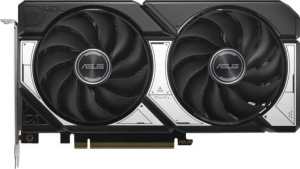
Asus Dual GeForce RTX 5060 Ti OC Edition 16GB
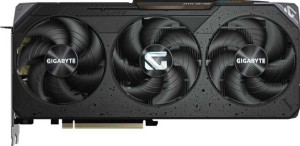
Gigabyte Radeon RX 9070 Gaming OC

Asus Dual GeForce RTX 5060 Ti OC Edition 16GB Gigabyte Radeon RX 9070 Gaming OC

Overview

Welcome to our in-depth spec comparison between the Asus Dual GeForce RTX 5060 Ti OC Edition 16GB and the Gigabyte Radeon RX 9070 Gaming OC. Both cards share a 16GB VRAM pool, PCIe 5.0 support, and ray tracing capability, yet they take markedly different approaches to memory architecture, raw throughput, and feature sets. Read on as we break down every key specification to help you decide which card best fits your needs.

Common Features

  • Both cards support Double Precision Floating Point (DPFP).
  • Both cards come with 16GB of VRAM.
  • Both cards support ECC memory.
  • Both cards support DirectX 12 Ultimate.
  • Both cards support OpenGL version 4.6.
  • Both cards support multi-display technology.
  • Both cards support ray tracing.
  • Both cards support 3D.
  • XeSS (XMX) support is not available on either card.
  • Neither card has LHR (Lite Hash Rate) limitation.
  • Both cards include an HDMI output with HDMI 2.1b.
  • Neither card has USB-C ports.
  • Neither card has DVI outputs.
  • Neither card has mini DisplayPort outputs.
  • Both cards use PCI Express (PCIe) version 5.
  • Both cards are built on a 5 nm semiconductor process.
  • Neither card features air-water cooling.
  • AMD SAM / Intel Resizable BAR is supported as Intel Resizable BAR on both cards.

Main Differences

  • GPU base clock speed is 2407 MHz on Asus Dual GeForce RTX 5060 Ti OC Edition 16GB and 1440 MHz on Gigabyte Radeon RX 9070 Gaming OC.
  • GPU turbo clock is 2602 MHz on Asus Dual GeForce RTX 5060 Ti OC Edition 16GB and 2700 MHz on Gigabyte Radeon RX 9070 Gaming OC.
  • Pixel rate is 124.9 GPixel/s on Asus Dual GeForce RTX 5060 Ti OC Edition 16GB and 345.6 GPixel/s on Gigabyte Radeon RX 9070 Gaming OC.
  • Floating-point performance is 23.98 TFLOPS on Asus Dual GeForce RTX 5060 Ti OC Edition 16GB and 38.71 TFLOPS on Gigabyte Radeon RX 9070 Gaming OC.
  • Texture rate is 374.7 GTexels/s on Asus Dual GeForce RTX 5060 Ti OC Edition 16GB and 604.8 GTexels/s on Gigabyte Radeon RX 9070 Gaming OC.
  • GPU memory speed is 1750 MHz on Asus Dual GeForce RTX 5060 Ti OC Edition 16GB and 2518 MHz on Gigabyte Radeon RX 9070 Gaming OC.
  • Shading units count is 4608 on Asus Dual GeForce RTX 5060 Ti OC Edition 16GB and 3584 on Gigabyte Radeon RX 9070 Gaming OC.
  • Texture mapping units (TMUs) total 144 on Asus Dual GeForce RTX 5060 Ti OC Edition 16GB and 224 on Gigabyte Radeon RX 9070 Gaming OC.
  • Render output units (ROPs) number 48 on Asus Dual GeForce RTX 5060 Ti OC Edition 16GB and 128 on Gigabyte Radeon RX 9070 Gaming OC.
  • Effective memory speed is 28000 MHz on Asus Dual GeForce RTX 5060 Ti OC Edition 16GB and 20000 MHz on Gigabyte Radeon RX 9070 Gaming OC.
  • Maximum memory bandwidth is 448 GB/s on Asus Dual GeForce RTX 5060 Ti OC Edition 16GB and 644.6 GB/s on Gigabyte Radeon RX 9070 Gaming OC.
  • The GDDR version is GDDR7 on Asus Dual GeForce RTX 5060 Ti OC Edition 16GB and GDDR6 on Gigabyte Radeon RX 9070 Gaming OC.
  • Memory bus width is 128-bit on Asus Dual GeForce RTX 5060 Ti OC Edition 16GB and 256-bit on Gigabyte Radeon RX 9070 Gaming OC.
  • OpenCL version is 3 on Asus Dual GeForce RTX 5060 Ti OC Edition 16GB and 2.2 on Gigabyte Radeon RX 9070 Gaming OC.
  • DLSS support is available on Asus Dual GeForce RTX 5060 Ti OC Edition 16GB but not on Gigabyte Radeon RX 9070 Gaming OC.
  • RGB lighting is present on Gigabyte Radeon RX 9070 Gaming OC but not on Asus Dual GeForce RTX 5060 Ti OC Edition 16GB.
  • HDMI port count is 1 on Asus Dual GeForce RTX 5060 Ti OC Edition 16GB and 2 on Gigabyte Radeon RX 9070 Gaming OC.
  • DisplayPort outputs number 3 on Asus Dual GeForce RTX 5060 Ti OC Edition 16GB and 2 on Gigabyte Radeon RX 9070 Gaming OC.
  • GPU architecture is Blackwell on Asus Dual GeForce RTX 5060 Ti OC Edition 16GB and RDNA 4.0 on Gigabyte Radeon RX 9070 Gaming OC.
  • Thermal Design Power (TDP) is 180W on Asus Dual GeForce RTX 5060 Ti OC Edition 16GB and 220W on Gigabyte Radeon RX 9070 Gaming OC.
  • Transistor count is 21900 million on Asus Dual GeForce RTX 5060 Ti OC Edition 16GB and 53900 million on Gigabyte Radeon RX 9070 Gaming OC.
  • Card width is 229 mm on Asus Dual GeForce RTX 5060 Ti OC Edition 16GB and 288 mm on Gigabyte Radeon RX 9070 Gaming OC.
  • Card height is 120 mm on Asus Dual GeForce RTX 5060 Ti OC Edition 16GB and 132 mm on Gigabyte Radeon RX 9070 Gaming OC.
Specs Comparison
Asus Dual GeForce RTX 5060 Ti OC Edition 16GB

Asus Dual GeForce RTX 5060 Ti OC Edition 16GB

Gigabyte Radeon RX 9070 Gaming OC

Gigabyte Radeon RX 9070 Gaming OC

Performance:
GPU clock speed 2407 MHz 1440 MHz
GPU turbo 2602 MHz 2700 MHz
pixel rate 124.9 GPixel/s 345.6 GPixel/s
floating-point performance 23.98 TFLOPS 38.71 TFLOPS
texture rate 374.7 GTexels/s 604.8 GTexels/s
GPU memory speed 1750 MHz 2518 MHz
shading units 4608 3584
texture mapping units (TMUs) 144 224
render output units (ROPs) 48 128
Has Double Precision Floating Point (DPFP)

At first glance, the Asus RTX 5060 Ti appears competitive with a higher base clock of 2407 MHz versus the Gigabyte RX 9070's 1440 MHz, but clock speed alone is a poor proxy for GPU performance — architecture efficiency, parallelism, and pipeline width matter far more. Once both cards hit their boost states (2602 MHz vs. 2700 MHz respectively), the turbo gap nearly closes, and the RX 9070's broader compute infrastructure takes over.

The RX 9070 holds a commanding lead across every major throughput metric. Its 38.71 TFLOPS of floating-point performance is over 60% higher than the RTX 5060 Ti's 23.98 TFLOPS, which translates directly to faster shader workloads in modern games and compute tasks. More striking is the pixel fill rate advantage: 345.6 GPixel/s versus just 124.9 GPixel/s — nearly a 3× difference driven by the RX 9070's 128 ROPs compared to the RTX 5060 Ti's 48 ROPs. In practice, higher ROP counts reduce the rendering bottleneck at high resolutions and with demanding post-processing effects. The texture throughput gap (604.8 vs. 374.7 GTexels/s) and significantly faster memory clock (2518 MHz vs. 1750 MHz) further reinforce the RX 9070's advantage in bandwidth-sensitive scenarios. Notably, the RTX 5060 Ti does have more raw shading units (4608 vs. 3584), but this advantage is undermined by the narrower ROP and TMU configuration that limits how efficiently those shaders can output results.

The Gigabyte RX 9070 Gaming OC has a clear and decisive performance advantage in this group. Its superior compute throughput, fill rate, texture rate, and memory speed point to meaningfully better real-world rendering performance — particularly at higher resolutions. Both cards support Double Precision Floating Point, making that a non-differentiator. For users prioritizing raw GPU horsepower based on the available specs, the RX 9070 is the stronger performer.

Memory:
effective memory speed 28000 MHz 20000 MHz
maximum memory bandwidth 448 GB/s 644.6 GB/s
VRAM 16GB 16GB
GDDR version GDDR7 GDDR6
memory bus width 128-bit 256-bit
Supports ECC memory

Both cards ship with 16GB of VRAM, which is a genuine strength for demanding workloads — but how that memory is implemented reveals a fundamental design philosophy difference. The RTX 5060 Ti uses the newer GDDR7 standard running at an effective 28,000 MHz, while the RX 9070 relies on GDDR6 at 20,000 MHz. On paper, this makes the RTX 5060 Ti's memory look faster — but clock speed is only part of the equation.

The bus width tells the real story. The RX 9070's 256-bit memory interface is double the RTX 5060 Ti's 128-bit bus, and that wider lane more than compensates for the lower per-pin speed of GDDR6. The result is a maximum memory bandwidth of 644.6 GB/s for the RX 9070 versus just 448 GB/s for the RTX 5060 Ti — a gap of roughly 44%. Memory bandwidth is a critical real-world bottleneck: it determines how quickly the GPU can feed data to its shader cores, and at high resolutions or with high-resolution textures, a constrained bus becomes a choke point that no amount of compute power can fully overcome.

Both cards support ECC memory, which is a shared positive for users running professional or compute-adjacent workloads where data integrity matters. That said, in this memory group, the RX 9070 Gaming OC holds a clear advantage. The RTX 5060 Ti's use of cutting-edge GDDR7 is commendable, but the narrow 128-bit bus is a significant architectural limitation that results in substantially lower usable bandwidth — and bandwidth, not raw memory speed, is what drives real-world GPU throughput.

Features:
DirectX version DirectX 12 Ultimate DirectX 12 Ultimate
OpenGL version 4.6 4.6
OpenCL version 3 2.2
Supports multi-display technology
supports ray tracing
Supports 3D
supports DLSS
has XeSS (XMX)
AMD SAM / Intel Resizable BAR Intel Resizable BAR Intel Resizable BAR
has LHR
has RGB lighting
supported displays 4 4

The foundational feature set here is largely shared — both cards support DirectX 12 Ultimate, OpenGL 4.6, ray tracing, multi-display output across up to 4 displays, and Resizable BAR, which helps the CPU access the full VRAM pool for improved frame pacing in supported games. For most users, these overlapping capabilities mean the day-to-day gaming and productivity experience starts from the same baseline.

Where they diverge is in upscaling and OpenCL support — two differences with real practical weight. The RTX 5060 Ti supports DLSS, Nvidia's AI-driven upscaling technology, which uses dedicated Tensor Cores to reconstruct high-resolution frames from lower-resolution inputs. In supported titles, DLSS can deliver substantial frame rate gains with minimal perceptible quality loss, making it one of the most impactful per-game features a GPU can offer today. The RX 9070 lacks DLSS, and while AMD has its own upscaling solutions, none are listed in the provided specs for this card. On the compute side, the RTX 5060 Ti also carries a slight edge with OpenCL 3 versus the RX 9070's OpenCL 2.2, which may matter for GPU-accelerated creative or scientific applications that target the newer standard. The RX 9070 does include RGB lighting, which is a cosmetic differentiator for users building visually themed systems.

For feature depth, the RTX 5060 Ti OC Edition holds the more meaningful advantage in this group. DLSS support alone is a significant real-world differentiator in an expanding library of supported games, and the newer OpenCL version adds modest value for compute workloads. The RX 9070's RGB lighting is a nice-to-have, but it does not offset the functional gap.
Ports:
has an HDMI output
HDMI ports 1 2
HDMI version HDMI 2.1b HDMI 2.1b
DisplayPort outputs 3 2
USB-C ports 0 0
DVI outputs 0 0
mini DisplayPort outputs 0 0

Both cards share the same HDMI 2.1b standard and support a total of 4 displays, so the overall multi-monitor ceiling is identical. The difference lies entirely in how those four connections are distributed. The RTX 5060 Ti opts for 1 HDMI + 3 DisplayPort, while the RX 9070 goes with 2 HDMI + 2 DisplayPort — a subtle but potentially meaningful distinction depending on a user's display setup.

In practice, this split matters most for users with mixed display ecosystems. HDMI is the dominant connector on consumer TVs, many budget monitors, and living-room setups, so the RX 9070's dual HDMI outputs offer more flexibility for anyone connecting to a television alongside a monitor — or running dual-TV configurations without adapters. Conversely, the RTX 5060 Ti's three DisplayPort outputs are better suited to users with a multi-monitor desk setup, since DisplayPort is the preferred standard for high-refresh-rate and high-resolution PC monitors and also supports daisy-chaining on compatible displays. Neither card offers USB-C output, so that is a non-factor for both.

This group is essentially a tie in capability, but the RX 9070 Gaming OC has a slight practical edge for mixed TV-and-monitor or dual-TV users thanks to its 2 HDMI ports. The RTX 5060 Ti is the marginally better fit for dedicated multi-monitor PC desk setups that rely on DisplayPort. The ″right″ choice here depends entirely on the user's display inventory rather than any objective performance difference.

General info:
GPU architecture Blackwell RDNA 4.0
release date April 2025 March 2025
Thermal Design Power (TDP) 180W 220W
PCI Express (PCIe) version 5 5
semiconductor size 5 nm 5 nm
number of transistors 21900 million 53900 million
Has air-water cooling
width 229 mm 288 mm
height 120 mm 132 mm

Manufactured on the same 5 nm process node and both using PCIe 5.0, these two cards share a common fabrication foundation — yet their silicon implementations are strikingly different. The RX 9070 packs a massive 53,900 million transistors compared to the RTX 5060 Ti's 21,900 million, a gap of more than 2.4×. More transistors generally allow for more functional units, larger caches, and wider pipelines, which aligns directly with the RX 9070's broader compute and bandwidth advantages seen in its performance and memory specs. The RTX 5060 Ti's Blackwell architecture achieves its results from a considerably leaner die, which has real implications for power and size.

The TDP figures underscore this contrast clearly. The RTX 5060 Ti draws just 180W, while the RX 9070 requires 220W — a 40W difference that adds up meaningfully over long gaming sessions and affects PSU requirements and case thermals. For users in small form factor builds or those with tighter power budgets, the RTX 5060 Ti is the more accommodating card. Physical size reinforces this: at 229 mm long, the RTX 5060 Ti is notably more compact than the RX 9070's 288 mm, making it a better fit for mid-tower and smaller cases where clearance is limited.

This group doesn't have a single outright winner — it surfaces a genuine trade-off. The RX 9070 Gaming OC brings a far larger, more complex GPU die that fuels its performance lead, but at the cost of higher power draw and a larger physical footprint. The RTX 5060 Ti OC Edition is the more system-friendly card, offering a compact, power-efficient profile that will suit a broader range of builds — a meaningful advantage for users where space or wattage is a constraint.

Comparison Summary & Verdict

After examining every specification, these two cards serve meaningfully different audiences. The Asus Dual GeForce RTX 5060 Ti OC Edition 16GB stands out with its GDDR7 memory and DLSS support, making it an attractive pick for gamers who rely on Nvidia’s upscaling ecosystem and prefer a more compact, power-efficient card at just 180W TDP. The Gigabyte Radeon RX 9070 Gaming OC, on the other hand, dominates on raw throughput, delivering superior floating-point performance (38.71 TFLOPS), a wider 256-bit memory bus, and a vastly higher pixel and texture rate, making it the stronger choice for those who prioritize rasterization horsepower and bandwidth. Choose the Asus if DLSS compatibility and lower power draw matter most; choose the Gigabyte if you want the highest raw rendering performance from this comparison.

Asus Dual GeForce RTX 5060 Ti OC Edition 16GB
Buy Asus Dual GeForce RTX 5060 Ti OC Edition 16GB if...

Buy the Asus Dual GeForce RTX 5060 Ti OC Edition 16GB if you want DLSS support, a lower 180W power draw, and faster GDDR7 memory in a more compact card.

Gigabyte Radeon RX 9070 Gaming OC
Buy Gigabyte Radeon RX 9070 Gaming OC if...

Buy the Gigabyte Radeon RX 9070 Gaming OC if you prioritize higher raw floating-point performance, a wider 256-bit memory bus, and greater pixel and texture throughput for demanding rasterization workloads.