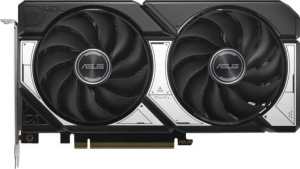
Asus Dual GeForce RTX 5060 Ti OC Edition 16GB
Nvidia GeForce RTX 5070 Ti

Asus Dual GeForce RTX 5060 Ti OC Edition 16GB Nvidia GeForce RTX 5070 Ti

Overview

Welcome to our in-depth specification comparison between the Asus Dual GeForce RTX 5060 Ti OC Edition 16GB and the Nvidia GeForce RTX 5070 Ti. Both cards share the same Blackwell architecture, GDDR7 memory, and a matching 16GB VRAM pool, making this a fascinating head-to-head within the same GPU generation. We put these two cards under the microscope, examining key battlegrounds like raw compute performance, memory bandwidth, power consumption, and physical dimensions to help you decide which one suits your needs.

Common Features

  • GPU memory speed is 1750 MHz on both products.
  • Both products support Double Precision Floating Point (DPFP).
  • Effective memory speed is 28000 MHz on both products.
  • Both products have 16GB of VRAM.
  • Both products use GDDR7 memory.
  • ECC memory support is available on both products.
  • Both products support DirectX 12 Ultimate.
  • OpenGL version is 4.6 on both products.
  • OpenCL version is 3 on both products.
  • Multi-display technology support is available on both products.
  • Ray tracing support is available on both products.
  • 3D support is available on both products.
  • DLSS support is available on both products.
  • XeSS (XMX) support is not available on either product.
  • Both products have one HDMI output running HDMI version 2.1b.
  • Both products have 3 DisplayPort outputs.
  • Neither product has USB-C, DVI, or mini DisplayPort outputs.
  • Both products are built on the Blackwell GPU architecture.
  • Both products use PCIe version 5.
  • Both products are manufactured on a 5 nm semiconductor process.
  • Air-water cooling is not available on either product.

Main Differences

  • GPU clock speed is 2407 MHz on Asus Dual GeForce RTX 5060 Ti OC Edition 16GB and 2300 MHz on Nvidia GeForce RTX 5070 Ti.
  • GPU turbo speed is 2602 MHz on Asus Dual GeForce RTX 5060 Ti OC Edition 16GB and 2450 MHz on Nvidia GeForce RTX 5070 Ti.
  • Pixel rate is 124.9 GPixel/s on Asus Dual GeForce RTX 5060 Ti OC Edition 16GB and 235.2 GPixel/s on Nvidia GeForce RTX 5070 Ti.
  • Floating-point performance is 23.98 TFLOPS on Asus Dual GeForce RTX 5060 Ti OC Edition 16GB and 43.94 TFLOPS on Nvidia GeForce RTX 5070 Ti.
  • Texture rate is 374.7 GTexels/s on Asus Dual GeForce RTX 5060 Ti OC Edition 16GB and 686.6 GTexels/s on Nvidia GeForce RTX 5070 Ti.
  • Shading units number 4608 on Asus Dual GeForce RTX 5060 Ti OC Edition 16GB and 8960 on Nvidia GeForce RTX 5070 Ti.
  • Texture mapping units (TMUs) number 144 on Asus Dual GeForce RTX 5060 Ti OC Edition 16GB and 280 on Nvidia GeForce RTX 5070 Ti.
  • Render output units (ROPs) number 48 on Asus Dual GeForce RTX 5060 Ti OC Edition 16GB and 96 on Nvidia GeForce RTX 5070 Ti.
  • Maximum memory bandwidth is 448 GB/s on Asus Dual GeForce RTX 5060 Ti OC Edition 16GB and 896 GB/s on Nvidia GeForce RTX 5070 Ti.
  • Memory bus width is 128-bit on Asus Dual GeForce RTX 5060 Ti OC Edition 16GB and 256-bit on Nvidia GeForce RTX 5070 Ti.
  • Thermal Design Power (TDP) is 180W on Asus Dual GeForce RTX 5060 Ti OC Edition 16GB and 300W on Nvidia GeForce RTX 5070 Ti.
  • Number of transistors is 21900 million on Asus Dual GeForce RTX 5060 Ti OC Edition 16GB and 45600 million on Nvidia GeForce RTX 5070 Ti.
  • Width is 229 mm on Asus Dual GeForce RTX 5060 Ti OC Edition 16GB and 304 mm on Nvidia GeForce RTX 5070 Ti.
  • Height is 120 mm on Asus Dual GeForce RTX 5060 Ti OC Edition 16GB and 137 mm on Nvidia GeForce RTX 5070 Ti.
Specs Comparison
Asus Dual GeForce RTX 5060 Ti OC Edition 16GB

Asus Dual GeForce RTX 5060 Ti OC Edition 16GB

Nvidia GeForce RTX 5070 Ti

Nvidia GeForce RTX 5070 Ti

Performance:
GPU clock speed 2407 MHz 2300 MHz
GPU turbo 2602 MHz 2450 MHz
pixel rate 124.9 GPixel/s 235.2 GPixel/s
floating-point performance 23.98 TFLOPS 43.94 TFLOPS
texture rate 374.7 GTexels/s 686.6 GTexels/s
GPU memory speed 1750 MHz 1750 MHz
shading units 4608 8960
texture mapping units (TMUs) 144 280
render output units (ROPs) 48 96
Has Double Precision Floating Point (DPFP)

At first glance, the Asus RTX 5060 Ti OC appears competitive on clock speed alone, running a base of 2407 MHz and boosting to 2602 MHz — meaningfully higher than the RTX 5070 Ti's 2300/2450 MHz. However, raw clock speed is only one dimension of GPU performance. The far more telling story is in the shader and compute resources: the 5070 Ti fields 8960 shading units, 280 TMUs, and 96 ROPs, compared to the 5060 Ti OC's 4608, 144, and 48 respectively — nearly a 2× advantage across the board. This means the 5070 Ti can process roughly twice as many parallel workloads per clock cycle, which clock speed differences of ~6% cannot compensate for.

That hardware gap translates directly into the headline compute figures. The 5070 Ti delivers 43.94 TFLOPS of floating-point performance versus 23.98 TFLOPS on the 5060 Ti OC — an 83% lead. Similarly, its texture rate of 686.6 GTexels/s and pixel rate of 235.2 GPixel/s are roughly 1.8× higher, meaning the 5070 Ti can fill frames with more geometric and texture detail significantly faster. In real-world terms, this gap matters most at higher resolutions (1440p and 4K), in heavily tessellated scenes, and in GPU compute tasks like ray tracing or AI-accelerated rendering. Both cards share an identical 1750 MHz memory speed and both support Double Precision Floating Point, so those factors do not differentiate them here.

The performance edge in this group belongs decisively to the RTX 5070 Ti. The 5060 Ti OC's higher clock speeds offer a modest uplift that is entirely eclipsed by the 5070 Ti's substantially larger execution architecture. Unless power consumption or price-per-frame factors (not covered in this group) shift the calculus, the 5070 Ti is the clear winner on raw GPU performance.
Memory:
effective memory speed 28000 MHz 28000 MHz
maximum memory bandwidth 448 GB/s 896 GB/s
VRAM 16GB 16GB
GDDR version GDDR7 GDDR7
memory bus width 128-bit 256-bit
Supports ECC memory

Both the Asus Dual GeForce RTX 5060 Ti OC Edition 16GB and the Nvidia GeForce RTX 5070 Ti feature the same effective memory speed of 28000 MHz and use the same GDDR7 memory type. Both products are also equipped with 16GB of VRAM and support ECC memory.

However, there are notable differences in memory bandwidth and memory bus width. The 5060 Ti has a maximum memory bandwidth of 448 GB/s, whereas the 5070 Ti boasts a significantly higher bandwidth of 896 GB/s. Additionally, the 5060 Ti utilizes a 128-bit memory bus width, while the 5070 Ti features a wider 256-bit memory bus.

In summary, while both cards share some common features, the 5070 Ti has a clear advantage in terms of memory bandwidth and bus width, which could lead to better performance in memory-intensive tasks.

Features:
DirectX version DirectX 12 Ultimate DirectX 12 Ultimate
OpenGL version 4.6 4.6
OpenCL version 3 3
Supports multi-display technology
supports ray tracing
Supports 3D
supports DLSS
has XeSS (XMX)
AMD SAM / Intel Resizable BAR Intel Resizable BAR Intel Resizable BAR
has LHR
has RGB lighting
supported displays 4 4

The Asus Dual GeForce RTX 5060 Ti OC Edition 16GB and the Nvidia GeForce RTX 5070 Ti share many features in common. Both support DirectX 12 Ultimate, OpenGL 4.6, and OpenCL 3. Additionally, both cards support multi-display technology, ray tracing, 3D, and DLSS, making them capable of delivering immersive visual experiences. They also both have Intel Resizable BAR support and do not feature LHR (Lite Hash Rate) limitations.

In terms of design features, both cards lack RGB lighting and XeSS (XMX) support. Both models can support up to four displays, offering ample multi-monitor configurations for users who need extended display setups.

Overall, the Asus Dual GeForce RTX 5060 Ti and the Nvidia GeForce RTX 5070 Ti are closely matched in their feature sets, offering similar support for key technologies and display configurations.

Ports:
has an HDMI output
HDMI ports 1 1
HDMI version HDMI 2.1b HDMI 2.1b
DisplayPort outputs 3 3
USB-C ports 0 0
DVI outputs 0 0
mini DisplayPort outputs 0 0

The Asus Dual GeForce RTX 5060 Ti OC Edition 16GB and the Nvidia GeForce RTX 5070 Ti offer nearly identical port configurations. Both models feature one HDMI output with HDMI 2.1b support, three DisplayPort outputs, and no USB-C ports, DVI outputs, or mini DisplayPort outputs.

In summary, both products provide the same connectivity options, making them well-suited for a range of display setups, but they do not include USB-C or DVI ports.

General info:
GPU architecture Blackwell Blackwell
release date April 2025 January 2025
Thermal Design Power (TDP) 180W 300W
PCI Express (PCIe) version 5 5
semiconductor size 5 nm 5 nm
number of transistors 21900 million 45600 million
Has air-water cooling
width 229 mm 304 mm
height 120 mm 137 mm

Both the Asus Dual GeForce RTX 5060 Ti OC Edition 16GB and the Nvidia GeForce RTX 5070 Ti use the Blackwell GPU architecture and share the same 5 nm semiconductor size. Both cards are compatible with PCI Express 5.0. However, there are differences in other specifications. The 5060 Ti has a Thermal Design Power (TDP) of 180W, while the 5070 Ti has a much higher TDP of 300W, indicating it may require more power and cooling.

The number of transistors in the two cards also differs significantly. The 5060 Ti has 21.9 billion transistors, whereas the 5070 Ti doubles that with 45.6 billion transistors. In terms of physical size, the 5060 Ti is 229 mm wide and 120 mm tall, while the 5070 Ti is larger, measuring 304 mm in width and 137 mm in height.

Both cards do not feature air-water cooling systems, but the larger size of the 5070 Ti may contribute to better thermal handling despite the higher TDP.

Comparison Summary & Verdict

After examining all available specifications, a clear picture emerges for each GPU. The Nvidia GeForce RTX 5070 Ti is the undisputed powerhouse of this matchup, offering roughly double the shading units, a vastly superior 896 GB/s memory bandwidth via its 256-bit bus, and nearly twice the floating-point performance at 43.94 TFLOPS. It is the right choice for enthusiasts and professionals who demand maximum rendering throughput and future-proof headroom. The Asus Dual GeForce RTX 5060 Ti OC Edition 16GB, on the other hand, offers a compelling alternative for budget-conscious builders: it runs on a leaner 180W TDP, occupies significantly less physical space, and still delivers the same 16GB GDDR7 VRAM with full feature parity including ray tracing and DLSS support. Both cards share identical connectivity and software feature sets, so the decision ultimately comes down to performance ambition versus efficiency and cost.

Asus Dual GeForce RTX 5060 Ti OC Edition 16GB
Buy Asus Dual GeForce RTX 5060 Ti OC Edition 16GB if...

Buy the Asus Dual GeForce RTX 5060 Ti OC Edition 16GB if you want a compact, power-efficient GPU with a low 180W TDP and full GDDR7 16GB VRAM without the bulk or power demands of a flagship card.

Nvidia GeForce RTX 5070 Ti
Buy Nvidia GeForce RTX 5070 Ti if...

Buy the Nvidia GeForce RTX 5070 Ti if you need maximum GPU performance, with nearly double the shading units, 896 GB/s memory bandwidth, and 43.94 TFLOPS of floating-point power for demanding workloads and high-end gaming.