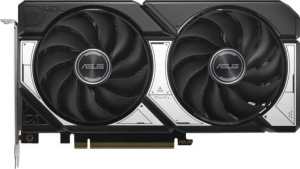
Asus Dual GeForce RTX 5060 Ti OC Edition 16GB
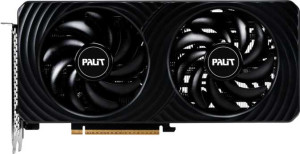
Palit GeForce RTX 5060 Ti Dual OC 8GB

Asus Dual GeForce RTX 5060 Ti OC Edition 16GB Palit GeForce RTX 5060 Ti Dual OC 8GB

Overview

Welcome to our detailed spec comparison between the Asus Dual GeForce RTX 5060 Ti OC Edition 16GB and the Palit GeForce RTX 5060 Ti Dual OC 8GB. Both cards are rooted in the same Blackwell architecture and share a broad set of features, yet they diverge in meaningful ways across VRAM capacity, boost clock speeds, physical dimensions, and aesthetics. Read on to discover which card aligns best with your priorities and use case.

Common Features

  • Both cards share a base GPU clock speed of 2407 MHz.
  • Both cards have a GPU memory speed of 1750 MHz.
  • Both cards feature 4608 shading units.
  • Both cards include 144 texture mapping units (TMUs).
  • Both cards have 48 render output units (ROPs).
  • Double Precision Floating Point (DPFP) support is available on both cards.
  • Both cards use GDDR7 memory.
  • Both cards have an effective memory speed of 28000 MHz.
  • Both cards offer a maximum memory bandwidth of 448 GB/s.
  • Both cards use a 128-bit memory bus width.
  • ECC memory support is available on both cards.
  • Both cards support DirectX 12 Ultimate.
  • Both cards support OpenGL version 4.6.
  • Both cards support OpenCL version 3.
  • Multi-display technology support is available on both cards.
  • Ray tracing support is available on both cards.
  • 3D support is available on both cards.
  • DLSS support is available on both cards.
  • XeSS (XMX) support is not available on either card.
  • Both cards include 1 HDMI port with HDMI 2.1b.
  • Both cards feature 3 DisplayPort outputs.
  • Neither card has USB-C, DVI, or mini DisplayPort outputs.
  • Both cards are built on the Blackwell GPU architecture.
  • Both cards have a Thermal Design Power (TDP) of 180W.
  • Both cards use PCIe version 5.
  • Both cards are manufactured on a 5 nm semiconductor process.
  • Both cards contain 21900 million transistors.
  • Neither card features air-water cooling.

Main Differences

  • GPU turbo clock speed is 2602 MHz on Asus Dual GeForce RTX 5060 Ti OC Edition 16GB and 2632 MHz on Palit GeForce RTX 5060 Ti Dual OC 8GB.
  • Pixel rate is 124.9 GPixel/s on Asus Dual GeForce RTX 5060 Ti OC Edition 16GB and 126.3 GPixel/s on Palit GeForce RTX 5060 Ti Dual OC 8GB.
  • Floating-point performance is 23.98 TFLOPS on Asus Dual GeForce RTX 5060 Ti OC Edition 16GB and 24.26 TFLOPS on Palit GeForce RTX 5060 Ti Dual OC 8GB.
  • Texture rate is 374.7 GTexels/s on Asus Dual GeForce RTX 5060 Ti OC Edition 16GB and 379 GTexels/s on Palit GeForce RTX 5060 Ti Dual OC 8GB.
  • VRAM is 16GB on Asus Dual GeForce RTX 5060 Ti OC Edition 16GB and 8GB on Palit GeForce RTX 5060 Ti Dual OC 8GB.
  • RGB lighting is present on Palit GeForce RTX 5060 Ti Dual OC 8GB but not available on Asus Dual GeForce RTX 5060 Ti OC Edition 16GB.
  • Card width is 229 mm on Asus Dual GeForce RTX 5060 Ti OC Edition 16GB and 262.1 mm on Palit GeForce RTX 5060 Ti Dual OC 8GB.
  • Card height is 120 mm on Asus Dual GeForce RTX 5060 Ti OC Edition 16GB and 126.3 mm on Palit GeForce RTX 5060 Ti Dual OC 8GB.
Specs Comparison
Asus Dual GeForce RTX 5060 Ti OC Edition 16GB

Asus Dual GeForce RTX 5060 Ti OC Edition 16GB

Palit GeForce RTX 5060 Ti Dual OC 8GB

Palit GeForce RTX 5060 Ti Dual OC 8GB

Performance:
GPU clock speed 2407 MHz 2407 MHz
GPU turbo 2602 MHz 2632 MHz
pixel rate 124.9 GPixel/s 126.3 GPixel/s
floating-point performance 23.98 TFLOPS 24.26 TFLOPS
texture rate 374.7 GTexels/s 379 GTexels/s
GPU memory speed 1750 MHz 1750 MHz
shading units 4608 4608
texture mapping units (TMUs) 144 144
render output units (ROPs) 48 48
Has Double Precision Floating Point (DPFP)

At their core, the Asus Dual RTX 5060 Ti OC and the Palit RTX 5060 Ti Dual OC share identical GPU architectures: the same 4608 shading units, 144 TMUs, 48 ROPs, and a base clock of 2407 MHz. This means both cards draw from exactly the same pool of raw compute hardware, and neither has a structural advantage in parallelism or throughput potential.

The only differentiator within this group is the boost clock. The Palit card turbos to 2632 MHz versus the Asus at 2602 MHz — a gap of 30 MHz, or roughly 1.15%. This modest frequency advantage flows directly into every derived metric: the Palit edges ahead with 24.26 TFLOPS of floating-point performance versus 23.98 TFLOPS, a 379 GTexels/s texture rate versus 374.7 GTexels/s, and a 126.3 GPixel/s pixel rate versus 124.9 GPixel/s. In practice, a ~1% clock advantage translates to differences that fall well within benchmark noise — no user will perceive this gap in real workloads.

On raw GPU performance, the Palit RTX 5060 Ti Dual OC holds a marginal technical edge courtesy of its higher boost clock, but the advantage is so slim that it should carry virtually no weight in a purchase decision. Both cards support Double Precision Floating Point, though at this tier DPFP is rarely a practical factor. For performance alone, these two cards are effectively tied.

Memory:
effective memory speed 28000 MHz 28000 MHz
maximum memory bandwidth 448 GB/s 448 GB/s
VRAM 16GB 8GB
GDDR version GDDR7 GDDR7
memory bus width 128-bit 128-bit
Supports ECC memory

The memory subsystem of these two cards is built on an identical foundation: both use GDDR7 memory running at an effective 28000 MHz across a 128-bit bus, delivering 448 GB/s of bandwidth. That is a strong result for a 128-bit interface — GDDR7's efficiency per pin is a genuine generational leap — and both cards benefit equally from it.

Where they sharply diverge is capacity. The Asus Dual RTX 5060 Ti OC carries 16GB of VRAM, exactly double the 8GB on the Palit Dual OC. This distinction matters far more than the bandwidth tie suggests. At 1440p and especially 4K, modern games, texture packs, and AI-accelerated workloads are increasingly pushing past the 8GB threshold. A card that runs out of VRAM is forced to spill data to system RAM, causing severe stuttering and frame time spikes that no amount of GPU clock speed can compensate for. The Asus card's larger buffer provides meaningful headroom against this scenario today and considerably better longevity as VRAM demands continue to climb.

For memory, the Asus Dual RTX 5060 Ti OC Edition 16GB holds a clear and significant advantage. The doubled VRAM capacity is the single most impactful differentiator in this group — buyers targeting high-resolution gaming, modded titles, or creative workloads should weigh this heavily.

Features:
DirectX version DirectX 12 Ultimate DirectX 12 Ultimate
OpenGL version 4.6 4.6
OpenCL version 3 3
Supports multi-display technology
supports ray tracing
Supports 3D
supports DLSS
has XeSS (XMX)
AMD SAM / Intel Resizable BAR Intel Resizable BAR Intel Resizable BAR
has LHR
has RGB lighting
supported displays 4 4

From a feature standpoint, these two cards are nearly carbon copies of one another. Both support DirectX 12 Ultimate, ray tracing, and DLSS — the triad that defines the modern GeForce feature set — along with Intel Resizable BAR, up to 4 simultaneous displays, and identical API support across OpenGL and OpenCL. Neither carries LHR restrictions, and neither supports XeSS, which is expected given these are NVIDIA cards.

The only concrete differentiator in this group is aesthetics: the Palit RTX 5060 Ti Dual OC includes RGB lighting, while the Asus Dual OC does not. For builders who care about case aesthetics or themed setups, this is a genuine, if purely cosmetic, distinction. For those indifferent to lighting, it is entirely irrelevant to the card's functional capability.

On features, these cards are effectively tied for any use case that matters functionally. The Palit holds a minor edge for aesthetics-conscious buyers thanks to its RGB lighting, but no advantage exists in software capabilities, API support, or display connectivity. The decision here comes down entirely to personal preference on looks.

Ports:
has an HDMI output
HDMI ports 1 1
HDMI version HDMI 2.1b HDMI 2.1b
DisplayPort outputs 3 3
USB-C ports 0 0
DVI outputs 0 0
mini DisplayPort outputs 0 0

Port selection is an exact match between these two cards. Both offer 3 DisplayPort outputs and 1 HDMI 2.1b port, totalling four display connections — consistent with the four-display limit noted in their feature specs. There are no USB-C, DVI, or mini DisplayPort outputs on either card.

The quality of these ports is worth noting: HDMI 2.1b supports up to 4K at high refresh rates and 8K output, while DisplayPort at this generation handles demanding multi-monitor and high-refresh setups comfortably. The three DisplayPort outputs make either card a capable choice for triple-monitor configurations without adapters.

This group is a complete tie — every port type, count, and version is identical across both cards. Connectivity plays no role in differentiating the Asus Dual RTX 5060 Ti OC and the Palit RTX 5060 Ti Dual OC.

General info:
GPU architecture Blackwell Blackwell
release date April 2025 April 2025
Thermal Design Power (TDP) 180W 180W
PCI Express (PCIe) version 5 5
semiconductor size 5 nm 5 nm
number of transistors 21900 million 21900 million
Has air-water cooling
width 229 mm 262.1 mm
height 120 mm 126.3 mm

Underneath, these two cards are built from the same silicon: identical Blackwell architecture, a 5nm manufacturing process, 21,900 million transistors, a 180W TDP, and PCIe 5.0 connectivity. The shared TDP is particularly relevant — both cards draw the same power under load, meaning neither has a thermal or efficiency advantage at the platform level.

Physical dimensions are where a meaningful practical difference emerges. The Asus Dual RTX 5060 Ti OC measures 229 mm × 120 mm, while the Palit Dual OC is noticeably larger at 262.1 mm × 126.3 mm — roughly 33mm longer and 6mm taller. That size gap matters in compact or mid-tower builds where GPU clearance is tight. The Asus card's smaller footprint gives it a genuine compatibility advantage for space-constrained cases, without any trade-off in power consumption or architecture.

For general platform fundamentals — power, process, and silicon — these cards are identical. The edge in this group goes to the Asus Dual RTX 5060 Ti OC purely on physical size: its more compact dimensions make it the more flexible option for smaller chassis, and buyers with tight cases should factor this in.

Comparison Summary & Verdict

At their core, the Asus Dual GeForce RTX 5060 Ti OC Edition 16GB and the Palit GeForce RTX 5060 Ti Dual OC 8GB are closely matched siblings, sharing the same Blackwell architecture, 180W TDP, 128-bit memory bus, and a full feature set including ray tracing and DLSS. The decisive differentiator is VRAM: the Asus card offers a substantial 16GB, making it the clear pick for users tackling memory-intensive workloads, high-resolution textures, or those future-proofing their setup. The Palit card counters with a slightly higher GPU turbo clock of 2632 MHz, marginally better raw throughput figures, the addition of RGB lighting, and a more compact footprint at just 229 mm wide. If raw memory capacity is your top concern, the Asus wins outright. If you value a touch more clock speed, visual flair, and a smaller card, the Palit Dual OC 8GB is the more compelling choice.

Asus Dual GeForce RTX 5060 Ti OC Edition 16GB
Buy Asus Dual GeForce RTX 5060 Ti OC Edition 16GB if...

Buy the Asus Dual GeForce RTX 5060 Ti OC Edition 16GB if you need the generous headroom of 16GB VRAM for memory-intensive gaming, high-resolution textures, or long-term future-proofing.

Palit GeForce RTX 5060 Ti Dual OC 8GB
Buy Palit GeForce RTX 5060 Ti Dual OC 8GB if...

Buy the Palit GeForce RTX 5060 Ti Dual OC 8GB if you prefer a marginally higher boost clock, RGB lighting, and a more compact card size, and 8GB of VRAM is sufficient for your workload.