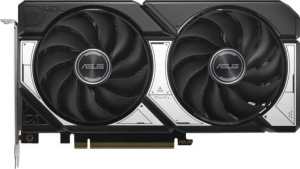
Asus Dual GeForce RTX 5060 Ti OC Edition 16GB
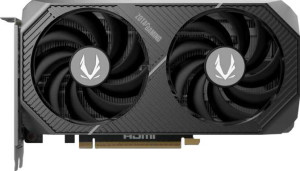
Zotac Gaming GeForce RTX 5060 Ti Twin Edge 16GB

Asus Dual GeForce RTX 5060 Ti OC Edition 16GB Zotac Gaming GeForce RTX 5060 Ti Twin Edge 16GB

Overview

When two graphics cards share the same Blackwell architecture, 16GB of GDDR7 memory, and an identical feature set including ray tracing and DLSS support, the differences come down to the finer details. In this head-to-head between the Asus Dual GeForce RTX 5060 Ti OC Edition 16GB and the Zotac Gaming GeForce RTX 5060 Ti Twin Edge 16GB, we put their GPU boost clocks, calculated performance metrics, and physical dimensions under the microscope to help you decide which card belongs in your build.

Common Features

  • Both cards share a base GPU clock speed of 2407 MHz.
  • Both cards have a GPU memory speed of 1750 MHz.
  • Both cards feature 4608 shading units.
  • Both cards have 144 texture mapping units (TMUs).
  • Both cards have 48 render output units (ROPs).
  • Double Precision Floating Point (DPFP) is supported on both cards.
  • Both cards have an effective memory speed of 28000 MHz.
  • Both cards offer a maximum memory bandwidth of 448 GB/s.
  • Both cards come with 16GB of VRAM.
  • Both cards use GDDR7 memory.
  • Both cards have a 128-bit memory bus width.
  • ECC memory is supported on both cards.
  • Both cards support DirectX 12 Ultimate.
  • Both cards support OpenGL version 4.6.
  • Both cards support OpenCL version 3.
  • Multi-display technology is supported on both cards.
  • Ray tracing is supported on both cards.
  • DLSS is supported on both cards.
  • 3D support is available on both cards.
  • XeSS (XMX) support is not available on either card.
  • Both cards have one HDMI 2.1b output and three DisplayPort outputs.
  • Neither card has USB-C or DVI outputs.
  • Both cards are built on the Blackwell GPU architecture.
  • Both cards have a Thermal Design Power (TDP) of 180W.
  • Both cards use PCIe version 5.
  • Both cards are manufactured on a 5 nm semiconductor process.
  • Both cards contain 21900 million transistors.
  • Air-water cooling is not available on either card.
  • Both cards share the same height of approximately 120 mm.

Main Differences

  • GPU turbo clock speed is 2602 MHz on Asus Dual GeForce RTX 5060 Ti OC Edition 16GB and 2572 MHz on Zotac Gaming GeForce RTX 5060 Ti Twin Edge 16GB.
  • Pixel rate is 124.9 GPixel/s on Asus Dual GeForce RTX 5060 Ti OC Edition 16GB and 123.5 GPixel/s on Zotac Gaming GeForce RTX 5060 Ti Twin Edge 16GB.
  • Floating-point performance is 23.98 TFLOPS on Asus Dual GeForce RTX 5060 Ti OC Edition 16GB and 23.7 TFLOPS on Zotac Gaming GeForce RTX 5060 Ti Twin Edge 16GB.
  • Texture rate is 374.7 GTexels/s on Asus Dual GeForce RTX 5060 Ti OC Edition 16GB and 370.4 GTexels/s on Zotac Gaming GeForce RTX 5060 Ti Twin Edge 16GB.
  • Card width is 229 mm on Asus Dual GeForce RTX 5060 Ti OC Edition 16GB and 220.5 mm on Zotac Gaming GeForce RTX 5060 Ti Twin Edge 16GB.
  • Card height is 120 mm on Asus Dual GeForce RTX 5060 Ti OC Edition 16GB and 120.3 mm on Zotac Gaming GeForce RTX 5060 Ti Twin Edge 16GB.
Specs Comparison
Asus Dual GeForce RTX 5060 Ti OC Edition 16GB

Asus Dual GeForce RTX 5060 Ti OC Edition 16GB

Zotac Gaming GeForce RTX 5060 Ti Twin Edge 16GB

Zotac Gaming GeForce RTX 5060 Ti Twin Edge 16GB

Performance:
GPU clock speed 2407 MHz 2407 MHz
GPU turbo 2602 MHz 2572 MHz
pixel rate 124.9 GPixel/s 123.5 GPixel/s
floating-point performance 23.98 TFLOPS 23.7 TFLOPS
texture rate 374.7 GTexels/s 370.4 GTexels/s
GPU memory speed 1750 MHz 1750 MHz
shading units 4608 4608
texture mapping units (TMUs) 144 144
render output units (ROPs) 48 48
Has Double Precision Floating Point (DPFP)

At their core, both the Asus Dual RTX 5060 Ti OC and the Zotac Gaming RTX 5060 Ti Twin Edge share identical silicon foundations: the same 2407 MHz base clock, 4608 shading units, 144 TMUs, 48 ROPs, and 1750 MHz memory speed. This means both cards draw from the same theoretical well of raw compute resources, and neither has a structural advantage in shader throughput or memory bandwidth at the hardware level.

The sole differentiator within this group is the GPU boost clock — and the gap, while real, is modest. The Asus card boosts to 2602 MHz versus the Zotac's 2572 MHz, a 30 MHz difference. This translates directly into the small leads the Asus holds in floating-point performance (23.98 TFLOPS vs 23.7 TFLOPS), texture rate (374.7 GTexels/s vs 370.4 GTexels/s), and pixel fill rate (124.9 vs 123.5 GPixel/s). In practice, a ~1.2% clock advantage rarely produces measurable frame rate differences in real workloads, as games are typically bottlenecked by memory bandwidth, driver overhead, or the CPU before such a gap becomes visible.

The Asus Dual OC Edition holds a narrow but clear performance edge on paper, courtesy of its factory overclock. However, the practical real-world impact is negligible for gaming. If clock speed is the deciding factor, the Asus wins this group — but for most users, these two cards are effectively performance-identical.

Memory:
effective memory speed 28000 MHz 28000 MHz
maximum memory bandwidth 448 GB/s 448 GB/s
VRAM 16GB 16GB
GDDR version GDDR7 GDDR7
memory bus width 128-bit 128-bit
Supports ECC memory

When it comes to memory, these two cards are mirror images of each other in every measurable way. Both feature 16GB of GDDR7 running at an effective 28000 MHz across a 128-bit bus, delivering 448 GB/s of bandwidth. GDDR7 is a meaningful generational step over GDDR6X — offering higher data rates at lower power — so both cards benefit equally from that architectural uplift without either holding an exclusive advantage.

The 128-bit bus width is worth contextualizing: in isolation it sounds narrow compared to higher-tier GPUs, but paired with GDDR7's fast clock speeds, it produces bandwidth figures that comfortably support 1080p and 1440p workloads. The 16GB frame buffer is the real headline here — it ensures neither card will struggle with high-resolution texture packs, VRAM-hungry titles, or AI-assisted features like DLSS that increasingly consume local memory. ECC memory support is also present on both, a useful reliability feature for creators or prosumer workloads running on consumer hardware.

This group is a complete tie. Every single memory specification — capacity, type, speed, bandwidth, bus width, and ECC support — is identical between the Asus Dual OC and the Zotac Twin Edge. Memory cannot be a deciding factor in this comparison.

Features:
DirectX version DirectX 12 Ultimate DirectX 12 Ultimate
OpenGL version 4.6 4.6
OpenCL version 3 3
Supports multi-display technology
supports ray tracing
Supports 3D
supports DLSS
has XeSS (XMX)
AMD SAM / Intel Resizable BAR Intel Resizable BAR Intel Resizable BAR
has LHR
has RGB lighting
supported displays 4 4

Feature parity is total here. Both cards support DirectX 12 Ultimate — the current gold standard for modern gaming APIs, enabling hardware-accelerated ray tracing, mesh shaders, and variable rate shading — alongside OpenGL 4.6 and OpenCL 3, which matter for creative and compute workloads. Neither card is behind the other in any API compatibility dimension.

On the gaming technology side, both support ray tracing and DLSS, the latter being particularly significant: DLSS uses AI-based upscaling to deliver higher frame rates with minimal visual quality loss, and it remains one of the most impactful real-world performance features available on any GPU. Both cards also support Intel Resizable BAR, which allows the CPU to access the full GPU frame buffer simultaneously — a feature that can produce modest but genuine frame rate gains in supported titles. The absence of LHR (Lite Hash Rate) on both is a non-issue for gamers and simply reflects current-generation hardware norms.

Much like the memory group, features produce a complete tie. Every capability — from display API support and ray tracing to multi-display output across 4 screens — is identical between the Asus Dual OC and the Zotac Twin Edge. No feature exclusive to either card exists in this data set, so buyer preference must rest on other groups.

Ports:
has an HDMI output
HDMI ports 1 1
HDMI version HDMI 2.1b HDMI 2.1b
DisplayPort outputs 3 3
USB-C ports 0 0
DVI outputs 0 0
mini DisplayPort outputs 0 0

Connectivity is straightforward and identical on both cards. Each offers a layout of 3 DisplayPort outputs and 1 HDMI 2.1b port, totaling four display outputs — which aligns with the four supported displays noted in the features group. For the vast majority of users, including those running multi-monitor setups, this is more than sufficient.

The HDMI version is worth noting: HDMI 2.1b supports up to 10K resolution, high frame rate 4K output, and Variable Refresh Rate (VRR), making it fully capable of driving modern high-end displays and TVs without a bottleneck at the cable level. The triple DisplayPort configuration is equally capable, giving users flexible options for mixing monitor types. The absence of USB-C is the one thing productivity-focused users might notice — it rules out direct connection to USB-C monitors without an adapter — but this is consistent across both cards and typical for this product tier.

Ports result in another complete tie. The Asus Dual OC and the Zotac Twin Edge have an identical port layout down to the version number, leaving no distinction between them on connectivity grounds.

General info:
GPU architecture Blackwell Blackwell
release date April 2025 April 2025
Thermal Design Power (TDP) 180W 180W
PCI Express (PCIe) version 5 5
semiconductor size 5 nm 5 nm
number of transistors 21900 million 21900 million
Has air-water cooling
width 229 mm 220.5 mm
height 120 mm 120.3 mm

Underneath their respective coolers, these two cards are built on identical silicon: both use the Blackwell architecture fabricated on a 5 nm process with 21.9 billion transistors, and both connect via PCIe 5.0. The 5 nm node is significant — it enables higher transistor density and better power efficiency compared to previous generations, which is part of why both cards operate within a 180W TDP. That is a moderate power envelope for a card at this performance tier, meaning neither should demand exotic PSU headroom or produce excessive heat under typical gaming loads.

The only tangible difference in this group is physical size. The Asus Dual OC measures 229 mm in length, while the Zotac Twin Edge is marginally more compact at 220.5 mm. That roughly 8.5 mm difference is small in absolute terms, but it can matter in tighter cases — particularly Mini-ITX or compact Micro-ATX builds where clearance between the GPU end and a front panel or drive cage is limited. Both cards share the same 120 mm height, so slot and bracket compatibility is equal.

For most mid-tower and full-tower builds, the size difference is irrelevant, and this group is effectively a tie on all meaningful technical dimensions. However, if case clearance is a genuine concern, the Zotac Twin Edge holds a mild physical advantage by virtue of its slightly shorter footprint.

Comparison Summary & Verdict

Both the Asus Dual GeForce RTX 5060 Ti OC Edition 16GB and the Zotac Gaming GeForce RTX 5060 Ti Twin Edge 16GB share the same core DNA: identical 16GB GDDR7 memory, a 128-bit bus, 4608 shading units, a 180W TDP, and full support for ray tracing and DLSS. The Asus card takes a measurable lead with a higher GPU turbo clock of 2602 MHz, translating into 23.98 TFLOPS of floating-point performance and a texture rate of 374.7 GTexels/s. For users who want to extract every last bit of throughput, the Asus is the stronger choice. The Zotac Twin Edge, with its 2572 MHz boost clock and slightly lower compute figures, trades a small performance margin for a more compact 220.5 mm card width, making it a better fit for builds where physical clearance is a concern. Both cards are otherwise equal in connectivity, features, and memory capability, so your decision ultimately hinges on clock speed priority versus case compatibility.

Asus Dual GeForce RTX 5060 Ti OC Edition 16GB
Buy Asus Dual GeForce RTX 5060 Ti OC Edition 16GB if...

Buy the Asus Dual GeForce RTX 5060 Ti OC Edition 16GB if you want the higher GPU turbo clock of 2602 MHz and the best floating-point performance of the two cards.

Zotac Gaming GeForce RTX 5060 Ti Twin Edge 16GB
Buy Zotac Gaming GeForce RTX 5060 Ti Twin Edge 16GB if...

Buy the Zotac Gaming GeForce RTX 5060 Ti Twin Edge 16GB if you need a more compact card, as its 220.5 mm width is noticeably narrower than the Asus model.