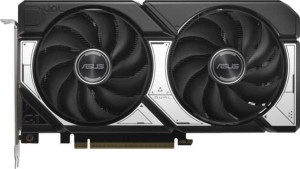
Asus Dual GeForce RTX 5060 Ti OC Edition 8GB
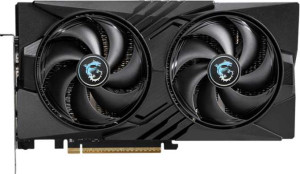
MSI GeForce RTX 5060 Gaming OC

Asus Dual GeForce RTX 5060 Ti OC Edition 8GB MSI GeForce RTX 5060 Gaming OC

Common Features

  • Both products have 8GB of VRAM.
  • Both products use GDDR7 memory.
  • Both products have a memory bus width of 128-bit.
  • Both products support ECC memory.
  • Both products support DirectX 12 Ultimate.
  • Both products support OpenGL version 4.6.
  • Both products support OpenCL version 3.
  • Both products support multi-display technology.
  • Both products support ray tracing.
  • Both products support 3D.
  • Both products support DLSS.
  • Both products have HDMI 2.1b outputs.
  • Both products have one HDMI port.
  • Both products have three DisplayPort outputs.
  • Both products have no USB-C ports.
  • Both products have no DVI outputs.
  • Both products have no mini DisplayPort outputs.
  • Both products are built on the Blackwell GPU architecture.
  • Both products use PCI Express version 5.
  • Both products are built on a 5 nm semiconductor.

Main Differences

  • GPU clock speed is 2407 MHz on Asus Dual GeForce RTX 5060 Ti OC Edition 8GB and 2280 MHz on MSI GeForce RTX 5060 Gaming OC.
  • GPU turbo is 2602 MHz on Asus Dual GeForce RTX 5060 Ti OC Edition 8GB and 2625 MHz on MSI GeForce RTX 5060 Gaming OC.
  • Pixel rate is 124.9 GPixel/s on Asus Dual GeForce RTX 5060 Ti OC Edition 8GB and 126 GPixel/s on MSI GeForce RTX 5060 Gaming OC.
  • Floating-point performance is 23.98 TFLOPS on Asus Dual GeForce RTX 5060 Ti OC Edition 8GB and 20.16 TFLOPS on MSI GeForce RTX 5060 Gaming OC.
  • Texture rate is 374.7 GTexels/s on Asus Dual GeForce RTX 5060 Ti OC Edition 8GB and 315 GTexels/s on MSI GeForce RTX 5060 Gaming OC.
  • Shading units are 4608 on Asus Dual GeForce RTX 5060 Ti OC Edition 8GB and 3840 on MSI GeForce RTX 5060 Gaming OC.
  • Texture mapping units (TMUs) are 144 on Asus Dual GeForce RTX 5060 Ti OC Edition 8GB and 120 on MSI GeForce RTX 5060 Gaming OC.
  • RGB lighting is not available on Asus Dual GeForce RTX 5060 Ti OC Edition 8GB but is available on MSI GeForce RTX 5060 Gaming OC.
  • Thermal Design Power (TDP) is 180W on Asus Dual GeForce RTX 5060 Ti OC Edition 8GB and 145W on MSI GeForce RTX 5060 Gaming OC.
  • The width is 229 mm on Asus Dual GeForce RTX 5060 Ti OC Edition 8GB and 248 mm on MSI GeForce RTX 5060 Gaming OC.
  • The height is 120 mm on Asus Dual GeForce RTX 5060 Ti OC Edition 8GB and 135 mm on MSI GeForce RTX 5060 Gaming OC.
Specs Comparison
Asus Dual GeForce RTX 5060 Ti OC Edition 8GB

Asus Dual GeForce RTX 5060 Ti OC Edition 8GB

MSI GeForce RTX 5060 Gaming OC

MSI GeForce RTX 5060 Gaming OC

Performance:
GPU clock speed 2407 MHz 2280 MHz
GPU turbo 2602 MHz 2625 MHz
pixel rate 124.9 GPixel/s 126 GPixel/s
floating-point performance 23.98 TFLOPS 20.16 TFLOPS
texture rate 374.7 GTexels/s 315 GTexels/s
GPU memory speed 1750 MHz 1750 MHz
shading units 4608 3840
texture mapping units (TMUs) 144 120
render output units (ROPs) 48 48
Has Double Precision Floating Point (DPFP)

The Asus Dual GeForce RTX 5060 Ti OC Edition 8GB and MSI GeForce RTX 5060 Gaming OC have some notable differences in their performance specifications. Starting with GPU clock speed, the Asus model operates at 2407 MHz, while the MSI version runs at 2280 MHz, making the Asus slightly faster in base clock performance. However, when it comes to GPU turbo, the MSI GPU reaches a slightly higher turbo speed of 2625 MHz compared to the Asus's 2602 MHz.

In terms of pixel rate, the MSI GeForce RTX 5060 Gaming OC offers 126 GPixel/s, which is a small advantage over the Asus model's 124.9 GPixel/s. The Asus card shines with its higher floating-point performance of 23.98 TFLOPS, while the MSI card trails behind at 20.16 TFLOPS. This shows that the Asus model is capable of delivering more computational power in tasks requiring floating-point calculations.

Looking at the texture rate, the Asus card again leads with 374.7 GTexels/s, while the MSI card offers 315 GTexels/s, indicating the Asus card's superior ability to handle textures. Both cards feature the same GPU memory speed of 1750 MHz, as well as identical render output units (ROPs) at 48. The Asus also has an edge in shading units, with 4608 compared to the MSI's 3840. Lastly, both cards support Double Precision Floating Point (DPFP), indicating that neither product has a clear advantage in this regard.

Memory:
effective memory speed 28000 MHz 28000 MHz
maximum memory bandwidth 448 GB/s 448 GB/s
VRAM 8GB 8GB
GDDR version GDDR7 GDDR7
memory bus width 128-bit 128-bit
Supports ECC memory

When it comes to memory specifications, the Asus Dual GeForce RTX 5060 Ti OC Edition 8GB and MSI GeForce RTX 5060 Gaming OC are identical across the board. Both products feature an effective memory speed of 28000 MHz and a maximum memory bandwidth of 448 GB/s. They also both come with 8GB of VRAM, ensuring ample memory capacity for high-performance tasks.

Additionally, both cards use GDDR7 memory, which offers fast data transfer rates, and have a memory bus width of 128-bit, providing efficient data processing. Lastly, both the Asus and MSI models support Error-Correcting Code (ECC) memory, which helps prevent data corruption and ensures stable operation under heavy workloads.

Given these matching specifications, there is no difference in memory performance between the two cards in this category.

Features:
DirectX version DirectX 12 Ultimate DirectX 12 Ultimate
OpenGL version 4.6 4.6
OpenCL version 3 3
Supports multi-display technology
supports ray tracing
Supports 3D
supports DLSS
has XeSS (XMX)
AMD SAM / Intel Resizable BAR Intel Resizable BAR Intel Resizable BAR
has LHR
has RGB lighting
supported displays 4 4

The Asus Dual GeForce RTX 5060 Ti OC Edition 8GB and MSI GeForce RTX 5060 Gaming OC share a nearly identical feature set. Both cards support DirectX 12 Ultimate, OpenGL 4.6, and OpenCL 3, ensuring compatibility with the latest graphics and compute technologies. They also both support multi-display technology, ray tracing, and 3D, offering immersive visuals and advanced rendering features. Additionally, both models include DLSS support, enabling enhanced performance through AI-driven graphics.

In terms of unique features, both cards do not support XeSS (XMX) and share the same Intel Resizable BAR support, which helps with better utilization of system memory. Neither product has LHR (Lite Hash Rate) restrictions, which is beneficial for users concerned about mining limitations.

The only notable difference between the two cards is that the Asus model does not feature RGB lighting, while the MSI version does. Both cards support up to four displays, so there is no difference in multi-monitor capabilities.

Ports:
has an HDMI output
HDMI ports 1 1
HDMI version HDMI 2.1b HDMI 2.1b
DisplayPort outputs 3 3
USB-C ports 0 0
DVI outputs 0 0
mini DisplayPort outputs 0 0

The port configurations for the Asus Dual GeForce RTX 5060 Ti OC Edition 8GB and MSI GeForce RTX 5060 Gaming OC are identical. Both models feature one HDMI output with HDMI 2.1b support, offering high-bandwidth video and audio transfer capabilities. Each card also includes three DisplayPort outputs, providing ample connectivity for multiple monitors or high-resolution displays.

Neither card includes USB-C, DVI, or mini DisplayPort outputs, so there are no differences in these areas. The HDMI and DisplayPort output counts are the same for both products, making them very similar in terms of available ports and video output options.

Overall, both cards offer the same set of ports, ensuring compatibility with a variety of display setups without any significant differences between the two models.

General info:
GPU architecture Blackwell Blackwell
release date April 2025 May 2025
Thermal Design Power (TDP) 180W 145W
PCI Express (PCIe) version 5 5
semiconductor size 5 nm 5 nm
number of transistors 21900 million 21900 million
Has air-water cooling
width 229 mm 248 mm
height 120 mm 135 mm

The Asus Dual GeForce RTX 5060 Ti OC Edition 8GB and MSI GeForce RTX 5060 Gaming OC share several similarities and a few differences in their general specifications. Both products utilize the same GPU architecture, Blackwell, and feature a semiconductor size of 5 nm, which contributes to their efficient performance. Additionally, both cards are based on the same number of transistors, with 21,900 million transistors in each card, and both support PCI Express (PCIe) version 5 for high-speed data transfer.

The most notable difference between the two is their Thermal Design Power (TDP). The Asus model has a higher TDP of 180W, while the MSI model has a lower TDP of 145W. This means that the MSI card may generate less heat and require less power under load. In terms of size, the Asus card is slightly smaller, measuring 229 mm in width and 120 mm in height, compared to the MSI's 248 mm width and 135 mm height.

Both cards do not feature air-water cooling systems, and the number of transistors and semiconductor size remain identical. Overall, the differences mainly lie in the TDP and the physical dimensions of the cards, with the Asus being smaller and more power-efficient.

Comparison Summary

This is a specification comparison between Asus Dual GeForce RTX 5060 Ti OC Edition 8GB and MSI GeForce RTX 5060 Gaming OC. Both products feature 8GB of VRAM, DirectX 12 Ultimate support, and 28000 MHz effective memory speed. However, the GPU clock speed is 2407 MHz on the Asus model and 2280 MHz on the MSI model, while the GPU turbo is 2602 MHz on the Asus and 2625 MHz on the MSI. Additionally, the Asus card offers a higher floating-point performance of 23.98 TFLOPS, compared to 20.16 TFLOPS on the MSI. The Asus model also has a higher texture rate of 374.7 GTexels/s versus 315 GTexels/s on the MSI. The Asus card has no RGB lighting, whereas the MSI model includes it.