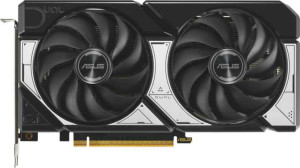
Asus Dual GeForce RTX 5060
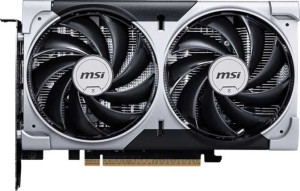
MSI GeForce RTX 5060 Ventus 2X OC

Asus Dual GeForce RTX 5060 MSI GeForce RTX 5060 Ventus 2X OC

Overview

Welcome to our in-depth specification comparison between the Asus Dual GeForce RTX 5060 and the MSI GeForce RTX 5060 Ventus 2X OC. Both cards are built on the same Blackwell architecture with identical memory configurations, yet they differ in key areas such as boost clock speeds, raw computational throughput, and physical dimensions. Read on to discover which of these RTX 5060 variants best suits your needs.

Common Features

  • Both products share a base GPU clock speed of 2280 MHz.
  • Both products have a GPU memory speed of 1750 MHz.
  • Both products feature 3840 shading units.
  • Both products include 120 texture mapping units (TMUs).
  • Both products have 48 render output units (ROPs).
  • Double Precision Floating Point (DPFP) is supported on both products.
  • Both products use GDDR7 memory with an effective speed of 28000 MHz.
  • Both products offer 8GB of VRAM.
  • Both products have a maximum memory bandwidth of 448 GB/s.
  • Both products use a 128-bit memory bus width.
  • ECC memory is supported on both products.
  • Both products are built on the Blackwell GPU architecture.
  • Both products have a Thermal Design Power (TDP) of 145W.
  • Both products use a 5 nm semiconductor process.
  • Both products contain 21900 million transistors.
  • Both products support PCIe version 5.
  • Both products are compatible with DirectX 12 Ultimate.
  • Both products support OpenGL version 4.6 and OpenCL version 3.
  • Ray tracing is supported on both products.
  • DLSS is supported on both products.
  • Multi-display technology is supported on both products.
  • 3D support is available on both products.
  • XeSS (XMX) support is not available on either product.
  • Air-water cooling is not available on either product.
  • Both products include 1 HDMI 2.1b port and 3 DisplayPort outputs.
  • Neither product includes USB-C, DVI, or mini DisplayPort outputs.

Main Differences

  • GPU turbo clock speed is 2497 MHz on Asus Dual GeForce RTX 5060 and 2527 MHz on MSI GeForce RTX 5060 Ventus 2X OC.
  • Pixel rate is 119.9 GPixel/s on Asus Dual GeForce RTX 5060 and 121.3 GPixel/s on MSI GeForce RTX 5060 Ventus 2X OC.
  • Floating-point performance is 19.18 TFLOPS on Asus Dual GeForce RTX 5060 and 19.41 TFLOPS on MSI GeForce RTX 5060 Ventus 2X OC.
  • Texture rate is 299.6 GTexels/s on Asus Dual GeForce RTX 5060 and 303.2 GTexels/s on MSI GeForce RTX 5060 Ventus 2X OC.
  • Width is 228 mm on Asus Dual GeForce RTX 5060 and 197 mm on MSI GeForce RTX 5060 Ventus 2X OC.
  • Height is 123 mm on Asus Dual GeForce RTX 5060 and 120 mm on MSI GeForce RTX 5060 Ventus 2X OC.
Specs Comparison
Asus Dual GeForce RTX 5060

Asus Dual GeForce RTX 5060

MSI GeForce RTX 5060 Ventus 2X OC

MSI GeForce RTX 5060 Ventus 2X OC

Performance:
GPU clock speed 2280 MHz 2280 MHz
GPU turbo 2497 MHz 2527 MHz
pixel rate 119.9 GPixel/s 121.3 GPixel/s
floating-point performance 19.18 TFLOPS 19.41 TFLOPS
texture rate 299.6 GTexels/s 303.2 GTexels/s
GPU memory speed 1750 MHz 1750 MHz
shading units 3840 3840
texture mapping units (TMUs) 120 120
render output units (ROPs) 48 48
Has Double Precision Floating Point (DPFP)

At their core, the Asus Dual GeForce RTX 5060 and the MSI GeForce RTX 5060 Ventus 2X OC share identical silicon foundations: the same 2280 MHz base clock, 3840 shading units, 120 TMUs, 48 ROPs, and 1750 MHz memory speed. This means both cards draw from the same theoretical well of raw compute resources, and in GPU comparisons, identical base hardware typically translates to near-identical performance floors.

The only meaningful differentiator within this group is the boost clock. The MSI Ventus 2X OC edges ahead with a 2527 MHz turbo versus the Asus Dual's 2497 MHz — a 30 MHz gap that flows directly into its marginally higher 19.41 TFLOPS of floating-point performance, 303.2 GTexels/s texture rate, and 121.3 GPixel/s pixel rate. In practice, a ~1.2% boost clock advantage rarely produces perceptible frame rate differences in gaming, but it does reflect MSI's factory overclock, which gives the Ventus 2X OC a consistent, if slim, performance ceiling above its counterpart.

Both cards support Double Precision Floating Point (DPFP), which matters for compute workloads and certain professional or scientific applications beyond gaming. Overall, the MSI Ventus 2X OC holds a marginal performance edge in this group strictly due to its higher factory boost clock — but the gap is so narrow that real-world gaming results between the two will be virtually indistinguishable.

Memory:
effective memory speed 28000 MHz 28000 MHz
maximum memory bandwidth 448 GB/s 448 GB/s
VRAM 8GB 8GB
GDDR version GDDR7 GDDR7
memory bus width 128-bit 128-bit
Supports ECC memory

On memory, these two cards are carbon copies of each other. Both deploy 8GB of GDDR7 across a 128-bit memory bus, hitting an effective memory speed of 28000 MHz and delivering 448 GB/s of peak bandwidth. There is no differentiator here — every number matches exactly.

What those shared numbers represent, however, is worth unpacking. GDDR7 is a significant generational leap in memory technology, and 28000 MHz effective speed on a 128-bit bus produces bandwidth that punches above what older GDDR6X implementations on wider buses could achieve. For a mid-range card, 448 GB/s is a genuinely competitive figure, helping sustain performance in memory-intensive scenarios like high-resolution textures, ray tracing, and AI-accelerated workloads. The 8GB capacity, though, remains a practical ceiling to keep in mind for demanding titles at higher resolutions. Both cards also support ECC memory, which adds error-correction capability useful in compute or workstation contexts.

This group is a dead tie — the Asus Dual RTX 5060 and MSI Ventus 2X OC offer identical memory subsystems in every measurable dimension. Neither holds any advantage here, and memory performance will not be a factor in choosing between them.

Features:
DirectX version DirectX 12 Ultimate DirectX 12 Ultimate
OpenGL version 4.6 4.6
OpenCL version 3 3
Supports multi-display technology
supports ray tracing
Supports 3D
supports DLSS
has XeSS (XMX)
AMD SAM / Intel Resizable BAR Intel Resizable BAR Intel Resizable BAR
has LHR
has RGB lighting
supported displays 4 4

Feature parity continues here — the Asus Dual RTX 5060 and MSI Ventus 2X OC carry an identical feature set across the board. Both support DirectX 12 Ultimate, which is the current gold standard for modern PC gaming, enabling hardware-accelerated ray tracing, mesh shaders, and variable rate shading in compatible titles. Alongside that, DLSS support is a standout capability: Nvidia's AI-driven upscaling technology allows both cards to render frames at lower resolutions and reconstruct them at higher quality, delivering meaningful frame rate gains with minimal visual compromise — particularly valuable at the mid-range price tier where every bit of performance efficiency counts.

Ray tracing support is present on both, though it is worth noting that ray tracing performance scales with GPU tier; these specs confirm the feature is available, not how well it performs. The inclusion of Intel Resizable BAR allows the CPU to access the full GPU framebuffer simultaneously rather than in small chunks, which can yield modest performance improvements in supported games. Support for up to 4 simultaneous displays is a practical plus for multi-monitor setups. Neither card carries an LHR limiter or RGB lighting — functional decisions rather than drawbacks, depending on the buyer's priorities.

With no divergence across any feature flag, this group is another complete tie. Whichever card a buyer chooses, they receive the exact same software and API capabilities, and features will play no role in differentiating the two.

Ports:
has an HDMI output
HDMI ports 1 1
HDMI version HDMI 2.1b HDMI 2.1b
DisplayPort outputs 3 3
USB-C ports 0 0
DVI outputs 0 0
mini DisplayPort outputs 0 0

Connectivity is yet another area where the Asus Dual RTX 5060 and MSI Ventus 2X OC are perfectly matched. Both offer a total of four display outputs: 1 HDMI 2.1b port and 3 DisplayPort outputs, with no USB-C, DVI, or mini DisplayPort connections on either card.

The port selection itself is well-suited for modern setups. HDMI 2.1b supports high refresh rates at 4K and beyond, making it fully capable for current-generation gaming monitors and TVs. The three DisplayPort outputs provide flexibility for multi-monitor configurations, and combined with the HDMI, both cards can drive up to four displays simultaneously — consistent with the supported display count noted in the features group. The absence of USB-C is worth flagging for users who rely on that connector for certain monitors or capture devices, though it is not unusual at this product tier.

No differentiation exists between the two cards here — this group is a complete tie, and port availability will not influence the buying decision in either direction.

General info:
GPU architecture Blackwell Blackwell
release date May 2025 May 2025
Thermal Design Power (TDP) 145W 145W
PCI Express (PCIe) version 5 5
semiconductor size 5 nm 5 nm
number of transistors 21900 million 21900 million
Has air-water cooling
width 228 mm 197 mm
height 123 mm 120 mm

Underneath their respective coolers, the Asus Dual RTX 5060 and MSI Ventus 2X OC are built on identical foundations. Both use Nvidia's Blackwell architecture on a 5nm process node with 21,900 million transistors, share a 145W TDP, and connect via PCIe 5.0. The 5nm fabrication process is significant — it enables high transistor density while keeping power consumption and heat generation in check, which is why a 145W TDP is quite reasonable for a card at this performance level. PCIe 5.0 compatibility ensures neither card will face any bandwidth bottleneck on current or near-future platforms.

Where this group does reveal a genuine difference is physical size. The Asus Dual measures 228 mm × 123 mm, while the MSI Ventus 2X OC is notably more compact at 197 mm × 120 mm — a 31mm difference in length that is far from trivial. For users building in smaller mid-tower or mini-ITX adjacent cases, that length gap can be the deciding factor between a card fitting cleanly or requiring a case upgrade. The MSI's shorter footprint makes it the more case-friendly option of the two.

On fundamentals like architecture, power draw, and process node, this is a tie — but the MSI Ventus 2X OC holds a clear practical advantage in physical dimensions, offering meaningfully better compatibility with compact builds without any sacrifice in the underlying platform specifications.

Comparison Summary & Verdict

After examining every specification, these two cards share a remarkably similar foundation: identical 8GB GDDR7 memory, the same 145W TDP, and equivalent feature sets including ray tracing and DLSS support. The distinction comes down to nuance. The MSI GeForce RTX 5060 Ventus 2X OC holds a measurable edge in GPU turbo clock speed (2527 MHz vs 2497 MHz), translating into slightly higher pixel rate, texture rate, and floating-point performance at 19.41 TFLOPS. Meanwhile, the Asus Dual GeForce RTX 5060 is the larger card at 228 mm wide. If you are working with a compact case or a tight build, the MSI card's smaller footprint may be the deciding factor, while those unconcerned with space may find either card equally compelling.

Asus Dual GeForce RTX 5060
Buy Asus Dual GeForce RTX 5060 if...

Buy the Asus Dual GeForce RTX 5060 if you have a full-size case with no space constraints and are comfortable with a slightly lower boost clock in exchange for broad Asus ecosystem availability.

MSI GeForce RTX 5060 Ventus 2X OC
Buy MSI GeForce RTX 5060 Ventus 2X OC if...

Buy the MSI GeForce RTX 5060 Ventus 2X OC if you want the higher GPU turbo clock speed, better floating-point performance, and a more compact card that fits more easily into smaller builds.