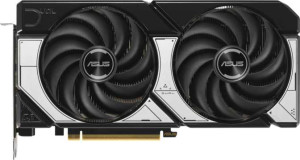
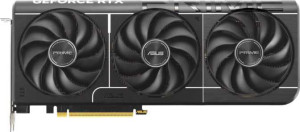
At the core, the Asus Dual RTX 5070 OC and Asus Prime RTX 5070 OC share an identical architectural foundation: the same 6144 shading units, 192 TMUs, 80 ROPs, and 1750 MHz memory speed. Both also support Double Precision Floating Point, and both start from the same base clock of 2325 MHz. This means the two cards are, in essence, the same silicon — the differences narrow down entirely to how aggressively each is factory-boosted.
The sole but meaningful differentiator is the GPU turbo clock: the Prime reaches 2557 MHz versus the Dual's 2542 MHz — a gap of 15 MHz, or roughly 0.6%. This cascades into marginally higher throughput across every derived metric: the Prime edges ahead with 31.42 TFLOPS of floating-point performance versus 31.24 TFLOPS, a slightly higher texture rate of 490.9 GTexels/s versus 488.1 GTexels/s, and a pixel rate of 204.6 GPixel/s against 203.4 GPixel/s. In real-world terms, a sub-1% compute gap of this kind will not produce a perceptible frame rate difference in games or workloads — it falls well within run-to-run variance.
Based strictly on the provided specs, the Asus Prime RTX 5070 OC holds a technical edge in performance, but it is marginal to the point of being practically irrelevant during typical use. Buyers should weigh this negligible boost against other factors — such as cooling design, acoustics, or price — since no GPU workload is likely to expose a 15 MHz turbo advantage in a way the user would notice.