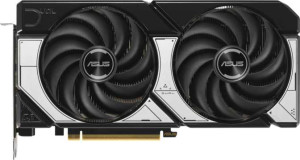
Asus Dual GeForce RTX 5070 OC Edition
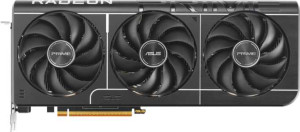
Asus Prime Radeon RX 9070 OC Edition

Asus Dual GeForce RTX 5070 OC Edition Asus Prime Radeon RX 9070 OC Edition

Overview

Welcome to our in-depth spec showdown between the Asus Dual GeForce RTX 5070 OC Edition and the Asus Prime Radeon RX 9070 OC Edition — two compelling mid-to-high-range graphics cards from the same manufacturer but built on rival architectures. In this comparison, we examine key battlegrounds including raw compute performance, memory configuration, feature support, and physical design to help you decide which GPU best fits your needs.

Common Features

  • Both products support Double Precision Floating Point (DPFP).
  • Both products support ECC memory.
  • Both products are compatible with DirectX 12 Ultimate.
  • Both products support OpenGL version 4.6.
  • Both products support multi-display technology.
  • Both products support ray tracing.
  • Both products support 3D.
  • XeSS (XMX) support is not available on either product.
  • LHR is not present on either product.
  • Both products support up to 4 displays.
  • Both products have an HDMI output.
  • Both products include 1 HDMI port.
  • Both products use HDMI version 2.1b.
  • Both products include 3 DisplayPort outputs.
  • Neither product has USB-C ports.
  • Neither product has DVI outputs.
  • Neither product has mini DisplayPort outputs.
  • Both products use PCIe version 5.
  • Both products are built on a 5 nm semiconductor process.
  • Neither product features air-water cooling.

Main Differences

  • GPU base clock speed is 2325 MHz on the Asus Dual GeForce RTX 5070 OC Edition and 1330 MHz on the Asus Prime Radeon RX 9070 OC Edition.
  • GPU turbo clock speed is 2542 MHz on the Asus Dual GeForce RTX 5070 OC Edition and 2590 MHz on the Asus Prime Radeon RX 9070 OC Edition.
  • Pixel rate is 203.4 GPixel/s on the Asus Dual GeForce RTX 5070 OC Edition and 331.5 GPixel/s on the Asus Prime Radeon RX 9070 OC Edition.
  • Floating-point performance is 31.24 TFLOPS on the Asus Dual GeForce RTX 5070 OC Edition and 37.13 TFLOPS on the Asus Prime Radeon RX 9070 OC Edition.
  • Texture rate is 488.1 GTexels/s on the Asus Dual GeForce RTX 5070 OC Edition and 580.2 GTexels/s on the Asus Prime Radeon RX 9070 OC Edition.
  • GPU memory speed is 1750 MHz on the Asus Dual GeForce RTX 5070 OC Edition and 2518 MHz on the Asus Prime Radeon RX 9070 OC Edition.
  • Shading units number 6144 on the Asus Dual GeForce RTX 5070 OC Edition and 3584 on the Asus Prime Radeon RX 9070 OC Edition.
  • Texture mapping units (TMUs) total 192 on the Asus Dual GeForce RTX 5070 OC Edition and 224 on the Asus Prime Radeon RX 9070 OC Edition.
  • Render output units (ROPs) total 80 on the Asus Dual GeForce RTX 5070 OC Edition and 128 on the Asus Prime Radeon RX 9070 OC Edition.
  • Effective memory speed is 28000 MHz on the Asus Dual GeForce RTX 5070 OC Edition and 20000 MHz on the Asus Prime Radeon RX 9070 OC Edition.
  • Maximum memory bandwidth is 672 GB/s on the Asus Dual GeForce RTX 5070 OC Edition and 644.6 GB/s on the Asus Prime Radeon RX 9070 OC Edition.
  • VRAM is 12 GB on the Asus Dual GeForce RTX 5070 OC Edition and 16 GB on the Asus Prime Radeon RX 9070 OC Edition.
  • The Asus Dual GeForce RTX 5070 OC Edition uses GDDR7 memory, while the Asus Prime Radeon RX 9070 OC Edition uses GDDR6 memory.
  • Memory bus width is 192-bit on the Asus Dual GeForce RTX 5070 OC Edition and 256-bit on the Asus Prime Radeon RX 9070 OC Edition.
  • OpenCL version is 3 on the Asus Dual GeForce RTX 5070 OC Edition and 2.2 on the Asus Prime Radeon RX 9070 OC Edition.
  • DLSS support is present on the Asus Dual GeForce RTX 5070 OC Edition but not available on the Asus Prime Radeon RX 9070 OC Edition.
  • The Asus Dual GeForce RTX 5070 OC Edition uses Intel Resizable BAR, while the Asus Prime Radeon RX 9070 OC Edition uses AMD SAM.
  • RGB lighting is present on the Asus Dual GeForce RTX 5070 OC Edition but not available on the Asus Prime Radeon RX 9070 OC Edition.
  • GPU architecture is Blackwell on the Asus Dual GeForce RTX 5070 OC Edition and RDNA 4.0 on the Asus Prime Radeon RX 9070 OC Edition.
  • Thermal Design Power (TDP) is 250W on the Asus Dual GeForce RTX 5070 OC Edition and 220W on the Asus Prime Radeon RX 9070 OC Edition.
  • The number of transistors is 31,100 million on the Asus Dual GeForce RTX 5070 OC Edition and 53,900 million on the Asus Prime Radeon RX 9070 OC Edition.
  • Card width is 249 mm on the Asus Dual GeForce RTX 5070 OC Edition and 312 mm on the Asus Prime Radeon RX 9070 OC Edition.
  • Card height is 126 mm on the Asus Dual GeForce RTX 5070 OC Edition and 130 mm on the Asus Prime Radeon RX 9070 OC Edition.
Specs Comparison
Asus Dual GeForce RTX 5070 OC Edition

Asus Dual GeForce RTX 5070 OC Edition

Asus Prime Radeon RX 9070 OC Edition

Asus Prime Radeon RX 9070 OC Edition

Performance:
GPU clock speed 2325 MHz 1330 MHz
GPU turbo 2542 MHz 2590 MHz
pixel rate 203.4 GPixel/s 331.5 GPixel/s
floating-point performance 31.24 TFLOPS 37.13 TFLOPS
texture rate 488.1 GTexels/s 580.2 GTexels/s
GPU memory speed 1750 MHz 2518 MHz
shading units 6144 3584
texture mapping units (TMUs) 192 224
render output units (ROPs) 80 128
Has Double Precision Floating Point (DPFP)

At first glance, the Asus Dual RTX 5070 OC's 6,144 shading units versus the Asus Prime RX 9070 OC's 3,584 might suggest a dominant Nvidia lead, but raw shader counts are not directly comparable across architectures — and the rest of the performance data tells a very different story. The RX 9070 OC holds a clear edge in nearly every throughput metric: its 37.13 TFLOPS of floating-point performance outpaces the RTX 5070's 31.24 TFLOPS by roughly 19%, and its texture and pixel fill rates (580.2 GTexels/s and 331.5 GPixel/s) substantially exceed the RTX 5070's 488.1 GTexels/s and 203.4 GPixel/s. In practice, higher pixel and texture fill rates translate to better throughput when rendering complex, high-resolution scenes with many overlapping surfaces and detailed textures.

The RX 9070 OC also holds a significant advantage in render output units (128 ROPs vs. 80) and memory clock speed (2518 MHz vs. 1750 MHz). More ROPs mean the GPU can write pixels to the framebuffer faster, which becomes especially relevant at high resolutions or with demanding anti-aliasing enabled. The faster memory clock directly increases available memory bandwidth, reducing potential bottlenecks when shaders need to fetch or write large amounts of data. One area where the RTX 5070 leads is base clock speed (2325 MHz vs. 1330 MHz), though their turbo clocks are nearly identical (2542 vs. 2590 MHz), meaning sustained peak performance is comparable — the RTX 5070's dramatically higher base clock simply reflects Nvidia's architectural approach of running fewer, faster units.

Both cards support Double Precision Floating Point (DPFP), which is relevant for compute workloads but generally not a differentiator for gaming. Overall, on the basis of the provided performance specifications, the Asus Prime RX 9070 OC Edition holds a clear edge in raw throughput — more TFLOPS, more ROPs, faster memory, and higher fill rates — making it the stronger performer on paper across the majority of GPU-bound workloads.
Memory:
effective memory speed 28000 MHz 20000 MHz
maximum memory bandwidth 672 GB/s 644.6 GB/s
VRAM 12GB 16GB
GDDR version GDDR7 GDDR6
memory bus width 192-bit 256-bit
Supports ECC memory

The memory configurations here represent two genuinely different engineering philosophies, and the trade-offs are meaningful. The RTX 5070 OC pairs 12GB of GDDR7 on a 192-bit bus to achieve an effective speed of 28,000 MHz and a peak bandwidth of 672 GB/s, while the RX 9070 OC uses 16GB of GDDR6 on a wider 256-bit bus, reaching 20,000 MHz effective speed and 644.6 GB/s of bandwidth. The RTX 5070 essentially leverages GDDR7's generational speed leap to compensate for its narrower bus, arriving at a slightly higher peak bandwidth despite having fewer memory channels.

Where the RX 9070 OC makes a compelling case is in VRAM capacity: 16GB versus 12GB is a tangible advantage for users working with large textures, high-resolution assets, or running memory-hungry AI workloads. As games and applications increasingly push past the 10–12GB threshold, having that extra headroom can be the difference between smooth performance and costly VRAM spill-over to system memory. The RTX 5070's bandwidth edge is real but narrow — roughly 4% — and may not outweigh the capacity gap in practice for future-facing workloads.

Both cards support ECC memory, which is primarily relevant for compute and professional use cases rather than gaming. Overall, the memory group does not have a single clear winner — it comes down to use case. For bandwidth-sensitive tasks at current resolutions, the RTX 5070 holds a slim edge; but for content creation, AI inference, or longevity in demanding games, the RX 9070 OC's 16GB of VRAM is the more practical advantage.

Features:
DirectX version DirectX 12 Ultimate DirectX 12 Ultimate
OpenGL version 4.6 4.6
OpenCL version 3 2.2
Supports multi-display technology
supports ray tracing
Supports 3D
supports DLSS
has XeSS (XMX)
AMD SAM / Intel Resizable BAR Intel Resizable BAR AMD SAM
has LHR
has RGB lighting
supported displays 4 4

Much of the feature set here is shared ground: both cards run DirectX 12 Ultimate, OpenGL 4.6, support ray tracing, multi-display output across up to 4 displays, and neither carries an LHR (Lite Hash Rate) limiter. These are table-stakes features for modern GPUs and don't separate the two. The more meaningful divergence lies in upscaling and compute support. The RTX 5070 OC supports DLSS, Nvidia's AI-driven upscaling technology, which has broad and mature game support and can deliver substantial frame rate gains with minimal visual quality loss. The RX 9070 OC lacks DLSS — it would rely on AMD's FSR instead, though notably FSR is not listed in the provided specs and therefore cannot be factored into this analysis.

On the compute side, the RTX 5070 supports OpenCL 3 versus the RX 9070's OpenCL 2.2. While this gap is unlikely to matter for gaming, OpenCL 3 offers a more capable feature set for GPU compute workloads, giving the RTX 5070 a modest edge for users who lean on OpenCL-accelerated applications. The two cards also differ in their resizable BAR implementations — Intel Resizable BAR on the RTX 5070 versus AMD SAM on the RX 9070 — which are functionally equivalent technologies that allow the CPU to access the full GPU framebuffer, improving performance in supported titles. This is effectively a tie.

One minor but visible differentiator is RGB lighting, present on the RTX 5070 OC but absent on the RX 9070 OC — relevant only to users building aesthetics-conscious systems. Taking the feature set as a whole, the RTX 5070 OC holds a clear edge in this group, primarily due to DLSS support, which has direct and proven real-world gaming performance implications that the RX 9070 OC cannot match based on the data provided.

Ports:
has an HDMI output
HDMI ports 1 1
HDMI version HDMI 2.1b HDMI 2.1b
DisplayPort outputs 3 3
USB-C ports 0 0
DVI outputs 0 0
mini DisplayPort outputs 0 0

The port configuration on these two cards is identical in every respect: both offer 1 HDMI 2.1b output and 3 DisplayPort outputs, for a total of 4 display connections — matching the maximum supported display count noted in their feature specs. Neither card includes USB-C, DVI, or mini DisplayPort outputs. This is a clean, modern layout that prioritizes the two dominant display standards without the clutter of legacy connectors.

HDMI 2.1b supports up to 10K resolution and high refresh rates, making it fully capable for current and near-future displays including 4K 144Hz and 8K panels. The three DisplayPort outputs similarly support high-bandwidth connections for gaming monitors, productivity displays, or mixed multi-monitor setups. For the vast majority of users — whether running a single high-refresh display or a triple-monitor arrangement — this port layout covers all practical scenarios without compromise.

This group is a straightforward tie: the port selection, versions, and quantity are exactly the same on both cards. Connectivity should play no role in choosing between the RTX 5070 OC and the RX 9070 OC.

General info:
GPU architecture Blackwell RDNA 4.0
release date March 2025 March 2025
Thermal Design Power (TDP) 250W 220W
PCI Express (PCIe) version 5 5
semiconductor size 5 nm 5 nm
number of transistors 31100 million 53900 million
Has air-water cooling
width 249 mm 312 mm
height 126 mm 130 mm

Both cards are fabbed on a 5nm process and connect via PCIe 5.0, so neither holds an advantage in interface bandwidth or manufacturing node. The striking divergence is in transistor count: the RX 9070 OC's RDNA 4.0 die packs 53,900 million transistors versus the RTX 5070 OC's Blackwell die at 31,100 million — a 73% difference on the same node. This is a significant indicator of silicon complexity and investment, and it helps explain why the RX 9070 OC leads in raw throughput metrics despite AMD using fewer, differently structured compute units.

Power efficiency tells an interesting story. The RX 9070 OC operates at a 220W TDP compared to the RTX 5070's 250W, a 30W gap that matters in thermally constrained builds or for users conscious of long-term energy costs. Delivering stronger raw compute performance at lower power draw is a tangible advantage for the AMD card in this regard. Physical size is also worth noting: the RX 9070 OC is considerably longer at 312mm versus 249mm for the RTX 5070, which could be a deciding factor for users with smaller cases or tighter GPU clearance.

Weighing these factors together, the RX 9070 OC has a meaningful edge in this group — it achieves its performance with a lower TDP, backed by a far more transistor-dense die. The RTX 5070 OC counters with a more compact 249mm footprint that suits a wider range of chassis. Neither uses air-water hybrid cooling, so thermal management falls entirely to each card's air cooler design.

Comparison Summary & Verdict

After examining every specification, these two GPUs each carve out a distinct identity. The Asus Dual GeForce RTX 5070 OC Edition stands out with its GDDR7 memory and higher effective memory speed, a notably compact form factor, DLSS support, and RGB lighting — making it the stronger pick for gamers who rely on Nvidia-exclusive features and want a shorter, easier-to-fit card. The Asus Prime Radeon RX 9070 OC Edition counters with superior raw floating-point performance at 37.13 TFLOPS, a larger 16 GB VRAM pool, a wider 256-bit memory bus, more ROPs and TMUs, and a lower 220W TDP — advantages that appeal to creators, compute workloads, and gamers who prioritize headroom and efficiency over feature ecosystems. Both share a strong common foundation: PCIe 5, ray tracing, DirectX 12 Ultimate, and identical port layouts. Your choice ultimately hinges on whether Nvidia’s feature set or AMD’s raw throughput and memory capacity matter more to you.

Asus Dual GeForce RTX 5070 OC Edition
Buy Asus Dual GeForce RTX 5070 OC Edition if...

Buy the Asus Dual GeForce RTX 5070 OC Edition if you want DLSS support, faster effective memory speed, a more compact card size, and RGB lighting as part of your build.

Asus Prime Radeon RX 9070 OC Edition
Buy Asus Prime Radeon RX 9070 OC Edition if...

Buy the Asus Prime Radeon RX 9070 OC Edition if you prioritize higher floating-point performance, a larger 16 GB VRAM pool, a wider memory bus, and a lower power draw of 220W.