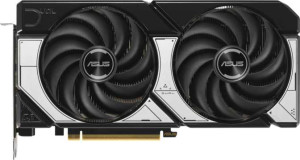
Asus Dual GeForce RTX 5070 OC Edition
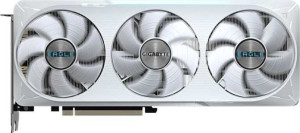
Gigabyte GeForce RTX 5070 Eagle OC Ice SFF

Asus Dual GeForce RTX 5070 OC Edition Gigabyte GeForce RTX 5070 Eagle OC Ice SFF

Overview

Welcome to our in-depth specification comparison between the Asus Dual GeForce RTX 5070 OC Edition and the Gigabyte GeForce RTX 5070 Eagle OC Ice SFF. Both cards are built on the same Blackwell architecture and share a remarkably similar feature set, making this a contest of fine margins. The key battlegrounds in this head-to-head are boost clock performance and physical dimensions, which could be the deciding factors depending on your setup and priorities.

Common Features

  • Both products have a GPU clock speed of 2325 MHz.
  • Both products have a GPU memory speed of 1750 MHz.
  • Both products have 6144 shading units.
  • Both products have 192 texture mapping units (TMUs).
  • Both products have 80 render output units (ROPs).
  • Double Precision Floating Point (DPFP) is supported on both products.
  • Both products have an effective memory speed of 28000 MHz.
  • Both products have a maximum memory bandwidth of 672 GB/s.
  • Both products feature 12GB of VRAM.
  • Both products use GDDR7 memory.
  • Both products have a 192-bit memory bus width.
  • ECC memory is supported on both products.
  • Both products support DirectX 12 Ultimate.
  • Both products support OpenGL version 4.6.
  • Both products support OpenCL version 3.
  • Multi-display technology is supported on both products.
  • Ray tracing is supported on both products.
  • 3D support is available on both products.
  • DLSS is supported on both products.
  • XeSS (XMX) is not available on either product.
  • Both products have one HDMI output running version HDMI 2.1b.
  • Both products have 3 DisplayPort outputs.
  • Neither product has USB-C ports, DVI outputs, or mini DisplayPort outputs.
  • Both products are based on the Blackwell GPU architecture.
  • Both products have a Thermal Design Power (TDP) of 250W.
  • Both products use PCIe version 5.
  • Both products are manufactured on a 5 nm semiconductor process.
  • Both products contain 31100 million transistors.
  • Air-water cooling is not available on either product.

Main Differences

  • GPU turbo clock speed is 2542 MHz on Asus Dual GeForce RTX 5070 OC Edition and 2587 MHz on Gigabyte GeForce RTX 5070 Eagle OC Ice SFF.
  • Pixel rate is 203.4 GPixel/s on Asus Dual GeForce RTX 5070 OC Edition and 207 GPixel/s on Gigabyte GeForce RTX 5070 Eagle OC Ice SFF.
  • Floating-point performance is 31.24 TFLOPS on Asus Dual GeForce RTX 5070 OC Edition and 31.79 TFLOPS on Gigabyte GeForce RTX 5070 Eagle OC Ice SFF.
  • Texture rate is 488.1 GTexels/s on Asus Dual GeForce RTX 5070 OC Edition and 496.7 GTexels/s on Gigabyte GeForce RTX 5070 Eagle OC Ice SFF.
  • Card width is 249 mm on Asus Dual GeForce RTX 5070 OC Edition and 290 mm on Gigabyte GeForce RTX 5070 Eagle OC Ice SFF.
  • Card height is 126 mm on Asus Dual GeForce RTX 5070 OC Edition and 120 mm on Gigabyte GeForce RTX 5070 Eagle OC Ice SFF.
Specs Comparison
Asus Dual GeForce RTX 5070 OC Edition

Asus Dual GeForce RTX 5070 OC Edition

Gigabyte GeForce RTX 5070 Eagle OC Ice SFF

Gigabyte GeForce RTX 5070 Eagle OC Ice SFF

Performance:
GPU clock speed 2325 MHz 2325 MHz
GPU turbo 2542 MHz 2587 MHz
pixel rate 203.4 GPixel/s 207 GPixel/s
floating-point performance 31.24 TFLOPS 31.79 TFLOPS
texture rate 488.1 GTexels/s 496.7 GTexels/s
GPU memory speed 1750 MHz 1750 MHz
shading units 6144 6144
texture mapping units (TMUs) 192 192
render output units (ROPs) 80 80
Has Double Precision Floating Point (DPFP)

At their core, both the Asus Dual RTX 5070 OC and the Gigabyte RTX 5070 Eagle OC Ice SFF are built on identical silicon foundations: the same 6144 shading units, 192 TMUs, 80 ROPs, and a base GPU clock of 2325 MHz. This means the vast majority of their raw compute capability is shared, and both support Double Precision Floating Point, which is relevant for certain compute and professional workloads beyond gaming.

The only meaningful performance differentiator comes from their respective boost clocks. The Gigabyte Eagle OC Ice SFF reaches a turbo of 2587 MHz versus the Asus Dual OC's 2542 MHz — a gap of 45 MHz, or roughly 1.8%. This modest but real advantage cascades into every derived metric: the Gigabyte edges ahead in pixel rate (207 vs 203.4 GPixel/s), texture rate (496.7 vs 488.1 GTexels/s), and floating-point throughput (31.79 vs 31.24 TFLOPS). In practice, these differences fall well within benchmark noise margins and would not be perceptible in gaming frame rates or typical rendering workloads.

From a pure performance standpoint, the Gigabyte RTX 5070 Eagle OC Ice SFF holds a narrow technical edge due to its higher factory boost clock, but this advantage is negligible in real-world use. Users choosing between these two cards should weight factors beyond raw GPU clocks — such as cooling solution, form factor, and price — far more heavily than this marginal performance delta.

Memory:
effective memory speed 28000 MHz 28000 MHz
maximum memory bandwidth 672 GB/s 672 GB/s
VRAM 12GB 12GB
GDDR version GDDR7 GDDR7
memory bus width 192-bit 192-bit
Supports ECC memory

The memory specifications of the Asus Dual GeForce RTX 5070 OC Edition and the Gigabyte GeForce RTX 5070 Eagle OC Ice SFF are identical. Both cards feature an effective memory speed of 28000 MHz and a maximum memory bandwidth of 672 GB/s. They are equipped with 12GB of VRAM, and both use GDDR7 memory, ensuring high performance and fast data transfer.

Additionally, both cards have the same 192-bit memory bus width, which helps with efficient data handling. They also support ECC memory (Error-Correcting Code), which enhances stability by detecting and correcting memory errors.

In summary, the memory configurations for these two cards are exactly the same, offering equivalent performance in terms of speed, bandwidth, VRAM, and error correction features.

Features:
DirectX version DirectX 12 Ultimate DirectX 12 Ultimate
OpenGL version 4.6 4.6
OpenCL version 3 3
Supports multi-display technology
supports ray tracing
Supports 3D
supports DLSS
has XeSS (XMX)
AMD SAM / Intel Resizable BAR Intel Resizable BAR Intel Resizable BAR
has LHR
has RGB lighting
supported displays 4 4

The Asus Dual GeForce RTX 5070 OC Edition and the Gigabyte GeForce RTX 5070 Eagle OC Ice SFF offer identical features across all listed specifications. Both support DirectX 12 Ultimate, OpenGL version 4.6, and OpenCL version 3, ensuring compatibility with modern software and applications.

Each card also supports multi-display technology, ray tracing, 3D functionality, and DLSS (Deep Learning Super Sampling). Neither card has XeSS (XMX) support, and both feature Intel Resizable BAR, which enhances performance with compatible CPUs. Additionally, both cards are free from LHR (Lite Hash Rate) limitations and include RGB lighting for customizable aesthetics.

Both the Asus and Gigabyte models can support up to four displays, making them suitable for multi-monitor setups. In summary, these two cards are exactly matched in terms of features, offering the same capabilities and specifications across the board.

Ports:
has an HDMI output
HDMI ports 1 1
HDMI version HDMI 2.1b HDMI 2.1b
DisplayPort outputs 3 3
USB-C ports 0 0
DVI outputs 0 0
mini DisplayPort outputs 0 0

The Asus Dual GeForce RTX 5070 OC Edition and the Gigabyte GeForce RTX 5070 Eagle OC Ice SFF share identical port configurations. Both cards feature one HDMI output, with support for HDMI 2.1b. Each card also includes three DisplayPort outputs, making them suitable for multi-monitor setups. Neither card offers USB-C, DVI, nor mini DisplayPort outputs.

In summary, the ports on both the Asus and Gigabyte models are exactly the same, offering the same HDMI and DisplayPort options for connectivity.

General info:
GPU architecture Blackwell Blackwell
release date March 2025 January 2025
Thermal Design Power (TDP) 250W 250W
PCI Express (PCIe) version 5 5
semiconductor size 5 nm 5 nm
number of transistors 31100 million 31100 million
Has air-water cooling
width 249 mm 290 mm
height 126 mm 120 mm

Both the Asus Dual GeForce RTX 5070 OC Edition and the Gigabyte GeForce RTX 5070 Eagle OC Ice SFF share the same GPU architecture, utilizing Blackwell. They both have a Thermal Design Power (TDP) of 250W, use PCI Express (PCIe) version 5, and are built with a 5 nm semiconductor size. Additionally, both cards feature the same number of transistors, with 31,100 million transistors.

The cooling solutions for both cards are not air-water hybrid systems, as neither has air-water cooling. However, the physical dimensions of the cards differ slightly. The Asus model is 249 mm wide and 126 mm tall, while the Gigabyte card is slightly wider at 290 mm but shorter in height, measuring 120 mm.

In summary, these two models are very similar in terms of architecture, power, and core specs, with the main difference lying in the size—particularly the width of the cards.

Comparison Summary & Verdict

After examining all the evidence, both the Asus Dual GeForce RTX 5070 OC Edition and the Gigabyte GeForce RTX 5070 Eagle OC Ice SFF share the same 12GB GDDR7 memory, identical port configurations, and an equal 250W TDP, making them near-identical on paper. However, the Gigabyte edges ahead with a slightly higher GPU turbo clock of 2587 MHz, a marginally better floating-point performance of 31.79 TFLOPS, and a superior texture rate, giving it a slim but measurable performance advantage. The Asus, on the other hand, is noticeably more compact at 249 mm in width versus the Gigabyte’s 290 mm, making it the better fit for smaller cases or tighter builds. Choose the Gigabyte if squeezing out every last drop of GPU performance is your priority; opt for the Asus if physical size and case compatibility matter most to you.

Asus Dual GeForce RTX 5070 OC Edition
Buy Asus Dual GeForce RTX 5070 OC Edition if...

Buy the Asus Dual GeForce RTX 5070 OC Edition if you need a more compact card that fits easily into smaller or tighter PC cases, thanks to its significantly narrower 249 mm width.

Gigabyte GeForce RTX 5070 Eagle OC Ice SFF
Buy Gigabyte GeForce RTX 5070 Eagle OC Ice SFF if...

Buy the Gigabyte GeForce RTX 5070 Eagle OC Ice SFF if you want the highest possible out-of-the-box performance, as it offers a higher GPU turbo clock, better floating-point performance, and a faster texture rate.