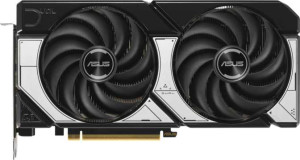
Asus Dual GeForce RTX 5070 OC Edition
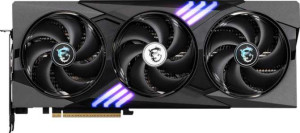
MSI GeForce RTX 5070 Ti Gaming Trio OC Plus

Asus Dual GeForce RTX 5070 OC Edition MSI GeForce RTX 5070 Ti Gaming Trio OC Plus

Overview

Welcome to our in-depth specification comparison between the Asus Dual GeForce RTX 5070 OC Edition and the MSI GeForce RTX 5070 Ti Gaming Trio OC Plus. Both cards share the same Blackwell architecture and PCIe 5 platform, yet they diverge sharply when it comes to raw compute power, memory capacity, and physical footprint. Read on to see how these two Nvidia-based GPUs stack up across performance, memory, and design.

Common Features

  • GPU memory speed is 1750 MHz on both products.
  • Both products support Double Precision Floating Point (DPFP).
  • Effective memory speed is 28000 MHz on both products.
  • Both products use GDDR7 memory.
  • Both products support ECC memory.
  • Both products support DirectX 12 Ultimate.
  • OpenGL version is 4.6 on both products.
  • OpenCL version is 3 on both products.
  • Multi-display technology is supported on both products.
  • Ray tracing is supported on both products.
  • 3D support is available on both products.
  • DLSS is supported on both products.
  • XeSS (XMX) support is not available on either product.
  • Both products have an HDMI output.
  • Both products have 1 HDMI port.
  • HDMI version is 2.1b on both products.
  • Both products have 3 DisplayPort outputs.
  • Neither product has USB-C ports.
  • Neither product has DVI outputs.
  • Neither product has mini DisplayPort outputs.
  • Both products are built on the Blackwell GPU architecture.
  • Both products use PCIe version 5.
  • Semiconductor size is 5 nm on both products.
  • Neither product has air-water cooling.

Main Differences

  • GPU clock speed is 2325 MHz on Asus Dual GeForce RTX 5070 OC Edition and 2295 MHz on MSI GeForce RTX 5070 Ti Gaming Trio OC Plus.
  • GPU turbo speed is 2542 MHz on Asus Dual GeForce RTX 5070 OC Edition and 2572 MHz on MSI GeForce RTX 5070 Ti Gaming Trio OC Plus.
  • Pixel rate is 203.4 GPixel/s on Asus Dual GeForce RTX 5070 OC Edition and 246.9 GPixel/s on MSI GeForce RTX 5070 Ti Gaming Trio OC Plus.
  • Floating-point performance is 31.24 TFLOPS on Asus Dual GeForce RTX 5070 OC Edition and 46.09 TFLOPS on MSI GeForce RTX 5070 Ti Gaming Trio OC Plus.
  • Texture rate is 488.1 GTexels/s on Asus Dual GeForce RTX 5070 OC Edition and 720.2 GTexels/s on MSI GeForce RTX 5070 Ti Gaming Trio OC Plus.
  • Shading units number 6144 on Asus Dual GeForce RTX 5070 OC Edition and 8960 on MSI GeForce RTX 5070 Ti Gaming Trio OC Plus.
  • Texture mapping units (TMUs) total 192 on Asus Dual GeForce RTX 5070 OC Edition and 280 on MSI GeForce RTX 5070 Ti Gaming Trio OC Plus.
  • Render output units (ROPs) total 80 on Asus Dual GeForce RTX 5070 OC Edition and 96 on MSI GeForce RTX 5070 Ti Gaming Trio OC Plus.
  • Maximum memory bandwidth is 672 GB/s on Asus Dual GeForce RTX 5070 OC Edition and 896 GB/s on MSI GeForce RTX 5070 Ti Gaming Trio OC Plus.
  • VRAM is 12GB on Asus Dual GeForce RTX 5070 OC Edition and 16GB on MSI GeForce RTX 5070 Ti Gaming Trio OC Plus.
  • Memory bus width is 192-bit on Asus Dual GeForce RTX 5070 OC Edition and 256-bit on MSI GeForce RTX 5070 Ti Gaming Trio OC Plus.
  • Thermal Design Power (TDP) is 250W on Asus Dual GeForce RTX 5070 OC Edition and 300W on MSI GeForce RTX 5070 Ti Gaming Trio OC Plus.
  • Number of transistors is 31100 million on Asus Dual GeForce RTX 5070 OC Edition and 45600 million on MSI GeForce RTX 5070 Ti Gaming Trio OC Plus.
  • Width is 249 mm on Asus Dual GeForce RTX 5070 OC Edition and 338 mm on MSI GeForce RTX 5070 Ti Gaming Trio OC Plus.
  • Height is 126 mm on Asus Dual GeForce RTX 5070 OC Edition and 140 mm on MSI GeForce RTX 5070 Ti Gaming Trio OC Plus.
Specs Comparison
Asus Dual GeForce RTX 5070 OC Edition

Asus Dual GeForce RTX 5070 OC Edition

MSI GeForce RTX 5070 Ti Gaming Trio OC Plus

MSI GeForce RTX 5070 Ti Gaming Trio OC Plus

Performance:
GPU clock speed 2325 MHz 2295 MHz
GPU turbo 2542 MHz 2572 MHz
pixel rate 203.4 GPixel/s 246.9 GPixel/s
floating-point performance 31.24 TFLOPS 46.09 TFLOPS
texture rate 488.1 GTexels/s 720.2 GTexels/s
GPU memory speed 1750 MHz 1750 MHz
shading units 6144 8960
texture mapping units (TMUs) 192 280
render output units (ROPs) 80 96
Has Double Precision Floating Point (DPFP)

At first glance, the clock speed story seems close: the Asus RTX 5070 OC actually leads at base (2325 MHz vs. 2295 MHz), while the MSI RTX 5070 Ti Gaming Trio OC Plus edges ahead at boost (2572 MHz vs. 2542 MHz). In isolation, a ~30 MHz difference at either end is essentially noise — neither card has a meaningful clock speed advantage. The real performance gap lives elsewhere entirely.

The decisive differentiator is shader and compute scale. The 5070 Ti packs 8960 shading units against the 5070's 6144 — roughly 46% more raw parallelism — and that gap flows directly into every downstream metric: 46.09 TFLOPS of floating-point throughput versus 31.24 TFLOPS, a 720.2 GTexels/s texture fill rate against 488.1 GTexels/s, and 96 ROPs versus 80 driving pixel output. In practice, more shading units and ROPs translate to higher sustained frame rates at demanding resolutions, better headroom for ray tracing workloads, and faster throughput in GPU-accelerated compute tasks. The ~21% pixel rate advantage of the 5070 Ti is particularly relevant at 4K, where ROP throughput can become a real bottleneck.

Both cards share identical 1750 MHz memory speed and both support Double Precision Floating Point, so neither holds an edge on memory bandwidth timing or professional compute compatibility from these specs alone. Overall, the MSI RTX 5070 Ti Gaming Trio OC Plus holds a clear and substantial performance advantage in this group — not because of clocks, but because of its significantly larger compute engine. The Asus 5070 OC is no slouch, but buyers prioritizing peak rendering and compute performance should note the 5070 Ti's ~47% TFLOPS lead is far from a paper difference.

Memory:
effective memory speed 28000 MHz 28000 MHz
maximum memory bandwidth 672 GB/s 896 GB/s
VRAM 12GB 16GB
GDDR version GDDR7 GDDR7
memory bus width 192-bit 256-bit
Supports ECC memory

Both the Asus Dual GeForce RTX 5070 OC Edition and the MSI GeForce RTX 5070 Ti Gaming Trio OC Plus share the same effective memory speed of 28000 MHz and both use the GDDR7 memory standard. However, there are notable differences in their memory specifications. The Asus card has 12GB of VRAM, while the MSI version comes with 16GB of VRAM, offering a higher capacity for memory-intensive tasks.

In terms of memory bandwidth, the Asus model supports a maximum of 672 GB/s, while the MSI card offers a higher maximum bandwidth of 896 GB/s. This difference indicates that the MSI card may have a greater ability to handle larger data throughput, which can be beneficial in performance-heavy applications.

Both products feature a memory bus width that affects how efficiently data can be transferred. The Asus Dual GeForce RTX 5070 OC Edition uses a 192-bit bus width, while the MSI GeForce RTX 5070 Ti Gaming Trio OC Plus utilizes a wider 256-bit bus. Additionally, both models support ECC (Error-Correcting Code) memory, ensuring increased reliability by detecting and correcting memory errors.

Features:
DirectX version DirectX 12 Ultimate DirectX 12 Ultimate
OpenGL version 4.6 4.6
OpenCL version 3 3
Supports multi-display technology
supports ray tracing
Supports 3D
supports DLSS
has XeSS (XMX)
AMD SAM / Intel Resizable BAR Intel Resizable BAR Intel Resizable BAR
has LHR
has RGB lighting
supported displays 4 4

Both the Asus Dual GeForce RTX 5070 OC Edition and the MSI GeForce RTX 5070 Ti Gaming Trio OC Plus support the same DirectX version, DirectX 12 Ultimate, and both are compatible with OpenGL version 4.6 and OpenCL version 3. Additionally, both cards support multi-display technology, ray tracing, and 3D, offering similar capabilities in terms of visual enhancements and immersive experiences.

In terms of additional features, both models support DLSS (Deep Learning Super Sampling), enhancing gaming performance and visual quality. Neither card supports XeSS (XMX), however, which limits their access to Intel's proprietary upscaling technology. Both cards also feature Intel Resizable BAR, enabling improved memory access between the CPU and GPU for increased performance in certain applications.

Other shared features include a lack of LHR (Low Hash Rate), meaning both cards are suitable for mining applications, and RGB lighting, adding customizable aesthetic options. Both the Asus and MSI models support up to four displays, offering flexibility for multi-monitor setups.

Ports:
has an HDMI output
HDMI ports 1 1
HDMI version HDMI 2.1b HDMI 2.1b
DisplayPort outputs 3 3
USB-C ports 0 0
DVI outputs 0 0
mini DisplayPort outputs 0 0

Both the Asus Dual GeForce RTX 5070 OC Edition and the MSI GeForce RTX 5070 Ti Gaming Trio OC Plus offer similar port configurations. Both cards feature one HDMI output with HDMI version 2.1b, allowing for high-quality video and audio transfer. Additionally, each card provides three DisplayPort outputs for connecting to multiple monitors or displays.

Neither card includes USB-C ports, DVI outputs, or mini DisplayPort outputs. In terms of display connectivity, both models provide the same options, focusing on HDMI and DisplayPort for versatility in modern display setups.

General info:
GPU architecture Blackwell Blackwell
release date March 2025 January 2025
Thermal Design Power (TDP) 250W 300W
PCI Express (PCIe) version 5 5
semiconductor size 5 nm 5 nm
number of transistors 31100 million 45600 million
Has air-water cooling
width 249 mm 338 mm
height 126 mm 140 mm

Both the Asus Dual GeForce RTX 5070 OC Edition and the MSI GeForce RTX 5070 Ti Gaming Trio OC Plus use the same GPU architecture, Blackwell, and have the same PCI Express (PCIe) version 5 and semiconductor size of 5 nm. However, there are differences in other specifications. The Asus model has a Thermal Design Power (TDP) of 250W, while the MSI version has a higher TDP of 300W, indicating that the MSI card may require more power to operate at its full potential.

In terms of physical dimensions, the Asus Dual GeForce RTX 5070 OC Edition is smaller, measuring 249 mm in width and 126 mm in height, compared to the MSI GeForce RTX 5070 Ti Gaming Trio OC Plus, which is 338 mm in width and 140 mm in height. This suggests that the MSI card is larger, possibly making it less suitable for compact cases.

Both cards have the same transistor size with the Asus card featuring 31,100 million transistors and the MSI card featuring 45,600 million transistors, reflecting a difference in the overall complexity and potentially the capabilities of the two products. Neither card supports air-water cooling.

Comparison Summary & Verdict

After examining every specification, a clear picture emerges for each card. The Asus Dual GeForce RTX 5070 OC Edition stands out as the more compact and power-efficient option, with a 250W TDP, a 249 mm length, and 12 GB of GDDR7 memory — making it an excellent fit for users who need a capable next-generation GPU that fits smaller cases without demanding a high-wattage power supply. The MSI GeForce RTX 5070 Ti Gaming Trio OC Plus, on the other hand, pulls significantly ahead in raw throughput, offering 46.09 TFLOPS of floating-point performance, 16 GB of GDDR7 memory on a 256-bit bus, and a texture rate of 720.2 GTexels/s — advantages that will matter most to demanding creators and enthusiast gamers. Both cards support ray tracing, DLSS, and DirectX 12 Ultimate, so the choice ultimately comes down to how much performance headroom and VRAM you need versus the constraints of your build and budget.

Asus Dual GeForce RTX 5070 OC Edition
Buy Asus Dual GeForce RTX 5070 OC Edition if...

Buy the Asus Dual GeForce RTX 5070 OC Edition if you want a compact, power-efficient Blackwell GPU with a 250W TDP and a 249 mm length that fits smaller builds without sacrificing next-generation features.

MSI GeForce RTX 5070 Ti Gaming Trio OC Plus
Buy MSI GeForce RTX 5070 Ti Gaming Trio OC Plus if...

Buy the MSI GeForce RTX 5070 Ti Gaming Trio OC Plus if you need maximum GPU performance, with 46.09 TFLOPS, 16 GB of GDDR7 on a 256-bit memory bus, and significantly higher shading and texture throughput for demanding workloads.