Asus Dual GeForce RTX 5070 OC Edition
MSI GeForce RTX 5070 Ventus 2X OC

Asus Dual GeForce RTX 5070 OC Edition MSI GeForce RTX 5070 Ventus 2X OC

Overview

Welcome to our detailed spec comparison of the Asus Dual GeForce RTX 5070 OC Edition and the MSI GeForce RTX 5070 Ventus 2X OC. Both cards are built on the same Blackwell architecture and share identical core performance figures, so the decision between them comes down to the finer details. In this comparison, we examine their physical dimensions and aesthetic features to help you determine which card is the right fit for your build.

Common Features

  • Both cards have a base GPU clock speed of 2325 MHz.
  • Both cards have a GPU turbo clock speed of 2542 MHz.
  • Both cards deliver a pixel rate of 203.4 GPixel/s.
  • Both cards offer a floating-point performance of 31.24 TFLOPS.
  • Both cards have a texture rate of 488.1 GTexels/s.
  • Both cards have a GPU memory speed of 1750 MHz.
  • Both cards include 6144 shading units.
  • Both cards feature 192 texture mapping units (TMUs).
  • Both cards have an effective memory speed of 28000 MHz.
  • Both cards provide a maximum memory bandwidth of 672 GB/s.
  • Both cards come with 12GB of VRAM.
  • Both cards use GDDR7 memory.
  • Both cards use a 192-bit memory bus width.
  • ECC memory support is available on both cards.
  • Both cards support DirectX 12 Ultimate.
  • Both cards support OpenGL version 4.6.
  • Both cards support OpenCL version 3.
  • Multi-display technology is supported on both cards.
  • Ray tracing is supported on both cards.
  • DLSS support is available on both cards.
  • 3D support is available on both cards.
  • XeSS (XMX) support is not available on either card.
  • Both cards feature one HDMI 2.1b output.
  • Both cards include three DisplayPort outputs.
  • Neither card has USB-C ports, DVI outputs, or mini DisplayPort outputs.
  • Both cards are based on the Blackwell GPU architecture.
  • Both cards have a Thermal Design Power (TDP) of 250W.
  • Both cards use PCIe version 5.
  • Both cards are manufactured on a 5 nm semiconductor process.
  • Both cards contain 31100 million transistors.
  • Air-water cooling is not present on either card.
  • Both cards have a height of 126 mm.

Main Differences

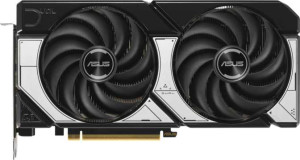
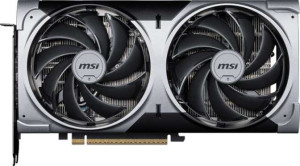
  • RGB lighting is present on the Asus Dual GeForce RTX 5070 OC Edition but not available on the MSI GeForce RTX 5070 Ventus 2X OC.
  • Width is 249 mm on the Asus Dual GeForce RTX 5070 OC Edition and 236 mm on the MSI GeForce RTX 5070 Ventus 2X OC.
Specs Comparison
Asus Dual GeForce RTX 5070 OC Edition

Asus Dual GeForce RTX 5070 OC Edition

MSI GeForce RTX 5070 Ventus 2X OC

MSI GeForce RTX 5070 Ventus 2X OC

Performance:
GPU clock speed 2325 MHz 2325 MHz
GPU turbo 2542 MHz 2542 MHz
pixel rate 203.4 GPixel/s 203.4 GPixel/s
floating-point performance 31.24 TFLOPS 31.24 TFLOPS
texture rate 488.1 GTexels/s 488.1 GTexels/s
GPU memory speed 1750 MHz 1750 MHz
shading units 6144 6144
texture mapping units (TMUs) 192 192
render output units (ROPs) 80 80
Has Double Precision Floating Point (DPFP)

When comparing the Performance specs of the Asus Dual RTX 5070 OC and the MSI RTX 5070 Ventus 2X OC, the most striking finding is that every single metric is identical across the board. Both cards share a base clock of 2325 MHz, a boost clock of 2542 MHz, and the same 31.24 TFLOPS of floating-point performance — the key figure that governs raw computational throughput in games and GPU-accelerated workloads. The matching texture rate of 488.1 GTexels/s and pixel rate of 203.4 GPixel/s further confirm that neither card has been tuned to prioritize one workload over another.

Under the hood, both GPUs are built on the same silicon configuration: 6144 shading units, 192 TMUs, and 80 ROPs. These figures define the parallelism and rasterization ceiling of the card — more shading units enable more simultaneous shader operations, while a higher ROP count accelerates the final pixel output stage. Since both cards share this layout exactly, there is no architectural differentiation to speak of. Memory speed is also locked at 1750 MHz on both, meaning bandwidth characteristics will be equivalent. Both also support Double Precision Floating Point, relevant for scientific or professional compute tasks, though this is standard at this tier.

The verdict for this group is a complete tie. Every performance specification — clocks, throughput, compute units, and memory speed — is identical. Any real-world performance difference between these two cards would have to come from factors outside this spec group, such as cooling efficiency or power delivery stability. Based strictly on the data provided here, neither the Asus Dual RTX 5070 OC nor the MSI RTX 5070 Ventus 2X OC holds any performance advantage over the other.
Memory:
effective memory speed 28000 MHz 28000 MHz
maximum memory bandwidth 672 GB/s 672 GB/s
VRAM 12GB 12GB
GDDR version GDDR7 GDDR7
memory bus width 192-bit 192-bit
Supports ECC memory

The memory specifications for the Asus Dual GeForce RTX 5070 OC Edition and the MSI GeForce RTX 5070 Ventus 2X OC are identical across all key metrics. Both models feature an effective memory speed of 28000 MHz and a maximum memory bandwidth of 672 GB/s. They also each come with 12GB of VRAM, utilize the GDDR7 memory standard, and have a 192-bit memory bus width.

Additionally, both products support ECC (Error Correction Code) memory, ensuring enhanced reliability in data processing.

Overall, the memory specifications are perfectly matched between these two models, offering the same performance in terms of speed, bandwidth, and memory capacity.

Features:
DirectX version DirectX 12 Ultimate DirectX 12 Ultimate
OpenGL version 4.6 4.6
OpenCL version 3 3
Supports multi-display technology
supports ray tracing
Supports 3D
supports DLSS
has XeSS (XMX)
AMD SAM / Intel Resizable BAR Intel Resizable BAR Intel Resizable BAR
has LHR
has RGB lighting
supported displays 4 4

The Asus Dual GeForce RTX 5070 OC Edition and the MSI GeForce RTX 5070 Ventus 2X OC share many key features in common. Both models support DirectX 12 Ultimate, OpenGL 4.6, and OpenCL 3, ensuring compatibility with the latest graphics APIs. They also both support multi-display technology, ray tracing, and 3D, and include DLSS (Deep Learning Super Sampling) support for improved graphics performance.

However, there is one key difference: the Asus model includes RGB lighting, while the MSI model does not. Additionally, both products support Intel Resizable BAR (part of the AMD SAM / Intel Resizable BAR standard), and neither has LHR (Lite Hash Rate) capabilities. Both models also support up to 4 displays.

Overall, the feature set is very similar between these two products, with the main distinction being the presence of RGB lighting in the Asus model.

Ports:
has an HDMI output
HDMI ports 1 1
HDMI version HDMI 2.1b HDMI 2.1b
DisplayPort outputs 3 3
USB-C ports 0 0
DVI outputs 0 0
mini DisplayPort outputs 0 0

The port configurations for the Asus Dual GeForce RTX 5070 OC Edition and the MSI GeForce RTX 5070 Ventus 2X OC are identical. Both models include one HDMI output with an HDMI 2.1b version, and three DisplayPort outputs. Neither model features USB-C, DVI, or mini DisplayPort outputs.

Overall, the port layout is the same for both cards, offering the same types and number of video outputs.

General info:
GPU architecture Blackwell Blackwell
release date March 2025 January 2025
Thermal Design Power (TDP) 250W 250W
PCI Express (PCIe) version 5 5
semiconductor size 5 nm 5 nm
number of transistors 31100 million 31100 million
Has air-water cooling
width 249 mm 236 mm
height 126 mm 126 mm

The general specifications for the Asus Dual GeForce RTX 5070 OC Edition and the MSI GeForce RTX 5070 Ventus 2X OC are nearly identical. Both models feature the Blackwell GPU architecture, a Thermal Design Power (TDP) of 250W, and use PCI Express (PCIe) version 5. They also share the same semiconductor size of 5 nm and contain 31,100 million transistors.

There is one difference between the two: the width of the cards. The Asus model has a width of 249 mm, while the MSI model is slightly smaller at 236 mm. Both cards have the same height of 126 mm.

Both products also lack air-water cooling and share identical specifications in terms of GPU architecture, power requirements, and transistor count.

Comparison Summary & Verdict

After a thorough review of the specifications, the Asus Dual GeForce RTX 5070 OC Edition and the MSI GeForce RTX 5070 Ventus 2X OC are virtually identical in every performance metric, memory configuration, port selection, and thermal profile. The real distinction lies in two areas: the Asus card features RGB lighting, while the MSI does not, and the Asus is slightly wider at 249 mm compared to the MSI at 236 mm. If you value aesthetics and want a card that contributes to a lit-up build, the Asus Dual OC Edition is the natural choice. If you prefer a more compact, understated card that fits more easily into tighter cases, the MSI Ventus 2X OC has the edge in physical footprint without sacrificing any performance.

Asus Dual GeForce RTX 5070 OC Edition
Buy Asus Dual GeForce RTX 5070 OC Edition if...

Buy the Asus Dual GeForce RTX 5070 OC Edition if you want RGB lighting in your build and do not mind a slightly wider card at 249 mm.

MSI GeForce RTX 5070 Ventus 2X OC
Buy MSI GeForce RTX 5070 Ventus 2X OC if...

Buy the MSI GeForce RTX 5070 Ventus 2X OC if you prefer a more compact design at 236 mm and have no need for RGB lighting.