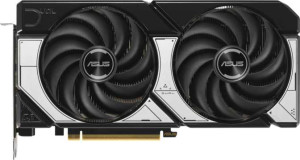
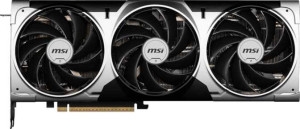
In the Performance category, the Asus Dual RTX 5070 OC and the MSI RTX 5070 Ventus 3X OC are, in every measurable way, identical. Both cards share the same 2325 MHz base clock and 2542 MHz boost clock, deliver the same 31.24 TFLOPS of floating-point performance, and are backed by equal counts of 6144 shading units, 192 TMUs, and 80 ROPs. Memory speed, pixel rate, and texture rate are also a perfect match across the board.
What this means in practice is that both GPUs draw from the exact same silicon configuration operating at the exact same frequencies — neither card has been tuned to extract additional headroom from the underlying GPU. The boost clock of 2542 MHz is the ceiling users can expect under sustained load on both cards, which will translate to equivalent frame rates, rendering throughput, and compute workload performance in real-world scenarios like gaming, 3D rendering, or AI-accelerated tasks. The shared support for Double Precision Floating Point (DPFP) is worth noting for users running scientific or professional compute workloads, though again, neither card holds an advantage here.
The verdict for this group is a dead tie. There is no performance differentiation whatsoever between these two cards at the GPU level. Any difference in real-world experience will come down to factors outside this spec group — such as thermal design, power delivery, or cooling efficiency — rather than raw GPU performance.