Asus Dual GeForce RTX 5070
Nvidia GeForce RTX 5060 Ti 16GB

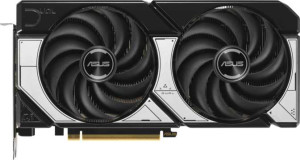
Asus Dual GeForce RTX 5070 Nvidia GeForce RTX 5060 Ti 16GB

Overview

Welcome to our in-depth specification comparison between the Asus Dual GeForce RTX 5070 and the Nvidia GeForce RTX 5060 Ti 16GB, two Blackwell-architecture GPUs built on a 5 nm process. Both cards share a strong feature foundation, yet they diverge significantly in areas like raw compute throughput, memory configuration, and power draw — making the choice between them anything but straightforward for gamers and creators alike.

Common Features

  • GPU memory speed is 1750 MHz on both products.
  • Both products support Double Precision Floating Point (DPFP).
  • Effective memory speed is 28000 MHz on both products.
  • Both products use GDDR7 memory.
  • Both products support ECC memory.
  • Both products support DirectX 12 Ultimate.
  • OpenGL version is 4.6 on both products.
  • OpenCL version is 3 on both products.
  • Multi-display technology is supported by both products.
  • Ray tracing is supported by both products.
  • 3D support is available on both products.
  • DLSS is supported by both products.
  • XeSS (XMX) support is not available on either product.
  • Both products have an HDMI output with 1 HDMI port at version HDMI 2.1b.
  • Both products have 3 DisplayPort outputs.
  • Neither product has USB-C ports, DVI outputs, or mini DisplayPort outputs.
  • Both products are based on the Blackwell GPU architecture.
  • Both products use PCIe version 5.
  • Both products are built on a 5 nm semiconductor process.
  • Neither product features air-water cooling.

Main Differences

  • GPU clock speed is 2325 MHz on Asus Dual GeForce RTX 5070 and 2410 MHz on Nvidia GeForce RTX 5060 Ti 16GB.
  • GPU turbo speed is 2512 MHz on Asus Dual GeForce RTX 5070 and 2570 MHz on Nvidia GeForce RTX 5060 Ti 16GB.
  • Pixel rate is 201 GPixel/s on Asus Dual GeForce RTX 5070 and 123.4 GPixel/s on Nvidia GeForce RTX 5060 Ti 16GB.
  • Floating-point performance is 30.87 TFLOPS on Asus Dual GeForce RTX 5070 and 23.69 TFLOPS on Nvidia GeForce RTX 5060 Ti 16GB.
  • Texture rate is 482.3 GTexels/s on Asus Dual GeForce RTX 5070 and 370.1 GTexels/s on Nvidia GeForce RTX 5060 Ti 16GB.
  • Shading units total 6144 on Asus Dual GeForce RTX 5070 and 4608 on Nvidia GeForce RTX 5060 Ti 16GB.
  • Texture mapping units (TMUs) number 192 on Asus Dual GeForce RTX 5070 and 144 on Nvidia GeForce RTX 5060 Ti 16GB.
  • Render output units (ROPs) number 80 on Asus Dual GeForce RTX 5070 and 48 on Nvidia GeForce RTX 5060 Ti 16GB.
  • Maximum memory bandwidth is 672 GB/s on Asus Dual GeForce RTX 5070 and 448 GB/s on Nvidia GeForce RTX 5060 Ti 16GB.
  • VRAM is 12GB on Asus Dual GeForce RTX 5070 and 16GB on Nvidia GeForce RTX 5060 Ti 16GB.
  • Memory bus width is 192-bit on Asus Dual GeForce RTX 5070 and 128-bit on Nvidia GeForce RTX 5060 Ti 16GB.
  • RGB lighting is present on Asus Dual GeForce RTX 5070 but not available on Nvidia GeForce RTX 5060 Ti 16GB.
  • Thermal Design Power (TDP) is 250W on Asus Dual GeForce RTX 5070 and 180W on Nvidia GeForce RTX 5060 Ti 16GB.
  • The number of transistors is 31100 million on Asus Dual GeForce RTX 5070 and 21900 million on Nvidia GeForce RTX 5060 Ti 16GB.
  • Width is 249 mm on Asus Dual GeForce RTX 5070 and 241 mm on Nvidia GeForce RTX 5060 Ti 16GB.
  • Height is 126 mm on Asus Dual GeForce RTX 5070 and 111 mm on Nvidia GeForce RTX 5060 Ti 16GB.
Specs Comparison
Asus Dual GeForce RTX 5070

Asus Dual GeForce RTX 5070

Nvidia GeForce RTX 5060 Ti 16GB

Nvidia GeForce RTX 5060 Ti 16GB

Performance:
GPU clock speed 2325 MHz 2410 MHz
GPU turbo 2512 MHz 2570 MHz
pixel rate 201 GPixel/s 123.4 GPixel/s
floating-point performance 30.87 TFLOPS 23.69 TFLOPS
texture rate 482.3 GTexels/s 370.1 GTexels/s
GPU memory speed 1750 MHz 1750 MHz
shading units 6144 4608
texture mapping units (TMUs) 192 144
render output units (ROPs) 80 48
Has Double Precision Floating Point (DPFP)

On paper, the RTX 5060 Ti 16GB edges out the RTX 5070 in raw clock speeds — its base clock of 2410 MHz and boost of 2570 MHz run modestly faster than the 5070's 2325 / 2512 MHz. However, clock speed alone is a poor proxy for GPU performance, and the rest of the compute unit counts tell a very different story.

The RTX 5070 carries significantly more silicon: 6144 shading units versus 4608 on the 5060 Ti — a roughly 33% advantage. This directly translates into the 5070's commanding lead in every throughput metric that actually drives gaming and compute workloads. Its 30.87 TFLOPS of floating-point performance outpaces the 5060 Ti's 23.69 TFLOPS by about 30%, meaning faster shader execution, better ray-tracing throughput, and smoother AI-accelerated rendering. The texture fill rate gap (482.3 vs 370.1 GTexels/s) reinforces this across texture-heavy scenes, while the pixel fill rate difference is even more dramatic — 201 vs 123.4 GPixel/s — driven by the 5070's 80 ROPs against just 48 on the 5060 Ti, a spec that directly impacts high-resolution and high-framerate rendering. Memory speed is identical at 1750 MHz on both cards, and both support Double Precision Floating Point, making them equally capable for mixed-precision compute tasks.

The verdict is clear: the RTX 5070 holds a substantial performance advantage across all key throughput metrics despite its slightly lower clock speeds. The 5060 Ti's higher clocks cannot compensate for its fewer shading units, TMUs, and ROPs. For users prioritizing raw rendering horsepower — whether for high-resolution gaming, content creation, or GPU compute — the 5070 is the stronger performer in this group by a meaningful margin.
Memory:
effective memory speed 28000 MHz 28000 MHz
maximum memory bandwidth 672 GB/s 448 GB/s
VRAM 12GB 16GB
GDDR version GDDR7 GDDR7
memory bus width 192-bit 128-bit
Supports ECC memory

Both cards share the same GDDR7 memory standard and an identical effective speed of 28000 MHz, so the differentiators here come down to capacity, bus width, and the bandwidth those two factors produce together. The RTX 5060 Ti 16GB wins on raw VRAM — 16GB versus 12GB on the RTX 5070 — which matters for workloads that saturate video memory: high-resolution texture packs, large AI model inference, or running multiple 4K assets simultaneously. In those specific scenarios, the extra 4GB acts as a buffer that prevents costly data eviction to system RAM.

Where the RTX 5070 reasserts itself is memory bandwidth. Its 192-bit bus delivers 672 GB/s of peak bandwidth, compared to the 5060 Ti's 128-bit bus and 448 GB/s — a roughly 50% bandwidth advantage. Bandwidth governs how quickly the GPU can feed its shader cores with data, so the 5070's wider pipe directly supports the higher compute throughput seen in its performance specs. Starving a fast GPU of memory bandwidth is a known bottleneck, and the 5060 Ti's narrower bus is a genuine architectural constraint. Both cards support ECC memory, making them equally suitable for error-sensitive professional compute tasks.

This group presents a genuine trade-off with no single winner. The RTX 5060 Ti 16GB has the capacity edge — useful for VRAM-limited workloads — while the RTX 5070 has a decisive bandwidth advantage that sustains its higher performance ceiling in most gaming and rendering scenarios. The right choice depends on use case: capacity-constrained tasks favor the 5060 Ti, while bandwidth-sensitive workloads clearly favor the 5070.

Features:
DirectX version DirectX 12 Ultimate DirectX 12 Ultimate
OpenGL version 4.6 4.6
OpenCL version 3 3
Supports multi-display technology
supports ray tracing
Supports 3D
supports DLSS
has XeSS (XMX)
AMD SAM / Intel Resizable BAR Intel Resizable BAR Intel Resizable BAR
has LHR
has RGB lighting
supported displays 4 4

Across the feature set, these two cards are remarkably aligned. Both support DirectX 12 Ultimate, ray tracing, and DLSS — meaning users of either card get access to the same generation of real-time lighting technology and AI-upscaling capabilities in supported titles. OpenGL 4.6 and OpenCL 3 parity ensures identical compatibility across creative and compute applications, and both support up to 4 simultaneous displays with multi-display technology enabled — a practical ceiling that covers virtually all multi-monitor setups.

Neither card carries LHR restrictions or XeSS support, and both include Intel Resizable BAR, which allows the CPU to access the full GPU frame buffer at once rather than in small chunks — a feature that can yield measurable frame rate improvements in titles optimized for it. Given how closely matched these two are on every functional capability, the only differentiating spec in this group is RGB lighting: the Asus Dual RTX 5070 includes it, while the RTX 5060 Ti 16GB does not.

For this group, the cards are essentially tied on all meaningful features. The RTX 5070 gains a minor cosmetic edge with RGB lighting — relevant for aesthetics-conscious builds — but no functional or software capability separates them here. A buyer's decision on features alone would come down entirely to whether RGB lighting matters for their setup.

Ports:
has an HDMI output
HDMI ports 1 1
HDMI version HDMI 2.1b HDMI 2.1b
DisplayPort outputs 3 3
USB-C ports 0 0
DVI outputs 0 0
mini DisplayPort outputs 0 0

Port configurations are an exact match between these two cards. Both offer 1 HDMI 2.1b output and 3 DisplayPort outputs, totaling four display connections — consistent with the four-display limit noted in their feature specs. The absence of USB-C, DVI, and mini DisplayPort outputs is identical across both.

The shared HDMI 2.1b standard is worth noting for practical reasons: it supports high-bandwidth output sufficient for 4K at high refresh rates and 8K connectivity, making both cards equally capable when pairing with modern high-end monitors or TVs. The three DisplayPort outputs give multi-monitor users flexible, high-fidelity connections without requiring adapters for the majority of current display hardware.

This group is a complete tie — there is no port-related differentiator between the RTX 5070 and the RTX 5060 Ti 16GB. Connectivity should play no role in choosing between these two cards.

General info:
GPU architecture Blackwell Blackwell
release date March 2025 April 2025
Thermal Design Power (TDP) 250W 180W
PCI Express (PCIe) version 5 5
semiconductor size 5 nm 5 nm
number of transistors 31100 million 21900 million
Has air-water cooling
width 249 mm 241 mm
height 126 mm 111 mm

Sharing the same Blackwell architecture, 5nm process node, and PCIe 5 interface, these two cards come from the same generational family — but their transistor counts reveal a meaningful size difference. The RTX 5070 packs 31,100 million transistors against the RTX 5060 Ti's 21,900 million, a roughly 42% larger die that directly underpins the 5070's superior compute unit counts seen in performance specs. More transistors at the same node generally means more functional hardware — not just raw complexity.

The thermal and physical implications of that larger die are equally significant. The RTX 5070 carries a 250W TDP versus 180W for the RTX 5060 Ti — a 70W difference that has real consequences for system builders. A higher TDP demands a more robust power supply, better case airflow, and in some configurations, a higher-wattage PCIe power connector setup. The 5060 Ti's lower power draw makes it a more practical fit for compact builds or systems with modest PSUs, and it will run cooler and quieter under equivalent cooling solutions. Neither card uses liquid cooling, so thermal management falls entirely on the air cooler design of each.

Physical size also splits slightly in the 5060 Ti's favor: at 241 × 111 mm versus the 5070's 249 × 126 mm, the 5060 Ti is a more compact card — a tangible advantage in smaller mid-tower or mATX cases where clearance is limited. Overall, the RTX 5060 Ti 16GB holds the edge in general practicality — lower power consumption and a smaller footprint — while the RTX 5070 justifies its larger, hungrier profile with a substantially bigger GPU die.

Comparison Summary & Verdict

After examining every specification, a clear picture emerges. The Asus Dual GeForce RTX 5070 holds a decisive edge in rendering muscle, boasting 30.87 TFLOPS of floating-point performance, 6144 shading units, a 192-bit memory bus delivering 672 GB/s of bandwidth, and 80 ROPs — making it the stronger choice for demanding workloads and high-framerate gaming. The Nvidia GeForce RTX 5060 Ti 16GB, on the other hand, counters with a larger 16 GB VRAM pool, marginally higher clock speeds, and a much lower 180W TDP, which makes it appealing for users working with memory-intensive tasks or building in power-constrained systems. Both cards are equally equipped in connectivity, software features, and API support, so the decision ultimately comes down to whether you need outright GPU horsepower or a larger frame buffer with greater power efficiency.

Asus Dual GeForce RTX 5070
Buy Asus Dual GeForce RTX 5070 if...

Buy the Asus Dual GeForce RTX 5070 if you want maximum GPU compute power, higher memory bandwidth, and superior pixel and texture throughput for demanding gaming or content creation workloads.

Nvidia GeForce RTX 5060 Ti 16GB
Buy Nvidia GeForce RTX 5060 Ti 16GB if...

Buy the Nvidia GeForce RTX 5060 Ti 16GB if you need a larger 16 GB VRAM buffer for memory-intensive applications and prefer a more power-efficient card with a lower 180W TDP.