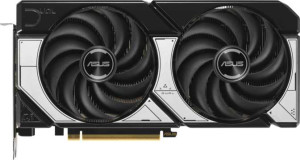
Asus Dual GeForce RTX 5070
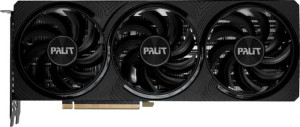
Palit GeForce RTX 4070 Ti Super Infinity 3

Asus Dual GeForce RTX 5070 Palit GeForce RTX 4070 Ti Super Infinity 3

Overview

When choosing between the Asus Dual GeForce RTX 5070 and the Palit GeForce RTX 4070 Ti Super Infinity 3, buyers are faced with a compelling cross-generational clash. The RTX 5070 arrives on the cutting-edge Blackwell architecture with next-gen GDDR7 memory, while the RTX 4070 Ti Super leverages Ada Lovelace silicon with a beefier shader array and larger frame buffer. This page breaks down their performance metrics, memory configurations, feature support, and physical dimensions to help you make an informed decision.

Common Features

  • Both GPUs support Double Precision Floating Point (DPFP).
  • Both cards share a maximum memory bandwidth of 672 GB/s.
  • Both GPUs support ECC memory.
  • Both cards are based on a 5 nm semiconductor process.
  • Both GPUs support DirectX 12 Ultimate.
  • Both cards support OpenGL version 4.6.
  • Both GPUs support OpenCL version 3.
  • Multi-display technology is supported on both cards.
  • Ray tracing is supported on both cards.
  • 3D support is available on both cards.
  • DLSS support is available on both cards.
  • XeSS (XMX) support is not available on either card.
  • Both cards feature one HDMI output and three DisplayPort outputs.
  • Neither card has USB-C ports, DVI outputs, or mini DisplayPort outputs.
  • Air-water cooling is not available on either card.

Main Differences

  • GPU clock speed is 2325 MHz on Asus Dual GeForce RTX 5070 and 2340 MHz on Palit GeForce RTX 4070 Ti Super Infinity 3.
  • GPU turbo speed is 2512 MHz on Asus Dual GeForce RTX 5070 and 2610 MHz on Palit GeForce RTX 4070 Ti Super Infinity 3.
  • Pixel rate is 201 GPixel/s on Asus Dual GeForce RTX 5070 and 250.6 GPixel/s on Palit GeForce RTX 4070 Ti Super Infinity 3.
  • Floating-point performance is 30.87 TFLOPS on Asus Dual GeForce RTX 5070 and 44.1 TFLOPS on Palit GeForce RTX 4070 Ti Super Infinity 3.
  • Texture rate is 482.3 GTexels/s on Asus Dual GeForce RTX 5070 and 689 GTexels/s on Palit GeForce RTX 4070 Ti Super Infinity 3.
  • GPU memory speed is 1750 MHz on Asus Dual GeForce RTX 5070 and 1313 MHz on Palit GeForce RTX 4070 Ti Super Infinity 3.
  • Shading units total 6144 on Asus Dual GeForce RTX 5070 and 8448 on Palit GeForce RTX 4070 Ti Super Infinity 3.
  • Texture mapping units (TMUs) number 192 on Asus Dual GeForce RTX 5070 and 264 on Palit GeForce RTX 4070 Ti Super Infinity 3.
  • Render output units (ROPs) number 80 on Asus Dual GeForce RTX 5070 and 96 on Palit GeForce RTX 4070 Ti Super Infinity 3.
  • Effective memory speed is 28000 MHz on Asus Dual GeForce RTX 5070 and 21000 MHz on Palit GeForce RTX 4070 Ti Super Infinity 3.
  • VRAM is 12 GB on Asus Dual GeForce RTX 5070 and 16 GB on Palit GeForce RTX 4070 Ti Super Infinity 3.
  • Asus Dual GeForce RTX 5070 uses GDDR7 memory while Palit GeForce RTX 4070 Ti Super Infinity 3 uses GDDR6X memory.
  • Memory bus width is 192-bit on Asus Dual GeForce RTX 5070 and 256-bit on Palit GeForce RTX 4070 Ti Super Infinity 3.
  • RGB lighting is present on Asus Dual GeForce RTX 5070 but not available on Palit GeForce RTX 4070 Ti Super Infinity 3.
  • HDMI version is 2.1b on Asus Dual GeForce RTX 5070 and 2.1a on Palit GeForce RTX 4070 Ti Super Infinity 3.
  • GPU architecture is Blackwell on Asus Dual GeForce RTX 5070 and Ada Lovelace on Palit GeForce RTX 4070 Ti Super Infinity 3.
  • Thermal Design Power (TDP) is 250W on Asus Dual GeForce RTX 5070 and 285W on Palit GeForce RTX 4070 Ti Super Infinity 3.
  • PCIe version is 5 on Asus Dual GeForce RTX 5070 and 4 on Palit GeForce RTX 4070 Ti Super Infinity 3.
  • Transistor count is 31100 million on Asus Dual GeForce RTX 5070 and 76300 million on Palit GeForce RTX 4070 Ti Super Infinity 3.
  • Card width is 249 mm on Asus Dual GeForce RTX 5070 and 294 mm on Palit GeForce RTX 4070 Ti Super Infinity 3, while height is 126 mm on Asus Dual GeForce RTX 5070 and 116 mm on Palit GeForce RTX 4070 Ti Super Infinity 3.
Specs Comparison
Asus Dual GeForce RTX 5070

Asus Dual GeForce RTX 5070

Palit GeForce RTX 4070 Ti Super Infinity 3

Palit GeForce RTX 4070 Ti Super Infinity 3

Performance:
GPU clock speed 2325 MHz 2340 MHz
GPU turbo 2512 MHz 2610 MHz
pixel rate 201 GPixel/s 250.6 GPixel/s
floating-point performance 30.87 TFLOPS 44.1 TFLOPS
texture rate 482.3 GTexels/s 689 GTexels/s
GPU memory speed 1750 MHz 1313 MHz
shading units 6144 8448
texture mapping units (TMUs) 192 264
render output units (ROPs) 80 96
Has Double Precision Floating Point (DPFP)

On paper, the raw compute numbers tell a clear story: the Palit RTX 4070 Ti Super Infinity 3 holds a commanding lead across every throughput metric. Its 44.1 TFLOPS of floating-point performance dwarfs the Asus Dual RTX 5070's 30.87 TFLOPS — a gap of roughly 43% — and the same margin carries through to texture throughput (689 GTexels/s vs 482.3 GTexels/s) and pixel fill rate (250.6 GPixel/s vs 201 GPixel/s). These differences trace directly back to the underlying silicon: the 4070 Ti Super packs 8,448 shading units against the RTX 5070's 6,144, along with more TMUs (264 vs 192) and more ROPs (96 vs 80). In practice, higher shading unit counts and fill rates translate to smoother rendering in geometry-heavy scenes and faster throughput in compute workloads like AI inference or video encoding run on the GPU.

The one area where the RTX 5070 pulls ahead is GPU memory speed: at 1,750 MHz vs the 4070 Ti Super's 1,313 MHz, its memory interface runs noticeably faster. This can help in bandwidth-sensitive scenarios, though whether that advantage offsets the large gap in compute and texture throughput depends heavily on the workload. Clock speeds at base and boost are comparable — the 4070 Ti Super edges out a slightly higher turbo (2,610 MHz vs 2,512 MHz), so the RTX 5070's higher memory clock is not accompanied by a core clock advantage. Both cards support Double Precision Floating Point, making neither meaningfully differentiated for DPFP-dependent professional tasks based on this data alone.

Based strictly on the provided performance specs, the Palit RTX 4070 Ti Super Infinity 3 has a clear and significant advantage. Its lead in shading units, TFLOPS, texture rate, and pixel rate is substantial enough to matter in real gaming and GPU compute scenarios — not a marginal edge but a structural one rooted in more execution resources. The Asus Dual RTX 5070's faster memory is a genuine positive, but it does not close the gap in raw computational throughput established by these figures.

Memory:
effective memory speed 28000 MHz 21000 MHz
maximum memory bandwidth 672 GB/s 672 GB/s
VRAM 12GB 16GB
GDDR version GDDR7 GDDR6X
memory bus width 192-bit 256-bit
Supports ECC memory

The memory subsystems of these two cards represent a fascinating engineering trade-off. The Asus Dual RTX 5070 uses GDDR7 running at an effective 28,000 MHz, while the Palit RTX 4070 Ti Super relies on GDDR6X at 21,000 MHz. Despite the RTX 5070's significantly faster memory technology, both cards arrive at an identical peak bandwidth figure of 672 GB/s — the RTX 5070 achieves this over a narrower 192-bit bus by leaning on GDDR7's higher per-pin speed, whereas the 4070 Ti Super reaches the same ceiling through a wider 256-bit bus compensating for its slower GDDR6X. For most rendering workloads, peak bandwidth is what determines real-world throughput, so this convergence is meaningful: neither card enjoys a memory bandwidth advantage at the system level.

Where the two cards diverge more consequentially is in VRAM capacity. The 4070 Ti Super ships with 16GB versus the RTX 5070's 12GB — a 33% larger frame buffer. In practice, VRAM capacity sets the ceiling for how demanding a scene or texture set the GPU can hold without spilling to slower system memory. At high resolutions with large texture packs, or in GPU-accelerated creative workloads like 3D rendering and video processing with heavy assets, the extra 4GB on the 4070 Ti Super provides more headroom before performance degrades. Both cards support ECC memory, which is a relevant parity point for professional and compute use cases requiring error-corrected memory access.

This group is genuinely split. The RTX 5070 brings a newer, more efficient memory architecture in GDDR7, but the bandwidth outcome is equal. The Palit RTX 4070 Ti Super holds the practical edge here by virtue of its larger 16GB VRAM pool, which is the more tangible differentiator for users pushing high-resolution gaming, large AI models, or content creation pipelines where running out of VRAM has immediate and significant performance consequences.

Features:
DirectX version DirectX 12 Ultimate DirectX 12 Ultimate
OpenGL version 4.6 4.6
OpenCL version 3 3
Supports multi-display technology
supports ray tracing
Supports 3D
supports DLSS
has XeSS (XMX)
AMD SAM / Intel Resizable BAR Intel Resizable BAR Intel Resizable BAR
has LHR
has RGB lighting
supported displays 4 4

Across the feature set, these two cards are remarkably aligned. Both support DirectX 12 Ultimate, OpenGL 4.6, and OpenCL 3, meaning they stand on equal footing for gaming compatibility, professional graphics APIs, and GPU compute tasks. Ray tracing, DLSS, 3D output, and multi-display support up to 4 connected displays are shared across both cards as well. For the vast majority of users, this parity means the feature checklist will not be a deciding factor — whatever software or game leverages these capabilities will run on either card without compromise.

The only differentiator in this group is RGB lighting: the Asus Dual RTX 5070 includes it, while the Palit RTX 4070 Ti Super does not. This is purely an aesthetic consideration with no bearing on performance or compatibility, but it is relevant for builders assembling a visually cohesive system with synchronized lighting across components. For those indifferent to aesthetics, its absence on the Palit card is equally inconsequential.

Strictly on features, this group is essentially a tie. The Asus Dual RTX 5070 gains a marginal edge for RGB-focused builds, but every functionally meaningful feature — API support, ray tracing, DLSS, display output count — is identical between the two cards. A buyer's decision here should rest entirely on whether RGB lighting matters to their specific build, not on any performance-relevant feature gap.

Ports:
has an HDMI output
HDMI ports 1 1
HDMI version HDMI 2.1b HDMI 2.1a
DisplayPort outputs 3 3
USB-C ports 0 0
DVI outputs 0 0
mini DisplayPort outputs 0 0

Port configurations on these two cards are nearly identical: both offer 1 HDMI output and 3 DisplayPort outputs, supporting up to four simultaneous displays without adapters. Neither card includes USB-C or DVI, so users dependent on those connectors will need adapters regardless of which card they choose. For the overwhelming majority of desktop monitor setups, this layout is more than sufficient.

The sole distinction is the HDMI version: the Asus Dual RTX 5070 ships with HDMI 2.1b, while the Palit RTX 4070 Ti Super carries HDMI 2.1a. In practical terms, HDMI 2.1b incrementally extends the specification over 2.1a, primarily around display stream compression and auxiliary channel improvements. For most users connecting a single high-refresh-rate or 4K display, the real-world difference between these two revisions will be imperceptible day-to-day.

This group is effectively a tie for almost all users. The Asus Dual RTX 5070 holds a very narrow technical edge with the newer HDMI 2.1b standard, which could matter at the margins for users targeting the absolute ceiling of HDMI display capabilities, but the port count and overall connectivity layout are identical. Neither card offers a meaningful connectivity advantage over the other for typical multi-monitor or home theater use cases.

General info:
GPU architecture Blackwell Ada Lovelace
release date March 2025 June 2025
Thermal Design Power (TDP) 250W 285W
PCI Express (PCIe) version 5 4
semiconductor size 5 nm 5 nm
number of transistors 31100 million 76300 million
Has air-water cooling
width 249 mm 294 mm
height 126 mm 116 mm

Both cards are fabbed on a 5 nm process node, but they diverge significantly in design philosophy. The Palit RTX 4070 Ti Super (Ada Lovelace) packs a massive 76,300 million transistors onto its die, compared to the Asus Dual RTX 5070's (Blackwell) 31,100 million — more than double. This correlates directly with the raw compute gap seen in the performance group, where the 4070 Ti Super's larger die enables more execution units. The RTX 5070's Blackwell architecture achieves its throughput with a substantially smaller die, which is characteristic of a newer architectural generation extracting more efficiency per transistor.

From a system-building perspective, the RTX 5070 holds two practical advantages. Its TDP of 250W is meaningfully lower than the 4070 Ti Super's 285W, meaning it draws less power under load, generates less heat, and places lighter demands on the power supply — a relevant consideration for compact builds or systems with tighter power budgets. It also supports PCIe 5 versus the 4070 Ti Super's PCIe 4, offering greater future headroom for bandwidth-intensive workloads, though current games and applications rarely saturate even PCIe 4. Physically, the RTX 5070 is also more compact at 249 mm long versus 294 mm, making it easier to fit in mid-tower and smaller cases.

For this group, the Asus Dual RTX 5070 has the clearer practical edge. Its lower TDP, newer PCIe generation, and smaller physical footprint make it the more system-friendly card. The 4070 Ti Super's transistor count advantage is real but is already accounted for in raw performance metrics — in terms of general platform characteristics, the RTX 5070's Blackwell foundation gives it the more efficient and forward-compatible profile.

Comparison Summary & Verdict

Both cards share a strong foundation: identical 672 GB/s memory bandwidth, 5 nm fabrication, DirectX 12 Ultimate, ray tracing, and DLSS support. However, their strengths diverge clearly. The Asus Dual GeForce RTX 5070 wins on efficiency and forward compatibility, offering a lower 250W TDP, PCIe 5 support, faster GDDR7 memory at 28000 MHz effective speed, RGB lighting, and a more compact 249 mm width — ideal for builders prioritizing a modern, power-conscious platform. The Palit GeForce RTX 4070 Ti Super Infinity 3 counters with raw horsepower: 44.1 TFLOPS of floating-point performance, 8448 shading units, a 16 GB GDDR6X buffer on a wider 256-bit bus, and higher pixel and texture rates — making it the stronger choice for users who want maximum rasterization performance and a larger VRAM headroom today.

Asus Dual GeForce RTX 5070
Buy Asus Dual GeForce RTX 5070 if...

Buy the Asus Dual GeForce RTX 5070 if you want a next-generation Blackwell GPU with faster GDDR7 memory, lower power draw at 250W, PCIe 5 support, and a more compact design with RGB lighting.

Palit GeForce RTX 4070 Ti Super Infinity 3
Buy Palit GeForce RTX 4070 Ti Super Infinity 3 if...

Choose the Palit GeForce RTX 4070 Ti Super Infinity 3 if you need maximum raw rasterization performance, a larger 16 GB VRAM buffer on a 256-bit bus, and higher overall floating-point throughput.