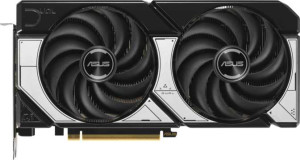
Asus Dual GeForce RTX 5070
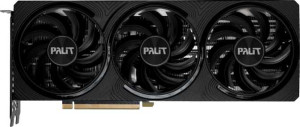
Palit GeForce RTX 4070 Ti Super Infinity 3 OC

Asus Dual GeForce RTX 5070 Palit GeForce RTX 4070 Ti Super Infinity 3 OC

Overview

Welcome to our in-depth specification showdown between the Asus Dual GeForce RTX 5070 and the Palit GeForce RTX 4070 Ti Super Infinity 3 OC. These two graphics cards come from different GPU generations, pitting Nvidia's cutting-edge Blackwell architecture against the proven Ada Lovelace design. In this comparison, we examine their key battlegrounds, including raw compute performance, memory configuration, power efficiency, and physical dimensions, to help you decide which card best fits your needs.

Common Features

  • Both cards support Double Precision Floating Point (DPFP).
  • Both cards share a maximum memory bandwidth of 672 GB/s.
  • Both cards support ECC memory.
  • Both cards are built on a 5 nm semiconductor process.
  • Both cards support DirectX 12 Ultimate.
  • Both cards support OpenGL version 4.6.
  • Both cards support OpenCL version 3.
  • Both cards support multi-display technology.
  • Both cards support ray tracing.
  • Both cards support 3D.
  • Both cards support DLSS.
  • XeSS (XMX) support is not available on either card.
  • Both cards include one HDMI output.
  • Both cards feature three DisplayPort outputs.
  • Neither card has USB-C ports.
  • Neither card has DVI outputs.
  • Neither card has mini DisplayPort outputs.
  • Neither card uses air-water cooling.

Main Differences

  • GPU clock speed is 2325 MHz on Asus Dual GeForce RTX 5070 and 2340 MHz on Palit GeForce RTX 4070 Ti Super Infinity 3 OC.
  • GPU turbo clock is 2512 MHz on Asus Dual GeForce RTX 5070 and 2640 MHz on Palit GeForce RTX 4070 Ti Super Infinity 3 OC.
  • Pixel rate is 201 GPixel/s on Asus Dual GeForce RTX 5070 and 253.4 GPixel/s on Palit GeForce RTX 4070 Ti Super Infinity 3 OC.
  • Floating-point performance is 30.87 TFLOPS on Asus Dual GeForce RTX 5070 and 44.61 TFLOPS on Palit GeForce RTX 4070 Ti Super Infinity 3 OC.
  • Texture rate is 482.3 GTexels/s on Asus Dual GeForce RTX 5070 and 697 GTexels/s on Palit GeForce RTX 4070 Ti Super Infinity 3 OC.
  • GPU memory speed is 1750 MHz on Asus Dual GeForce RTX 5070 and 1313 MHz on Palit GeForce RTX 4070 Ti Super Infinity 3 OC.
  • Shading units number 6144 on Asus Dual GeForce RTX 5070 and 8448 on Palit GeForce RTX 4070 Ti Super Infinity 3 OC.
  • Texture mapping units (TMUs) total 192 on Asus Dual GeForce RTX 5070 and 264 on Palit GeForce RTX 4070 Ti Super Infinity 3 OC.
  • Render output units (ROPs) number 80 on Asus Dual GeForce RTX 5070 and 96 on Palit GeForce RTX 4070 Ti Super Infinity 3 OC.
  • Effective memory speed is 28000 MHz on Asus Dual GeForce RTX 5070 and 21000 MHz on Palit GeForce RTX 4070 Ti Super Infinity 3 OC.
  • VRAM is 12 GB on Asus Dual GeForce RTX 5070 and 16 GB on Palit GeForce RTX 4070 Ti Super Infinity 3 OC.
  • Memory type is GDDR7 on Asus Dual GeForce RTX 5070 and GDDR6X on Palit GeForce RTX 4070 Ti Super Infinity 3 OC.
  • Memory bus width is 192-bit on Asus Dual GeForce RTX 5070 and 256-bit on Palit GeForce RTX 4070 Ti Super Infinity 3 OC.
  • RGB lighting is present on Asus Dual GeForce RTX 5070 but not available on Palit GeForce RTX 4070 Ti Super Infinity 3 OC.
  • HDMI version is 2.1b on Asus Dual GeForce RTX 5070 and 2.1a on Palit GeForce RTX 4070 Ti Super Infinity 3 OC.
  • GPU architecture is Blackwell on Asus Dual GeForce RTX 5070 and Ada Lovelace on Palit GeForce RTX 4070 Ti Super Infinity 3 OC.
  • Thermal Design Power (TDP) is 250W on Asus Dual GeForce RTX 5070 and 285W on Palit GeForce RTX 4070 Ti Super Infinity 3 OC.
  • PCIe version is 5 on Asus Dual GeForce RTX 5070 and 4 on Palit GeForce RTX 4070 Ti Super Infinity 3 OC.
  • Transistor count is 31100 million on Asus Dual GeForce RTX 5070 and 76300 million on Palit GeForce RTX 4070 Ti Super Infinity 3 OC.
  • Card width is 249 mm on Asus Dual GeForce RTX 5070 and 294 mm on Palit GeForce RTX 4070 Ti Super Infinity 3 OC.
  • Card height is 126 mm on Asus Dual GeForce RTX 5070 and 116 mm on Palit GeForce RTX 4070 Ti Super Infinity 3 OC.
Specs Comparison
Asus Dual GeForce RTX 5070

Asus Dual GeForce RTX 5070

Palit GeForce RTX 4070 Ti Super Infinity 3 OC

Palit GeForce RTX 4070 Ti Super Infinity 3 OC

Performance:
GPU clock speed 2325 MHz 2340 MHz
GPU turbo 2512 MHz 2640 MHz
pixel rate 201 GPixel/s 253.4 GPixel/s
floating-point performance 30.87 TFLOPS 44.61 TFLOPS
texture rate 482.3 GTexels/s 697 GTexels/s
GPU memory speed 1750 MHz 1313 MHz
shading units 6144 8448
texture mapping units (TMUs) 192 264
render output units (ROPs) 80 96
Has Double Precision Floating Point (DPFP)

Looking at raw compute throughput, the Palit RTX 4070 Ti Super holds a commanding lead. Its 44.61 TFLOPS of floating-point performance dwarfs the Asus RTX 5070's 30.87 TFLOPS — a gap of roughly 45%. This advantage is structural: the 4070 Ti Super fields 8,448 shading units versus the RTX 5070's 6,144, meaning it can process significantly more parallel workloads per clock cycle. The texture rate (697 vs. 482.3 GTexels/s) and pixel rate (253.4 vs. 201 GPixel/s) follow the same pattern, pointing to a consistent throughput advantage in both rendering and rasterization-heavy scenarios.

Clock speeds tell a more nuanced story. The two cards open nearly identically at base (2340 MHz vs. 2325 MHz), but the 4070 Ti Super pulls ahead under boost at 2640 MHz compared to the RTX 5070's 2512 MHz. The RTX 5070 does counter with substantially faster memory at 1750 MHz versus the 4070 Ti Super's 1313 MHz — a difference that can reduce memory-bound bottlenecks, particularly at higher resolutions or with large texture assets, though it is not enough to offset the deficit in shader and compute resources.

Both cards support Double Precision Floating Point (DPFP), making either a viable option for compute workloads beyond pure gaming. Overall, the Palit RTX 4070 Ti Super Infinity 3 OC holds a clear performance edge in this group across nearly every throughput metric. The Asus RTX 5070's advantage is limited to memory clock speed, which alone cannot bridge the wide gap in raw processing power.

Memory:
effective memory speed 28000 MHz 21000 MHz
maximum memory bandwidth 672 GB/s 672 GB/s
VRAM 12GB 16GB
GDDR version GDDR7 GDDR6X
memory bus width 192-bit 256-bit
Supports ECC memory

The most striking detail in this group is how both cards arrive at the exact same 672 GB/s of maximum memory bandwidth via completely different architectural approaches. The Asus RTX 5070 uses a narrower 192-bit bus paired with faster GDDR7 memory running at an effective 28,000 MHz, while the Palit RTX 4070 Ti Super relies on a wider 256-bit bus with GDDR6X at 21,000 MHz. In practice, bandwidth is the metric that most directly determines how quickly the GPU can feed its shaders with data, so this parity means neither card has a meaningful edge in memory throughput under typical conditions.

Where the comparison tips decisively is VRAM capacity. The 4070 Ti Super carries 16GB versus the RTX 5070's 12GB — a 33% advantage that becomes tangible in real workloads. At 4K with high-resolution texture packs, in modern titles that routinely push past 10GB of VRAM usage, or when running local AI inference models, that extra 4GB of headroom can be the difference between smooth operation and performance-degrading memory spills. The RTX 5070's 12GB is not insufficient for most current games at 1440p, but it leaves less margin for the future.

Both cards support ECC memory, a feature relevant to professional and compute users who need error correction in sensitive workloads. On balance, the Palit RTX 4070 Ti Super holds the edge in this group: bandwidth is a wash, but its larger VRAM pool provides a more versatile and future-proof memory configuration, particularly for users who regularly push high-resolution or memory-intensive scenarios.

Features:
DirectX version DirectX 12 Ultimate DirectX 12 Ultimate
OpenGL version 4.6 4.6
OpenCL version 3 3
Supports multi-display technology
supports ray tracing
Supports 3D
supports DLSS
has XeSS (XMX)
AMD SAM / Intel Resizable BAR Intel Resizable BAR Intel Resizable BAR
has LHR
has RGB lighting
supported displays 4 4

From a feature standpoint, these two cards are remarkably well-matched. Both support DirectX 12 Ultimate, ray tracing, and DLSS, meaning users on either card have access to the same generation of visual enhancement and hardware-accelerated lighting technologies. Multi-display support is identical at 4 displays, and both implement Intel Resizable BAR, which allows the CPU to access the full GPU framebuffer at once — a low-level optimization that can yield modest but real performance improvements in compatible systems.

The only tangible differentiator in this group is RGB lighting: the Asus RTX 5070 includes it, while the Palit RTX 4070 Ti Super does not. For users building inside a windowed case with a themed aesthetic, this is a genuine consideration. For those indifferent to lighting, it is simply a non-factor.

On features, this comparison is essentially a tie. Every meaningful software capability, API support level, and display configuration is shared between the two cards. The Asus RTX 5070 earns a narrow edge solely due to its RGB lighting inclusion, but only for users who value case aesthetics — it confers no performance or functional advantage whatsoever.

Ports:
has an HDMI output
HDMI ports 1 1
HDMI version HDMI 2.1b HDMI 2.1a
DisplayPort outputs 3 3
USB-C ports 0 0
DVI outputs 0 0
mini DisplayPort outputs 0 0

Port configurations on these two cards are nearly identical: both offer 1 HDMI and 3 DisplayPort outputs, supporting up to four simultaneous displays with no USB-C or legacy DVI connections on either. For the vast majority of users — whether running a single high-refresh monitor or a multi-display workstation setup — this layout is more than adequate.

The sole distinction is the HDMI version: the Asus RTX 5070 ships with HDMI 2.1b, while the Palit RTX 4070 Ti Super carries HDMI 2.1a. Both revisions support 4K at high refresh rates and 8K output, but 2.1b introduces incremental refinements over 2.1a. In practice, the difference is unlikely to affect most users today, though the newer revision offers marginally better forward compatibility for emerging display standards.

Overall, this group is nearly a tie. The Asus RTX 5070 holds a very slight technical edge due to its newer HDMI revision, but the real-world impact is minimal for current display ecosystems. Anyone prioritizing connectivity alone will find both cards equally capable for typical multi-monitor or high-resolution single-display use.

General info:
GPU architecture Blackwell Ada Lovelace
release date March 2025 September 2025
Thermal Design Power (TDP) 250W 285W
PCI Express (PCIe) version 5 4
semiconductor size 5 nm 5 nm
number of transistors 31100 million 76300 million
Has air-water cooling
width 249 mm 294 mm
height 126 mm 116 mm

The generational gap between these two cards is immediately apparent. The Asus RTX 5070 is built on Nvidia's newer Blackwell architecture, while the Palit RTX 4070 Ti Super belongs to the previous Ada Lovelace generation. Both are fabricated on a 5 nm process node, yet the transistor counts tell a surprising story: the 4070 Ti Super packs 76,300 million transistors against the RTX 5070's 31,100 million. This reflects a fundamentally different die design — Blackwell achieves its capabilities through architectural efficiency rather than sheer silicon area, whereas Ada Lovelace relies on a much larger, more transistor-dense chip.

Power efficiency is where the RTX 5070 makes a compelling case. Its 250W TDP is notably lower than the 4070 Ti Super's 285W, meaning it draws less power from the system and generates less heat under load — a meaningful advantage for smaller builds, systems with modest PSUs, or users mindful of long-term energy costs. The RTX 5070 also steps up to PCIe 5.0 versus the 4070 Ti Super's PCIe 4.0, offering greater theoretical interface bandwidth, though in current real-world use this distinction rarely creates a bottleneck.

Physically, the RTX 5070 is the more compact card at 249 mm in length compared to the 4070 Ti Super's 294 mm, giving it a tangible advantage in smaller or mid-tower cases where clearance is tight. On general characteristics, the Asus RTX 5070 holds the edge: it runs cooler, draws less power, fits more easily into compact builds, and represents the newer platform — all without any disadvantage in this specific category.
Comparison Summary & Verdict

After reviewing all the specifications, a clear picture emerges for each card. The Palit GeForce RTX 4070 Ti Super Infinity 3 OC holds a significant lead in raw throughput, offering higher shading unit counts, a superior texture rate of 697 GTexels/s, and 16 GB of VRAM on a wider 256-bit memory bus, making it the stronger choice for demanding workloads and high-resolution gaming. On the other hand, the Asus Dual GeForce RTX 5070 benefits from the newer Blackwell architecture, faster GDDR7 memory at 28000 MHz effective speed, a lower TDP of 250W, a more compact form factor, PCIe 5 connectivity, and RGB lighting. Buyers who value power efficiency and next-generation platform readiness will find the RTX 5070 compelling, while those who need maximum performance headroom today should lean toward the RTX 4070 Ti Super Infinity 3 OC.

Asus Dual GeForce RTX 5070
Buy Asus Dual GeForce RTX 5070 if...

Buy the Asus Dual GeForce RTX 5070 if you want a more power-efficient card with faster GDDR7 memory, PCIe 5 support, and a compact design built on Nvidia's latest Blackwell architecture.

Palit GeForce RTX 4070 Ti Super Infinity 3 OC
Buy Palit GeForce RTX 4070 Ti Super Infinity 3 OC if...

Buy the Palit GeForce RTX 4070 Ti Super Infinity 3 OC if you need maximum raw performance, with more shading units, a higher texture rate, and 16 GB of VRAM on a wider 256-bit memory bus.