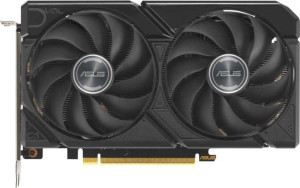
Asus Dual Radeon RX 9060 XT 16GB
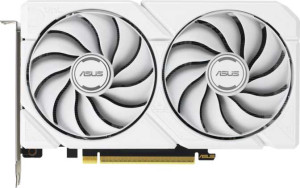
Asus Dual Radeon RX 9060 XT White Edition 16GB

Asus Dual Radeon RX 9060 XT 16GB Asus Dual Radeon RX 9060 XT White Edition 16GB

Overview

Welcome to our detailed spec comparison between the Asus Dual Radeon RX 9060 XT 16GB and the Asus Dual Radeon RX 9060 XT White Edition 16GB. Both cards are built on AMD's latest RDNA 4.0 architecture and target the same performance segment, but how closely do they actually match up across performance, memory, features, and connectivity? Read on as we break down every specification side by side.

Common Features

  • Both cards have a base GPU clock speed of 1700 MHz.
  • Both cards have a GPU turbo clock speed of 3230 MHz.
  • Both cards deliver a pixel rate of 206.7 GPixel/s.
  • Both cards offer a floating-point performance of 26.46 TFLOPS.
  • Both cards provide a texture rate of 413.4 GTexels/s.
  • Both cards have a GPU memory speed of 2518 MHz.
  • Both cards feature 2048 shading units.
  • Both cards include 128 texture mapping units (TMUs).
  • Both cards have an effective memory speed of 20000 MHz.
  • Both cards provide a maximum memory bandwidth of 322.3 GB/s.
  • Both cards come with 16GB of VRAM.
  • Both cards use GDDR6 memory.
  • Both cards have a 128-bit memory bus width.
  • ECC memory support is available on both cards.
  • Both cards support DirectX 12 Ultimate.
  • Both cards support OpenGL version 4.6.
  • Both cards support OpenCL version 2.2.
  • Multi-display technology support is available on both cards.
  • Ray tracing support is available on both cards.
  • 3D support is available on both cards.
  • DLSS support is not available on either card.
  • FSR4 support is available on both cards.
  • Both cards include an HDMI output.
  • Both cards feature 1 HDMI port running version 2.1b.
  • Both cards offer 2 DisplayPort outputs.
  • Neither card includes USB-C ports.
  • Neither card includes DVI outputs.
  • Neither card includes mini DisplayPort outputs.
  • Both cards are based on the RDNA 4.0 GPU architecture.
  • Both cards have a Thermal Design Power (TDP) of 160W.
  • Both cards use PCIe version 5.
  • Both cards are built on a 4 nm semiconductor process.
  • Both cards contain 29700 million transistors.
  • Air-water cooling is not available on either card.
  • Both cards share the same width of 202 mm.
  • Both cards share the same height of 120 mm.
Specs Comparison
Asus Dual Radeon RX 9060 XT 16GB

Asus Dual Radeon RX 9060 XT 16GB

Asus Dual Radeon RX 9060 XT White Edition 16GB

Asus Dual Radeon RX 9060 XT White Edition 16GB

Performance:
GPU clock speed 1700 MHz 1700 MHz
GPU turbo 3230 MHz 3230 MHz
pixel rate 206.7 GPixel/s 206.7 GPixel/s
floating-point performance 26.46 TFLOPS 26.46 TFLOPS
texture rate 413.4 GTexels/s 413.4 GTexels/s
GPU memory speed 2518 MHz 2518 MHz
shading units 2048 2048
texture mapping units (TMUs) 128 128
render output units (ROPs) 64 64
Has Double Precision Floating Point (DPFP)

In the Performance category, the Asus Dual Radeon RX 9060 XT 16GB and the Asus Dual Radeon RX 9060 XT White Edition 16GB are an exact match across every measurable metric. Both cards share a base GPU clock of 1700 MHz and a turbo clock of 3230 MHz, a competitive boost frequency that positions this GPU firmly in the upper mid-range tier and enables strong 1080p and 1440p gaming performance.

The computational throughput figures reinforce this parity: both deliver 26.46 TFLOPS of floating-point performance, a pixel rate of 206.7 GPixel/s, and a texture rate of 413.4 GTexels/s, backed by identical shader, TMU, and ROP counts of 2048, 128, and 64 respectively. These figures translate to virtually identical rendering capabilities in rasterized workloads. The shared 2518 MHz memory speed also ensures neither card has a bandwidth advantage over the other. Both support Double Precision Floating Point, which, while rarely a factor in gaming, adds marginal value for compute-adjacent tasks.

The verdict here is unambiguous: this is a complete tie. The White Edition is cosmetically differentiated but is built on the same silicon with identical clocks and compute units. No performance advantage exists on either side, so buyers choosing between these two can do so entirely on aesthetics or pricing without sacrificing a single frame.

Memory:
effective memory speed 20000 MHz 20000 MHz
maximum memory bandwidth 322.3 GB/s 322.3 GB/s
VRAM 16GB 16GB
GDDR version GDDR6 GDDR6
memory bus width 128-bit 128-bit
Supports ECC memory

Memory is often the deciding factor in how a GPU handles demanding textures, high resolutions, and future-proofing, so it is worth examining closely. Both the Asus Dual Radeon RX 9060 XT 16GB and the White Edition are equipped with 16GB of GDDR6 VRAM — a notably generous allocation for this market segment. At 1440p and even early 4K workloads, 16GB provides substantial headroom for high-resolution texture packs and memory-hungry titles that frequently push 8GB or 12GB cards to their limits.

Running across a 128-bit memory bus, the effective memory speed of 20000 MHz yields a maximum bandwidth of 322.3 GB/s. The 128-bit bus is a narrower interface by high-end GPU standards, but the high-speed GDDR6 largely compensates in practice, delivering bandwidth that is adequate for the GPU's compute tier. ECC memory support on both cards is a minor but noteworthy addition, primarily relevant for prosumer or compute workloads where data integrity matters.

Once again, the two cards are in complete parity. Every memory specification — capacity, type, bus width, bandwidth, and ECC support — is identical. Neither card holds any memory advantage over the other, and buyers can treat this category as a non-differentiator when deciding between the standard and White Edition variants.

Features:
DirectX version DirectX 12 Ultimate DirectX 12 Ultimate
OpenGL version 4.6 4.6
OpenCL version 2.2 2.2
Supports multi-display technology
supports ray tracing
Supports 3D
supports DLSS
has FSR4
has XeSS (XMX)
AMD SAM / Intel Resizable BAR AMD SAM AMD SAM
has LHR
has RGB lighting
supported displays 3 3

On the features front, both cards share a well-rounded and modern software and API stack. DirectX 12 Ultimate support is the headline here — this is the current gold standard for PC gaming, enabling advanced rendering features such as hardware-accelerated ray tracing, mesh shaders, and variable rate shading in supported titles. Ray tracing support is confirmed for both cards, meaning users can tap into these effects without relying purely on software workarounds.

The upscaling picture is AMD-centric on both variants. Neither card supports DLSS — Nvidia's proprietary solution — which is expected given the platform, but both carry FSR4, AMD's latest upscaling technology. FSR4 represents a meaningful generational leap in image quality over its predecessors and operates across a wide range of games, making its absence of DLSS largely inconsequential for most users. AMD SAM (Smart Access Memory) support is also present, which can deliver tangible frame rate gains when paired with a compatible AMD CPU and motherboard. Both cards cap out at 3 supported displays, covering the vast majority of multi-monitor setups.

As with the previous groups, this is an absolute tie. The standard RX 9060 XT 16GB and the White Edition are feature-for-feature identical — same API support, same upscaling ecosystem, same ray tracing capability. There is no functional differentiation here whatsoever, and the choice between them remains purely a matter of aesthetics.

Ports:
has an HDMI output
HDMI ports 1 1
HDMI version HDMI 2.1b HDMI 2.1b
DisplayPort outputs 2 2
USB-C ports 0 0
DVI outputs 0 0
mini DisplayPort outputs 0 0

Both the Asus Dual Radeon RX 9060 XT 16GB and the White Edition offer a practical three-port output configuration: one HDMI 2.1b port and two DisplayPort outputs. This combination covers virtually every modern display scenario — from a single high-refresh-rate gaming monitor to a full three-screen setup, which aligns with the cards' stated maximum of three supported displays.

The inclusion of HDMI 2.1b is particularly relevant for users connecting to large-screen TVs or high-bandwidth monitors, as this version supports the bandwidth needed for 4K at high refresh rates and 8K output. The dual DisplayPort outputs serve PC monitor users well, especially those running a multi-monitor productivity or gaming configuration. The absence of USB-C and legacy DVI ports is unlikely to affect most buyers at this product tier, as both connector types have become rare requirements in modern setups.

Predictably, the two cards are identical in this category as well. Port selection and connector versions are a non-issue when choosing between the standard and White Edition variants — both deliver the same connectivity options with no trade-offs on either side.

General info:
GPU architecture RDNA 4.0 RDNA 4.0
release date June 2025 June 2025
Thermal Design Power (TDP) 160W 160W
PCI Express (PCIe) version 5 5
semiconductor size 4 nm 4 nm
number of transistors 29700 million 29700 million
Has air-water cooling
width 202 mm 202 mm
height 120 mm 120 mm

At their core, both the Asus Dual Radeon RX 9060 XT 16GB and the White Edition are built on AMD's RDNA 4.0 architecture, fabricated on a 4 nm process node and packing 29.7 billion transistors. The advanced node is significant — it enables higher efficiency and performance density compared to older 5 nm or 6 nm designs, meaning the GPU can deliver strong compute throughput while keeping power consumption in check.

That efficiency is reflected in the 160W TDP, a relatively modest power envelope for this performance tier that should be manageable for most mid-range system builds without requiring an oversized PSU. Both cards connect via PCIe 5.0, the latest interface standard, which ensures maximum bandwidth headroom and full forward compatibility with current and near-future platforms — though in practice, even PCIe 4.0 is rarely a bottleneck for GPUs at this level. The shared dimensions of 202 mm × 120 mm make both cards compact enough to fit comfortably in a wide range of ATX and mid-tower cases.

There is nothing to separate these two cards in this category — every foundational specification, from die size and transistor count to TDP and physical footprint, is identical. The White Edition is the same card in a different finish, and general hardware characteristics confirm that conclusively.

Comparison Summary & Verdict

After a thorough side-by-side analysis, the Asus Dual Radeon RX 9060 XT 16GB and the Asus Dual Radeon RX 9060 XT White Edition 16GB are identical in every measurable specification. Both deliver 26.46 TFLOPS of floating-point performance, 16GB of GDDR6 memory on a 128-bit bus, a 160W TDP, and full support for DirectX 12 Ultimate and FSR4. They share the same physical dimensions, port configuration, and semiconductor design. The choice between the two ultimately comes down to factors outside of raw specifications, as neither card holds a technical edge over the other in any category covered by the available data.

Asus Dual Radeon RX 9060 XT 16GB
Buy Asus Dual Radeon RX 9060 XT 16GB if...

Buy the Asus Dual Radeon RX 9060 XT 16GB if you are choosing between these two cards, as both share identical specifications across every measured category.

Asus Dual Radeon RX 9060 XT White Edition 16GB
Buy Asus Dual Radeon RX 9060 XT White Edition 16GB if...

Buy the Asus Dual Radeon RX 9060 XT White Edition 16GB if you are choosing between these two cards, as both share identical specifications across every measured category.