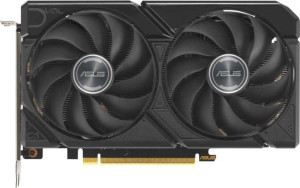
Asus Dual Radeon RX 9060 XT 16GB
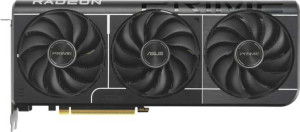
Asus Prime Radeon RX 9060 XT OC Edition 16GB

Asus Dual Radeon RX 9060 XT 16GB Asus Prime Radeon RX 9060 XT OC Edition 16GB

Overview

Choosing between the Asus Dual Radeon RX 9060 XT 16GB and the Asus Prime Radeon RX 9060 XT OC Edition 16GB is no easy task — both cards share the same RDNA 4.0 architecture, 16GB of GDDR6 memory, and a 160W TDP. Yet meaningful differences emerge around boost clock speeds and physical dimensions, making each card better suited to a different type of build. Read on to see how they stack up across every key specification.

Common Features

  • Both cards share a base GPU clock speed of 1700 MHz.
  • Both cards have a GPU memory speed of 2518 MHz.
  • Both cards feature 2048 shading units.
  • Both cards include 128 texture mapping units (TMUs).
  • Both cards have 64 render output units (ROPs).
  • Double Precision Floating Point (DPFP) support is available on both cards.
  • Both cards have an effective memory speed of 20000 MHz.
  • Both cards offer a maximum memory bandwidth of 322.3 GB/s.
  • Both cards come with 16GB of VRAM.
  • Both cards use GDDR6 memory.
  • Both cards have a 128-bit memory bus width.
  • ECC memory support is available on both cards.
  • Both cards support DirectX 12 Ultimate.
  • Both cards support OpenGL version 4.6.
  • Both cards support OpenCL version 2.2.
  • Multi-display technology support is available on both cards.
  • Ray tracing support is available on both cards.
  • 3D support is available on both cards.
  • DLSS support is not available on either card.
  • FSR4 support is available on both cards.
  • Both cards include one HDMI 2.1b output and two DisplayPort outputs.
  • Neither card includes USB-C, DVI, or mini DisplayPort outputs.
  • Both cards are built on the RDNA 4.0 GPU architecture.
  • Both cards have a Thermal Design Power (TDP) of 160W.
  • Both cards use PCIe version 5.
  • Both cards are manufactured on a 4 nm semiconductor process.
  • Both cards contain 29700 million transistors.
  • Air-water cooling is not available on either card.

Main Differences

  • GPU turbo clock speed is 3230 MHz on the Asus Dual Radeon RX 9060 XT 16GB and 3130 MHz on the Asus Prime Radeon RX 9060 XT OC Edition 16GB.
  • Pixel rate is 206.7 GPixel/s on the Asus Dual Radeon RX 9060 XT 16GB and 200.3 GPixel/s on the Asus Prime Radeon RX 9060 XT OC Edition 16GB.
  • Floating-point performance is 26.46 TFLOPS on the Asus Dual Radeon RX 9060 XT 16GB and 25.64 TFLOPS on the Asus Prime Radeon RX 9060 XT OC Edition 16GB.
  • Texture rate is 413.4 GTexels/s on the Asus Dual Radeon RX 9060 XT 16GB and 400.6 GTexels/s on the Asus Prime Radeon RX 9060 XT OC Edition 16GB.
  • Card width is 202 mm on the Asus Dual Radeon RX 9060 XT 16GB and 304 mm on the Asus Prime Radeon RX 9060 XT OC Edition 16GB.
  • Card height is 120 mm on the Asus Dual Radeon RX 9060 XT 16GB and 126 mm on the Asus Prime Radeon RX 9060 XT OC Edition 16GB.
Specs Comparison
Asus Dual Radeon RX 9060 XT 16GB

Asus Dual Radeon RX 9060 XT 16GB

Asus Prime Radeon RX 9060 XT OC Edition 16GB

Asus Prime Radeon RX 9060 XT OC Edition 16GB

Performance:
GPU clock speed 1700 MHz 1700 MHz
GPU turbo 3230 MHz 3130 MHz
pixel rate 206.7 GPixel/s 200.3 GPixel/s
floating-point performance 26.46 TFLOPS 25.64 TFLOPS
texture rate 413.4 GTexels/s 400.6 GTexels/s
GPU memory speed 2518 MHz 2518 MHz
shading units 2048 2048
texture mapping units (TMUs) 128 128
render output units (ROPs) 64 64
Has Double Precision Floating Point (DPFP)

Both cards share an identical foundation: the same 1700 MHz base clock, the same shader count (2048 shading units), identical TMU and ROP configurations (128/64), and the same 2518 MHz memory speed. This means the theoretical ceiling of their architectures is the same, and any performance difference comes down entirely to how aggressively each card boosts under load.

That is where a counterintuitive gap appears. Despite its ″OC Edition″ branding, the Prime actually peaks at a GPU turbo of 3130 MHz, while the Dual reaches 3230 MHz — a 100 MHz advantage. This translates directly into measurable leads across every throughput metric: the Dual delivers 26.46 TFLOPS of floating-point performance versus 25.64 TFLOPS for the Prime OC, and pulls ahead in both pixel rate (206.7 vs. 200.3 GPixel/s) and texture rate (413.4 vs. 400.6 GTexels/s). In practice, these roughly 3% gaps are unlikely to be decisive in most gaming scenarios, but they are real and consistent across all compute metrics.

For this spec group, the Asus Dual RX 9060 XT holds a clear, if modest, edge. It boosts higher and therefore outputs more raw compute throughput — which is the opposite of what its non-OC positioning might suggest. Buyers prioritizing peak GPU performance should note that the ″OC Edition″ label on the Prime does not reflect a higher boost clock in the supplied data.

Memory:
effective memory speed 20000 MHz 20000 MHz
maximum memory bandwidth 322.3 GB/s 322.3 GB/s
VRAM 16GB 16GB
GDDR version GDDR6 GDDR6
memory bus width 128-bit 128-bit
Supports ECC memory

Across every memory specification, these two cards are identical. Both feature 16GB of GDDR6 running at an effective 20000 MHz over a 128-bit bus, yielding 322.3 GB/s of peak memory bandwidth. There is no differentiator here whatsoever.

The shared configuration is worth contextualizing. A 128-bit bus is narrower than what higher-end GPUs offer, but the fast GDDR6 speed keeps bandwidth competitive for this market segment. The generous 16GB VRAM capacity is the standout figure — it comfortably handles modern titles at high texture settings and provides meaningful headroom for 4K asset streaming, ray tracing workloads, and AI-assisted rendering features that are increasingly VRAM-hungry. ECC memory support is a bonus that adds error-correction reliability, though it matters more in professional compute scenarios than in gaming.

This group is an absolute tie. Memory configuration should play no role in choosing between the Dual and the Prime OC Edition — any difference in real-world performance will originate elsewhere.

Features:
DirectX version DirectX 12 Ultimate DirectX 12 Ultimate
OpenGL version 4.6 4.6
OpenCL version 2.2 2.2
Supports multi-display technology
supports ray tracing
Supports 3D
supports DLSS
has FSR4
has XeSS (XMX)
AMD SAM / Intel Resizable BAR AMD SAM AMD SAM
has LHR
has RGB lighting
supported displays 3 3

Feature parity is total between these two cards. Both support DirectX 12 Ultimate and ray tracing, confirming access to the full suite of modern rendering features including hardware-accelerated shadows, reflections, and ambient occlusion. They also both carry FSR4 support — AMD's latest upscaling generation — which is a meaningful asset for boosting frame rates at higher resolutions with minimal image quality loss. Neither card supports DLSS, which is expected given their AMD architecture.

AMD SAM (Smart Access Memory) is present on both, allowing a compatible Ryzen-based system to grant the CPU full access to the GPU's VRAM rather than the default 256MB window. In practice this can yield measurable frame rate gains in certain titles at no additional cost, though it requires a supported platform to activate. The shared limit of 3 simultaneous displays is adequate for the vast majority of multi-monitor setups.

Much like the memory group, features offer zero basis for differentiation here. Both cards deliver the same software ecosystem, API support, and connectivity capabilities — this category is a dead heat.

Ports:
has an HDMI output
HDMI ports 1 1
HDMI version HDMI 2.1b HDMI 2.1b
DisplayPort outputs 2 2
USB-C ports 0 0
DVI outputs 0 0
mini DisplayPort outputs 0 0

Port layouts are identical on both cards: one HDMI 2.1b output and two DisplayPort outputs, totaling three physical connectors — which aligns with the three-display limit noted in the features group. No USB-C, DVI, or mini-DisplayPort outputs are present on either card.

The version of HDMI matters here. HDMI 2.1b supports up to 10K resolution and very high refresh rates, making it well-suited for modern 4K displays and the latest generation of TVs with high-frame-rate gaming modes. Users with a single premium display who rely on HDMI will find this more than capable. The dual DisplayPort outputs round out a practical and clean connectivity setup for a multi-monitor arrangement without the need for adapters in most typical desktop configurations.

No differentiator exists in this category. Both the Dual and the Prime OC Edition offer the same port selection and the same HDMI standard — connectivity should not factor into the decision between them.

General info:
GPU architecture RDNA 4.0 RDNA 4.0
release date June 2025 May 2025
Thermal Design Power (TDP) 160W 160W
PCI Express (PCIe) version 5 5
semiconductor size 4 nm 4 nm
number of transistors 29700 million 29700 million
Has air-water cooling
width 202 mm 304 mm
height 120 mm 126 mm

At the silicon level, these cards are twins. Both are built on the same RDNA 4.0 architecture using a 4nm process node with an identical 29,700 million transistors, and both carry a 160W TDP — meaning power delivery and cooling requirements are equivalent. PCIe 5.0 support on both ensures neither card will face any bandwidth bottleneck on current or near-future platforms.

The one concrete difference in this group is physical size. The Dual measures 202mm in length, while the Prime OC Edition stretches to 304mm — a 102mm gap that is far from trivial. That extra length places the Prime OC firmly in full-size GPU territory, which can be a real constraint in compact mid-tower or small form factor cases. The Dual's shorter footprint makes it a notably more flexible fit across a wider range of builds, including tighter chassis where clearance is limited.

For users in spacious full-tower cases this distinction is irrelevant, but for anyone building in a compact enclosure, the Asus Dual holds a meaningful practical advantage here. Same power draw, same architecture — but a significantly smaller physical footprint.

Comparison Summary & Verdict

Both the Asus Dual Radeon RX 9060 XT 16GB and the Asus Prime Radeon RX 9060 XT OC Edition 16GB share an identical performance foundation: RDNA 4.0 architecture, 16GB of GDDR6 memory, a 160W TDP, ray tracing support, and FSR4 compatibility. Where they diverge is on peak performance and size. The Dual pulls ahead with a higher GPU turbo clock of 3230 MHz, 26.46 TFLOPS of floating-point performance, and a faster texture rate — all packaged in a notably compact 202 mm width. The Prime OC Edition, measuring 304 mm wide, fits better in a spacious full-size tower where card length is not a constraint, though it offers slightly lower boost performance. For builders prioritising a compact, high-performing card, the Dual is the stronger pick; the Prime OC Edition suits those with larger cases who prefer a bigger physical footprint.

Asus Dual Radeon RX 9060 XT 16GB
Buy Asus Dual Radeon RX 9060 XT 16GB if...

Buy the Asus Dual Radeon RX 9060 XT 16GB if you want higher boost clocks, stronger raw performance metrics, and a compact 202 mm form factor that fits smaller PC builds.

Asus Prime Radeon RX 9060 XT OC Edition 16GB
Buy Asus Prime Radeon RX 9060 XT OC Edition 16GB if...

Buy the Asus Prime Radeon RX 9060 XT OC Edition 16GB if you have a spacious full-size tower case and are comfortable with a larger 304 mm card design.