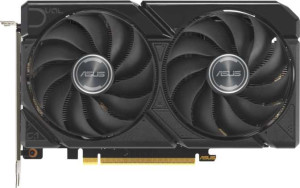
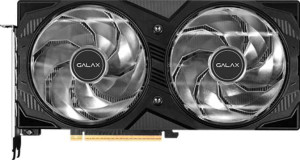
Both cards ship with 8GB of VRAM over a 128-bit bus, so the capacity and bus width are identical — but the memory technology underneath tells a very different story. The RX 9060 XT relies on GDDR6, while the RTX 5060 EX steps up to GDDR7, a newer standard that achieves higher data rates at lower voltages. That generational difference manifests directly in the effective memory speeds: 28000 MHz vs. 20000 MHz, a 40% gap that is far from cosmetic.
Where this really matters is bandwidth. The RTX 5060 EX delivers 448 GB/s of memory bandwidth compared to the RX 9060 XT's 322.3 GB/s. Bandwidth is the pipeline that feeds the GPU's execution units with texture data, frame buffer contents, and shader inputs — a wider pipeline means less time waiting on memory, particularly at higher resolutions or when using demanding texture packs. In bandwidth-constrained scenarios, such as 1440p gaming with high-resolution assets, the RTX 5060 EX's advantage here can translate into more consistent frame pacing and headroom. Interestingly, this GDDR7 memory edge partially offsets the RTX 5060 EX's compute deficit identified in the Performance group, since a faster memory subsystem can help keep its larger shader array better utilized.
Both cards support ECC memory, which is a shared feature more relevant to professional compute workloads than gaming. On memory alone, the Galax RTX 5060 EX holds a clear and meaningful advantage, courtesy of its superior GDDR7 technology delivering substantially higher bandwidth despite the shared bus width and capacity.