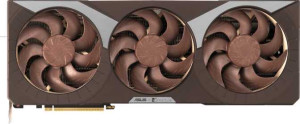
Asus GeForce RTX 5080 Noctua OC Edition
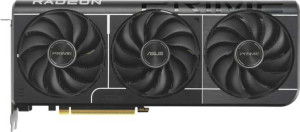
Asus Prime Radeon RX 9060 XT OC Edition 16GB

Asus GeForce RTX 5080 Noctua OC Edition Asus Prime Radeon RX 9060 XT OC Edition 16GB

Common Features

  • Both products have 16GB of VRAM.
  • Both products support ECC memory.
  • Both products support DirectX 12 Ultimate.
  • Both products support OpenGL version 4.6.
  • Both products support multi-display technology.
  • Both products support ray tracing.
  • Both products support 3D.
  • Both products have HDMI 2.1b output.
  • Both products have PCI Express (PCIe) version 5.
  • Both products do not have air-water cooling.
  • Both products support HDMI output.
  • Both products have a maximum of 4 supported displays.
  • Both products have no XeSS (XMX) support.
  • Both products have no LHR support.
  • Both products have RGB lighting.
  • Both products have a GPU architecture.
  • Both products have a GPU clock speed.
  • Both products support DisplayPort outputs.
  • Both products have an HDMI port.

Main Differences

  • GPU clock speed is 2295 MHz on Asus GeForce RTX 5080 Noctua OC Edition and 1700 MHz on Asus Prime Radeon RX 9060 XT OC Edition 16GB.
  • GPU turbo is 2700 MHz on Asus GeForce RTX 5080 Noctua OC Edition and 3130 MHz on Asus Prime Radeon RX 9060 XT OC Edition 16GB.
  • Pixel rate is 302.4 GPixel/s on Asus GeForce RTX 5080 Noctua OC Edition and 200.3 GPixel/s on Asus Prime Radeon RX 9060 XT OC Edition 16GB.
  • Floating-point performance is 58.06 TFLOPS on Asus GeForce RTX 5080 Noctua OC Edition and 25.64 TFLOPS on Asus Prime Radeon RX 9060 XT OC Edition 16GB.
  • Texture rate is 907.2 GTexels/s on Asus GeForce RTX 5080 Noctua OC Edition and 400.6 GTexels/s on Asus Prime Radeon RX 9060 XT OC Edition 16GB.
  • GPU memory speed is 1875 MHz on Asus GeForce RTX 5080 Noctua OC Edition and 2518 MHz on Asus Prime Radeon RX 9060 XT OC Edition 16GB.
  • Shading units are 10752 on Asus GeForce RTX 5080 Noctua OC Edition and 2048 on Asus Prime Radeon RX 9060 XT OC Edition 16GB.
  • Texture mapping units (TMUs) are 336 on Asus GeForce RTX 5080 Noctua OC Edition and 128 on Asus Prime Radeon RX 9060 XT OC Edition 16GB.
  • Render output units (ROPs) are 112 on Asus GeForce RTX 5080 Noctua OC Edition and 64 on Asus Prime Radeon RX 9060 XT OC Edition 16GB.
  • Effective memory speed is 30000 MHz on Asus GeForce RTX 5080 Noctua OC Edition and 20000 MHz on Asus Prime Radeon RX 9060 XT OC Edition 16GB.
  • Maximum memory bandwidth is 960 GB/s on Asus GeForce RTX 5080 Noctua OC Edition and 322.3 GB/s on Asus Prime Radeon RX 9060 XT OC Edition 16GB.
  • GDDR version is GDDR7 on Asus GeForce RTX 5080 Noctua OC Edition and GDDR6 on Asus Prime Radeon RX 9060 XT OC Edition 16GB.
  • Memory bus width is 256-bit on Asus GeForce RTX 5080 Noctua OC Edition and 128-bit on Asus Prime Radeon RX 9060 XT OC Edition 16GB.
  • OpenCL version is 3 on Asus GeForce RTX 5080 Noctua OC Edition and 2.2 on Asus Prime Radeon RX 9060 XT OC Edition 16GB.
  • Asus GeForce RTX 5080 Noctua OC Edition supports DLSS, while Asus Prime Radeon RX 9060 XT OC Edition 16GB does not.
  • Intel Resizable BAR is supported on Asus GeForce RTX 5080 Noctua OC Edition, while AMD SAM is supported on Asus Prime Radeon RX 9060 XT OC Edition 16GB.
  • Asus GeForce RTX 5080 Noctua OC Edition supports 4 displays, while Asus Prime Radeon RX 9060 XT OC Edition 16GB supports 3 displays.
  • HDMI ports are 2 on Asus GeForce RTX 5080 Noctua OC Edition and 1 on Asus Prime Radeon RX 9060 XT OC Edition 16GB.
  • DisplayPort outputs are 3 on Asus GeForce RTX 5080 Noctua OC Edition and 2 on Asus Prime Radeon RX 9060 XT OC Edition 16GB.
  • Thermal Design Power (TDP) is 360W on Asus GeForce RTX 5080 Noctua OC Edition and 160W on Asus Prime Radeon RX 9060 XT OC Edition 16GB.
  • GPU architecture is Blackwell on Asus GeForce RTX 5080 Noctua OC Edition and RDNA 4.0 on Asus Prime Radeon RX 9060 XT OC Edition 16GB.
  • Semiconductor size is 5 nm on Asus GeForce RTX 5080 Noctua OC Edition and 4 nm on Asus Prime Radeon RX 9060 XT OC Edition 16GB.
  • Number of transistors is 45600 million on Asus GeForce RTX 5080 Noctua OC Edition and 29700 million on Asus Prime Radeon RX 9060 XT OC Edition 16GB.
  • Width is 385 mm on Asus GeForce RTX 5080 Noctua OC Edition and 304 mm on Asus Prime Radeon RX 9060 XT OC Edition 16GB.
  • Height is 151 mm on Asus GeForce RTX 5080 Noctua OC Edition and 126 mm on Asus Prime Radeon RX 9060 XT OC Edition 16GB.
Specs Comparison
Asus GeForce RTX 5080 Noctua OC Edition

Asus GeForce RTX 5080 Noctua OC Edition

Asus Prime Radeon RX 9060 XT OC Edition 16GB

Asus Prime Radeon RX 9060 XT OC Edition 16GB

Performance:
GPU clock speed 2295 MHz 1700 MHz
GPU turbo 2700 MHz 3130 MHz
pixel rate 302.4 GPixel/s 200.3 GPixel/s
floating-point performance 58.06 TFLOPS 25.64 TFLOPS
texture rate 907.2 GTexels/s 400.6 GTexels/s
GPU memory speed 1875 MHz 2518 MHz
shading units 10752 2048
texture mapping units (TMUs) 336 128
render output units (ROPs) 112 64
Has Double Precision Floating Point (DPFP)

The Asus GeForce RTX 5080 Noctua OC Edition and the Asus Prime Radeon RX 9060 XT OC Edition 16GB differ significantly in their performance specifications. The RTX 5080 has a GPU clock speed of 2295 MHz, while the RX 9060 XT is lower at 1700 MHz. However, the RX 9060 XT features a higher GPU turbo boost of 3130 MHz, compared to the RTX 5080′s 2700 MHz. In terms of pixel rate, the RTX 5080 leads with 302.4 GPixel/s, whereas the RX 9060 XT achieves 200.3 GPixel/s, showing a noticeable difference in pixel rendering capabilities.

When it comes to floating-point performance, the RTX 5080 is much stronger with 58.06 TFLOPS, far exceeding the RX 9060 XT’s 25.64 TFLOPS. This indicates a significant gap in raw processing power, with the RTX 5080 offering a higher level of computational throughput. The texture rate also follows a similar trend, with the RTX 5080 delivering 907.2 GTexels/s, while the RX 9060 XT has 400.6 GTexels/s, indicating superior texture handling on the RTX 5080.

Both cards have high-end GPU memory performance, with the RTX 5080 operating at a memory speed of 1875 MHz, whereas the RX 9060 XT’s memory runs faster at 2518 MHz. The RX 9060 XT is equipped with 2048 shading units, a far greater number compared to the RTX 5080’s 10752 shading units, suggesting that the RTX 5080 is optimized for more complex graphical tasks. The number of texture mapping units (TMUs) is also much higher on the RTX 5080 at 336, compared to 128 on the RX 9060 XT, and the ROPs are similarly superior on the RTX 5080 with 112 ROPs versus 64 on the RX 9060 XT. Both cards support Double Precision Floating Point (DPFP), which is crucial for high-precision computations in professional workloads.

Memory:
effective memory speed 30000 MHz 20000 MHz
maximum memory bandwidth 960 GB/s 322.3 GB/s
VRAM 16GB 16GB
GDDR version GDDR7 GDDR6
memory bus width 256-bit 128-bit
Supports ECC memory

The memory specifications for the Asus GeForce RTX 5080 Noctua OC Edition and the Asus Prime Radeon RX 9060 XT OC Edition 16GB differ in a few key areas. Both cards feature 16GB of VRAM, but the RTX 5080 uses GDDR7 memory, while the RX 9060 XT is equipped with GDDR6. This difference in GDDR versions may influence overall memory performance, with GDDR7 typically offering faster data rates than GDDR6.

In terms of effective memory speed, the RTX 5080 achieves 30000 MHz, significantly higher than the RX 9060 XT’s 20000 MHz. This difference indicates that the RTX 5080 is capable of faster memory operations. The RTX 5080 also boasts a higher maximum memory bandwidth of 960 GB/s compared to the RX 9060 XT’s 322.3 GB/s, further suggesting superior data throughput on the RTX 5080.

Both cards support Error-Correcting Code (ECC) memory, which is important for ensuring the accuracy of data in high-performance computing tasks. Additionally, the memory bus width on the RTX 5080 is 256-bit, wider than the RX 9060 XT’s 128-bit bus. A wider memory bus typically allows for more efficient data transfer between the GPU and memory, contributing to the RTX 5080’s overall memory performance advantage.

Features:
DirectX version DirectX 12 Ultimate DirectX 12 Ultimate
OpenGL version 4.6 4.6
OpenCL version 3 2.2
Supports multi-display technology
supports ray tracing
Supports 3D
supports DLSS
has XeSS (XMX)
AMD SAM / Intel Resizable BAR Intel Resizable BAR AMD SAM
has LHR
has RGB lighting
supported displays 4 3

The Asus GeForce RTX 5080 Noctua OC Edition and the Asus Prime Radeon RX 9060 XT OC Edition 16GB share several similar features but differ in a few important areas. Both cards support DirectX 12 Ultimate, OpenGL 4.6, and multi-display technology. The RTX 5080 also supports OpenCL 3, while the RX 9060 XT supports OpenCL 2.2, indicating a difference in their version of OpenCL support.

Both cards are capable of ray tracing and 3D rendering, but the RTX 5080 supports DLSS, whereas the RX 9060 XT does not. This gives the RTX 5080 an advantage in supporting DLSS for improved performance in compatible games. Neither card supports XeSS (XMX), a feature that would enhance visual quality on Intel’s Xe GPUs.

The RTX 5080 has Intel Resizable BAR support, while the RX 9060 XT supports AMD SAM, which corresponds to the respective brand's technology for enhancing memory access and performance. In terms of visual customization, both cards feature RGB lighting. The RTX 5080 supports up to 4 displays, whereas the RX 9060 XT is limited to 3 supported displays. Additionally, neither card has LHR (Lite Hash Rate) restrictions, meaning both are unrestricted in their cryptocurrency mining capabilities.

Ports:
has an HDMI output
HDMI ports 2 1
HDMI version HDMI 2.1b HDMI 2.1b
DisplayPort outputs 3 2
USB-C ports 0 0
DVI outputs 0 0
mini DisplayPort outputs 0 0

The Asus GeForce RTX 5080 Noctua OC Edition and the Asus Prime Radeon RX 9060 XT OC Edition 16GB offer different port configurations. The RTX 5080 comes with 2 HDMI 2.1b ports, while the RX 9060 XT has just 1 HDMI 2.1b port. Both cards support HDMI version 2.1b, which ensures compatibility with modern displays and high resolutions. Additionally, the RTX 5080 has 3 DisplayPort outputs, while the RX 9060 XT has 2, giving the RTX 5080 the edge in the number of DisplayPort connections available for multiple displays.

Neither card includes USB-C, DVI, or mini DisplayPort outputs, so both are similar in this regard. However, the RTX 5080 does have more HDMI and DisplayPort connections, which may offer more flexibility for users with multiple monitors or different display setups.

Both cards support HDMI output, so there is no difference in terms of basic connectivity. However, the number of available HDMI and DisplayPort outputs on the RTX 5080 provides a more extensive range of display options compared to the RX 9060 XT.

General info:
GPU architecture Blackwell RDNA 4.0
release date August 2025 May 2025
Thermal Design Power (TDP) 360W 160W
PCI Express (PCIe) version 5 5
semiconductor size 5 nm 4 nm
number of transistors 45600 million 29700 million
Has air-water cooling
width 385 mm 304 mm
height 151 mm 126 mm

The Asus GeForce RTX 5080 Noctua OC Edition and the Asus Prime Radeon RX 9060 XT OC Edition 16GB differ in several key general specifications. The RTX 5080 uses the Blackwell GPU architecture, while the RX 9060 XT utilizes the RDNA 4.0 architecture. Both cards support PCI Express 5.0, ensuring compatibility with the latest motherboards and high-speed data transfer. The RTX 5080 has a significantly higher thermal design power (TDP) of 360W, compared to the RX 9060 XT’s 160W, reflecting the greater power requirements of the RTX 5080's more powerful design.

In terms of semiconductor size, the RTX 5080 is built on a 5 nm process, while the RX 9060 XT uses a 4 nm process. The difference in semiconductor size indicates that the RX 9060 XT uses a slightly smaller manufacturing process. The number of transistors also varies, with the RTX 5080 having 45600 million transistors, compared to the 29700 million transistors in the RX 9060 XT, showing a higher transistor count in the RTX 5080.

Neither card includes air-water cooling, both cards have standard cooling systems. The RTX 5080 is larger, with dimensions of 385 mm in width and 151 mm in height, while the RX 9060 XT is smaller at 304 mm wide and 126 mm tall. This size difference may influence the space required for installation and overall compatibility with certain cases.

Comparison Summary

This is a specification comparison between Asus GeForce RTX 5080 Noctua OC Edition and Asus Prime Radeon RX 9060 XT OC Edition 16GB. Both products feature 16GB of VRAM and ECC memory support, and both support DirectX 12 Ultimate and ray tracing. The Asus GeForce RTX 5080 Noctua OC Edition has a higher GPU clock speed (2295 MHz) compared to the Asus Prime Radeon RX 9060 XT OC Edition 16GB (1700 MHz), and also offers better floating-point performance (58.06 TFLOPS vs 25.64 TFLOPS). Additionally, the memory bandwidth is significantly greater on the Asus GeForce RTX 5080 Noctua OC Edition (960 GB/s vs 322.3 GB/s). The two cards differ in GPU architecture, with the GeForce using Blackwell and the Radeon using RDNA 4.0. The TDP is also much higher on the GeForce card at 360W compared to the Radeon at 160W.