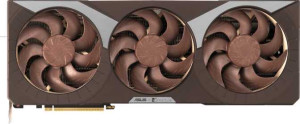
Asus GeForce RTX 5080 Noctua OC Edition
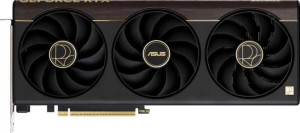
Asus ProArt GeForce RTX 5070 Ti

Asus GeForce RTX 5080 Noctua OC Edition Asus ProArt GeForce RTX 5070 Ti

Common Features

  • Both products have a GPU clock speed of 2295 MHz.
  • Both products support double precision floating point (DPFP).
  • Both products support DirectX 12 Ultimate.
  • Both products support OpenGL version 4.6.
  • Both products support OpenCL version 3.
  • Both products support multi-display technology.
  • Both products support ray tracing.
  • Both products support 3D.
  • Both products support DLSS.
  • Both products have an HDMI 2.1b output.
  • Both products have no DVI outputs.
  • Both products have no mini DisplayPort outputs.
  • Both products use GDDR7 memory.
  • Both products have a 256-bit memory bus width.
  • Both products support ECC memory.
  • Both products use the Blackwell GPU architecture.
  • Both products use PCI Express version 5.
  • Both products are built with a 5 nm semiconductor size.
  • Both products have 45600 million transistors.

Main Differences

  • GPU turbo is 2700 MHz on Asus GeForce RTX 5080 Noctua OC Edition and 2452 MHz on Asus ProArt GeForce RTX 5070 Ti.
  • Pixel rate is 302.4 GPixel/s on Asus GeForce RTX 5080 Noctua OC Edition and 235.4 GPixel/s on Asus ProArt GeForce RTX 5070 Ti.
  • Floating-point performance is 58.06 TFLOPS on Asus GeForce RTX 5080 Noctua OC Edition and 43.94 TFLOPS on Asus ProArt GeForce RTX 5070 Ti.
  • Texture rate is 907.2 GTexels/s on Asus GeForce RTX 5080 Noctua OC Edition and 686.6 GTexels/s on Asus ProArt GeForce RTX 5070 Ti.
  • GPU memory speed is 1875 MHz on Asus GeForce RTX 5080 Noctua OC Edition and 1750 MHz on Asus ProArt GeForce RTX 5070 Ti.
  • Shading units are 10752 on Asus GeForce RTX 5080 Noctua OC Edition and 8960 on Asus ProArt GeForce RTX 5070 Ti.
  • Texture mapping units (TMUs) are 336 on Asus GeForce RTX 5080 Noctua OC Edition and 280 on Asus ProArt GeForce RTX 5070 Ti.
  • Render output units (ROPs) are 112 on Asus GeForce RTX 5080 Noctua OC Edition and 96 on Asus ProArt GeForce RTX 5070 Ti.
  • Effective memory speed is 30000 MHz on Asus GeForce RTX 5080 Noctua OC Edition and 28000 MHz on Asus ProArt GeForce RTX 5070 Ti.
  • Maximum memory bandwidth is 960 GB/s on Asus GeForce RTX 5080 Noctua OC Edition and 896 GB/s on Asus ProArt GeForce RTX 5070 Ti.
  • HDMI ports are 2 on Asus GeForce RTX 5080 Noctua OC Edition and 1 on Asus ProArt GeForce RTX 5070 Ti.
  • DisplayPort outputs are 3 on Asus GeForce RTX 5080 Noctua OC Edition and 2 on Asus ProArt GeForce RTX 5070 Ti.
  • USB-C ports are not available on Asus GeForce RTX 5080 Noctua OC Edition and 1 is available on Asus ProArt GeForce RTX 5070 Ti.
  • Thermal Design Power (TDP) is 360W on Asus GeForce RTX 5080 Noctua OC Edition and 300W on Asus ProArt GeForce RTX 5070 Ti.
  • Width is 385 mm on Asus GeForce RTX 5080 Noctua OC Edition and 304 mm on Asus ProArt GeForce RTX 5070 Ti.
  • Height is 151 mm on Asus GeForce RTX 5080 Noctua OC Edition and 126 mm on Asus ProArt GeForce RTX 5070 Ti.
Specs Comparison
Asus GeForce RTX 5080 Noctua OC Edition

Asus GeForce RTX 5080 Noctua OC Edition

Asus ProArt GeForce RTX 5070 Ti

Asus ProArt GeForce RTX 5070 Ti

Performance:
GPU clock speed 2295 MHz 2295 MHz
GPU turbo 2700 MHz 2452 MHz
pixel rate 302.4 GPixel/s 235.4 GPixel/s
floating-point performance 58.06 TFLOPS 43.94 TFLOPS
texture rate 907.2 GTexels/s 686.6 GTexels/s
GPU memory speed 1875 MHz 1750 MHz
shading units 10752 8960
texture mapping units (TMUs) 336 280
render output units (ROPs) 112 96
Has Double Precision Floating Point (DPFP)

The Asus GeForce RTX 5080 Noctua OC Edition and the Asus ProArt GeForce RTX 5070 Ti share the same GPU clock speed of 2295 MHz, but the 5080 model has a higher GPU turbo speed of 2700 MHz compared to the 5070 Ti's 2452 MHz. This gives the 5080 an edge in maximum boost performance. In terms of pixel rate, the 5080 delivers 302.4 GPixel/s, significantly higher than the 5070 Ti’s 235.4 GPixel/s, reflecting the 5080’s greater graphical output capability.

The floating-point performance of the 5080 is also noticeably stronger, with 58.06 TFLOPS versus the 5070 Ti's 43.94 TFLOPS. The 5080 further leads with a higher texture rate of 907.2 GTexels/s, compared to the 5070 Ti’s 686.6 GTexels/s. This suggests the 5080 is optimized for better handling of textures and rendering tasks. Additionally, the 5080 has 336 texture mapping units (TMUs) and 112 render output units (ROPs), both superior to the 5070 Ti's 280 TMUs and 96 ROPs.

Both cards support Double Precision Floating Point (DPFP), but the 5080 again pulls ahead with more shading units, totaling 10,752, compared to the 5070 Ti’s 8,960. Lastly, the 5080 also features a faster GPU memory speed of 1875 MHz, whereas the 5070 Ti’s memory speed is 1750 MHz, further indicating the 5080's higher data throughput capacity.

Memory:
effective memory speed 30000 MHz 28000 MHz
maximum memory bandwidth 960 GB/s 896 GB/s
VRAM 16GB 16GB
GDDR version GDDR7 GDDR7
memory bus width 256-bit 256-bit
Supports ECC memory

Both the Asus GeForce RTX 5080 Noctua OC Edition and the Asus ProArt GeForce RTX 5070 Ti feature 16GB of VRAM, so they are on par when it comes to memory capacity. However, there are a few key differences when it comes to memory speed and bandwidth. The 5080 boasts an effective memory speed of 30,000 MHz and a maximum memory bandwidth of 960 GB/s, while the 5070 Ti has a slightly lower effective memory speed of 28,000 MHz and bandwidth of 896 GB/s. These differences indicate that the 5080 is capable of handling more data throughput compared to the 5070 Ti.

Both models use GDDR7 memory and have a 256-bit memory bus width, ensuring they share the same type of memory architecture. Additionally, both cards support ECC memory, which provides error-correction to improve reliability during intensive computations. This is beneficial for users who require stable and accurate performance during high-demand tasks.

Overall, while both graphics cards have the same VRAM and memory bus width, the 5080 offers faster memory speed and higher bandwidth, giving it a potential edge in memory performance.

Features:
DirectX version DirectX 12 Ultimate DirectX 12 Ultimate
OpenGL version 4.6 4.6
OpenCL version 3 3
Supports multi-display technology
supports ray tracing
Supports 3D
supports DLSS
has XeSS (XMX)
AMD SAM / Intel Resizable BAR Intel Resizable BAR Intel Resizable BAR
has LHR
has RGB lighting
supported displays 4 4

The Asus GeForce RTX 5080 Noctua OC Edition and the Asus ProArt GeForce RTX 5070 Ti are virtually identical in terms of features, with both supporting DirectX 12 Ultimate, OpenGL 4.6, and OpenCL 3. They also share compatibility with multi-display technology, ray tracing, 3D support, DLSS, and Intel Resizable BAR (AMD SAM / Intel Resizable BAR). Additionally, neither card supports XeSS (XMX), and both are free from LHR (Low Hash Rate) limitations.

Both graphics cards also include RGB lighting, offering customizable visual effects for users who want to add flair to their setups. The maximum number of supported displays is the same for both products, with each supporting up to 4 displays.

In short, both the 5080 and the 5070 Ti offer the same suite of features, ensuring a comparable user experience across the board when it comes to graphical capabilities and display setup options.

Ports:
has an HDMI output
HDMI ports 2 1
HDMI version HDMI 2.1b HDMI 2.1b
DisplayPort outputs 3 2
USB-C ports 0 1
DVI outputs 0 0
mini DisplayPort outputs 0 0

The Asus GeForce RTX 5080 Noctua OC Edition and the Asus ProArt GeForce RTX 5070 Ti both feature HDMI 2.1b outputs, but the 5080 offers two HDMI ports, while the 5070 Ti has only one. Both cards also support DisplayPort outputs, with the 5080 providing three DisplayPort outputs, while the 5070 Ti has two. The 5070 Ti includes a USB-C port, but the 5080 does not have any USB-C ports.

Neither card includes DVI or mini DisplayPort outputs, so their display connectivity options are limited to HDMI and DisplayPort, with the 5080 offering more versatility in the number of available ports overall.

In summary, the 5080 provides more HDMI and DisplayPort outputs, while the 5070 Ti offers a USB-C port in exchange for fewer display outputs.

General info:
GPU architecture Blackwell Blackwell
release date August 2025 September 2025
Thermal Design Power (TDP) 360W 300W
PCI Express (PCIe) version 5 5
semiconductor size 5 nm 5 nm
number of transistors 45600 million 45600 million
Has air-water cooling
width 385 mm 304 mm
height 151 mm 126 mm

Both the Asus GeForce RTX 5080 Noctua OC Edition and the Asus ProArt GeForce RTX 5070 Ti are built on the Blackwell GPU architecture, with the same 5 nm semiconductor size and 45,600 million transistors. Both cards also use the PCI Express (PCIe) version 5 for high-speed data transfer. However, the 5080 has a higher Thermal Design Power (TDP) of 360W, compared to the 5070 Ti’s 300W, indicating the 5080 may require more power to run at full capacity.

In terms of physical dimensions, the 5080 is larger, with a width of 385 mm and height of 151 mm, while the 5070 Ti is more compact, measuring 304 mm in width and 126 mm in height. Both cards do not feature air-water cooling systems, which means they rely on traditional cooling solutions.

In summary, while both cards share the same GPU architecture and semiconductor specifications, the 5080 has a higher TDP and larger form factor, which may influence power requirements and physical space considerations in your PC build.

Comparison Summary

This is a specification comparison between Asus GeForce RTX 5080 Noctua OC Edition and Asus ProArt GeForce RTX 5070 Ti. Both products share a GPU clock speed of 2295 MHz, support double precision floating point, and are equipped with 16GB VRAM. The two models differ in several areas: the Asus GeForce RTX 5080 Noctua OC Edition has a higher GPU turbo speed of 2700 MHz compared to 2452 MHz on the ProArt 5070 Ti, a faster GPU memory speed of 1875 MHz versus 1750 MHz, and more shading units (10752 vs. 8960). Additionally, the Asus GeForce RTX 5080 Noctua OC Edition offers more HDMI ports (2 vs. 1) and a higher thermal design power of 360W compared to 300W on the ProArt 5070 Ti.