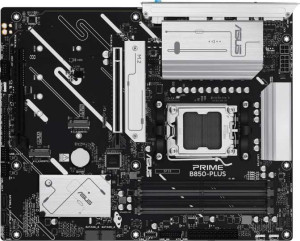
Asus Prime B850-Plus
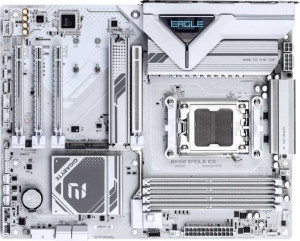
Gigabyte B850 Eagle Ice

Asus Prime B850-Plus Gigabyte B850 Eagle Ice

Common Features

  • Both products have an AM5 CPU socket.
  • Both products have a B850 chipset.
  • Both products have an ATX form factor.
  • Neither product supports Wi-Fi.
  • Neither product has Bluetooth.
  • Both products have HDMI 2.1 support.
  • Both products are easy to overclock.
  • Both products have RGB lighting.
  • Both products have a maximum memory amount of 256GB.
  • Both products have 4 memory slots.
  • Both products support DDR5 memory.
  • Both products have 2 memory channels.
  • Neither product supports ECC memory.
  • Both products have 2 USB 3.2 Gen 1 ports (USB-A).
  • Both products have an HDMI output.
  • Both products have 1 DisplayPort output.
  • Both products have 2 USB 3.2 Gen 1 ports through expansion.
  • Both products have 4 SATA 3 connectors.
  • Both products have 6 fan headers.
  • Both products have 3 M.2 sockets.

Main Differences

  • The Asus Prime B850-Plus has an easy BIOS reset feature, while the Gigabyte B850 Eagle Ice does not.
  • The Asus Prime B850-Plus supports overclocked RAM speeds up to 8000 MHz, whereas the Gigabyte B850 Eagle Ice supports up to 8200 MHz.
  • The Asus Prime B850-Plus has 3 USB 3.2 Gen 2 ports (USB-A), while the Gigabyte B850 Eagle Ice has 2.
  • The Asus Prime B850-Plus has 1 USB 3.2 Gen 2 port (USB-C), whereas the Gigabyte B850 Eagle Ice does not have any.
  • The Asus Prime B850-Plus has 2 USB 2.0 ports, while the Gigabyte B850 Eagle Ice has 4.
  • The Asus Prime B850-Plus has no PS/2 ports, while the Gigabyte B850 Eagle Ice includes 1 PS/2 port.
  • The Asus Prime B850-Plus has 1 PCIe 4.0 x16 slot, whereas the Gigabyte B850 Eagle Ice does not have any.
  • The Asus Prime B850-Plus has no PCIe x1 slots, while the Gigabyte B850 Eagle Ice has 2 PCIe x1 slots.
  • The Asus Prime B850-Plus has no PCIe x4 slots, while the Gigabyte B850 Eagle Ice includes 1 PCIe x4 slot.
Specs Comparison
Asus Prime B850-Plus

Asus Prime B850-Plus

Gigabyte B850 Eagle Ice

Gigabyte B850 Eagle Ice

General info:
CPU socket AM5 AM5
chipset B850 B850
form factor ATX ATX
release date April 2025 April 2025
supports Wi-Fi
Has Bluetooth
HDMI version HDMI 2.1 HDMI 2.1
Easy to overclock
has RGB lighting
Easy to reset BIOS
Has dual BIOS
CPU sockets 1 1
Has integrated graphics
warranty period 3 years 3 years
height 244 mm 244 mm
width 305 mm 305 mm
Has integrated CPU

The Asus Prime B850-Plus and the Gigabyte B850 Eagle Ice share many similarities in their general specs. Both motherboards feature the AM5 CPU socket, B850 chipset, ATX form factor, HDMI 2.1, and a 3-year warranty period. They both lack Wi-Fi and Bluetooth support, and neither offers integrated graphics or an integrated CPU.

One notable difference is that while both boards include RGB lighting and support easy overclocking, the Asus Prime B850-Plus has the added feature of being easy to reset BIOS, whereas the Gigabyte B850 Eagle Ice does not. Both boards come with a dual BIOS setup, but only the Asus model is explicitly mentioned as having an easy-to-reset BIOS.

In terms of size, both motherboards measure 244 mm in height and 305 mm in width, so there are no size differences. The CPU socket count is the same for both, with each board supporting one socket.

Memory:
maximum memory amount 256GB 256GB
overclocked RAM speed 8000 MHz 8200 MHz
memory slots 4 4
DDR memory version 5 5
memory channels 2 2
Supports ECC memory

Both the Asus Prime B850-Plus and the Gigabyte B850 Eagle Ice support a maximum memory amount of 256GB, and both motherboards offer 4 memory slots and 2 memory channels. They also support DDR5 memory version, and neither board supports ECC memory.

However, there is a difference in their overclocked RAM speeds. The Asus Prime B850-Plus supports overclocked RAM speeds of up to 8000 MHz, while the Gigabyte B850 Eagle Ice can go slightly higher at 8200 MHz. This gives the Gigabyte model a small edge in terms of maximum overclocked memory speed.

Overall, both motherboards offer similar memory capabilities, with the key distinction being the slightly higher overclocked RAM speed on the Gigabyte B850 Eagle Ice.

Ports:
USB 3.2 Gen 2 ports (USB-A) 3 2
USB 3.2 Gen 1 ports (USB-A) 2 2
USB 3.2 Gen 2 ports (USB-C) 1 0
USB 3.2 Gen 1 ports (USB-C) 0 1
USB 2.0 ports 2 4
USB 3.2 Gen 2x2 ports 0 0
USB 4 40Gbps ports 0 0
USB 4 20Gbps ports 0 0
Thunderbolt 4 ports 0 0
Thunderbolt 3 ports 0 0
has an HDMI output
DisplayPort outputs 1 1
RJ45 ports 1 1
Has USB Type-C
eSATA ports 0 0
DVI outputs 0 0
has a VGA connector
PS/2 ports 0 1

The Asus Prime B850-Plus and the Gigabyte B850 Eagle Ice both offer a range of USB ports, but with some differences in their configuration. The Asus board has 3 USB 3.2 Gen 2 (USB-A) ports, while the Gigabyte model has 2. For USB 3.2 Gen 1 (USB-A) ports, both motherboards provide 2 ports each. The Asus Prime B850-Plus includes 1 USB 3.2 Gen 2 (USB-C) port, while the Gigabyte model offers 1 USB 3.2 Gen 1 (USB-C) port, meaning they differ in the USB-C version supported.

When it comes to USB 2.0 ports, the Asus Prime B850-Plus has 2, while the Gigabyte B850 Eagle Ice offers 4. Both motherboards lack USB 3.2 Gen 2x2 and USB 4 ports, and neither has Thunderbolt 3 or 4 ports. Additionally, both boards include an HDMI output and a DisplayPort output, as well as 1 RJ45 port for networking.

In terms of additional legacy ports, the Asus Prime B850-Plus does not include a PS/2 port, while the Gigabyte B850 Eagle Ice does. Both motherboards lack eSATA, DVI, and VGA connectors, meaning their video output options are primarily HDMI and DisplayPort.

Connectors:
USB 3.2 Gen 1 ports (through expansion) 2 2
USB 2.0 ports (through expansion) 4 4
SATA 3 connectors 4 4
fan headers 6 6
USB 3.0 ports (through expansion) 2 2
M.2 sockets 3 3
Has TPM connector
U.2 sockets 0 0
Has mSATA connector
SATA 2 connectors 0 0

The Asus Prime B850-Plus and the Gigabyte B850 Eagle Ice share identical specifications when it comes to connectors. Both motherboards feature 2 USB 3.2 Gen 1 ports (through expansion), 4 USB 2.0 ports (through expansion), and 2 USB 3.0 ports (through expansion). They each have 4 SATA 3 connectors and 6 fan headers. Additionally, both motherboards include 3 M.2 sockets, support a TPM connector, and lack any U.2 sockets or mSATA connectors. They also both do not include any SATA 2 connectors.

With all the key connectors matching, the only conclusion here is that the Asus Prime B850-Plus and the Gigabyte B850 Eagle Ice are exactly the same in terms of expansion capabilities and connector options.

Expansion slots:
PCIe 4.0 x16 slots 1 0
PCIe 5.0 x16 slots 1 1
PCIe 3.0 x16 slots 0 0
PCIe x1 slots 0 2
PCI slots 0 0
PCIe 2.0 x16 slots 0 0
PCIe x4 slots 0 1
PCIe x8 slots 0 0

The Asus Prime B850-Plus and the Gigabyte B850 Eagle Ice differ in their expansion slot configurations. The Asus board includes 1 PCIe 4.0 x16 slot and 1 PCIe 5.0 x16 slot, with no additional PCIe x1, x4, or x8 slots. The Gigabyte B850 Eagle Ice, on the other hand, includes 1 PCIe 5.0 x16 slot, 2 PCIe x1 slots, and 1 PCIe x4 slot, but it does not have any PCIe 4.0 x16 slots.

Both motherboards lack PCI slots and PCIe 2.0 x16 slots, and neither includes additional expansion slots like PCIe x8.

In summary, the Asus Prime B850-Plus focuses on PCIe 4.0 and 5.0 x16 slots, while the Gigabyte B850 Eagle Ice provides more flexibility with additional PCIe x1 and x4 slots, but lacks a PCIe 4.0 x16 slot.

Audio:
audio channels 7.1 7.1
Has S/PDIF Out port
audio connectors 3 3

Both the Asus Prime B850-Plus and the Gigabyte B850 Eagle Ice offer 7.1 audio channels, providing high-quality sound for users. Neither motherboard includes an S/PDIF Out port, which may limit options for digital audio output. In terms of audio connectors, both motherboards come with 3 audio connectors, providing standard connectivity options for speakers, microphones, and other audio devices.

There are no differences in the audio specifications between the two boards, as they both share the same features.

Storage:
Supports RAID 1
Supports RAID 10 (1+0)
Supports RAID 5
Supports RAID 0
Supports RAID 0+1

Both the Asus Prime B850-Plus and the Gigabyte B850 Eagle Ice support the same RAID configurations. They both support RAID 1, RAID 10 (1+0), RAID 5, and RAID 0. However, neither of them supports RAID 0+1, as this feature is explicitly listed as not available for both motherboards.

In terms of RAID support, there are no differences between the two boards; they offer identical storage options for users looking to configure their drives in a RAID setup.

Comparison Summary

This is a specification comparison between the Asus Prime B850-Plus and Gigabyte B850 Eagle Ice. Both products feature an AM5 CPU socket, B850 chipset, and support for 256GB maximum memory. The Asus Prime B850-Plus has an easy BIOS reset feature, while the Gigabyte B850 Eagle Ice lacks this. The Asus model supports 8000 MHz overclocked RAM speed, whereas the Gigabyte model supports 8200 MHz. Additionally, the Asus Prime B850-Plus offers 3 USB 3.2 Gen 2 ports (USB-A), while the Gigabyte B850 Eagle Ice has 2. The Asus board has no PS/2 ports, while the Gigabyte version includes 1. Lastly, the Asus product has 1 PCIe 4.0 x16 slot, which is not available on the Gigabyte B850 Eagle Ice.