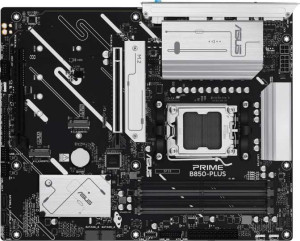
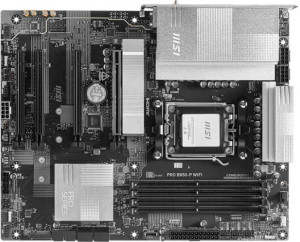
Port selection is where these two boards diverge most visibly, and the contrast reflects genuinely different design philosophies. The Asus Prime B850-Plus leans heavily into high-speed USB-A availability, offering 3x USB 3.2 Gen 2 and 2x USB 3.2 Gen 1 Type-A ports — a total of five USB-A connections at Gen 1 speeds or faster. For users with a dense peripheral setup (external drives, DACs, hubs, capture cards), this translates directly to fewer dongles and adapters. The MSI Pro B850-P WiFi counters with 2x USB 3.2 Gen 2 Type-C ports versus the Asus's single one, making it a better fit for modern devices that ship with USB-C natively, such as smartphones, NVMe enclosures, and recent peripherals.
Two other differences stand out. First, the Asus includes a DisplayPort output alongside HDMI, while the MSI offers only HDMI — relevant for users driving multiple monitors directly from the board's integrated output, or those whose display only accepts DisplayPort. Second, the MSI's 4 USB 2.0 ports (versus 2 on the Asus) offer more room for low-bandwidth devices like keyboards, mice, and dongles without occupying faster ports, though this is a minor practical advantage.
Taken together, the Asus Prime B850-Plus has a clear edge in this category for most users. Its superior count of high-speed USB-A ports addresses the most common real-world peripheral mix, and the addition of DisplayPort adds meaningful display flexibility. The MSI's extra USB-C Gen 2 port is a genuine advantage for USB-C-centric setups, but that use case is narrower than the broad utility the Asus layout provides.