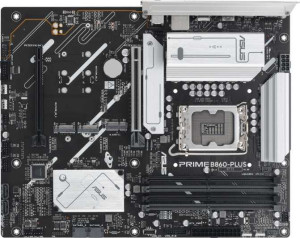
Asus Prime B860-Plus
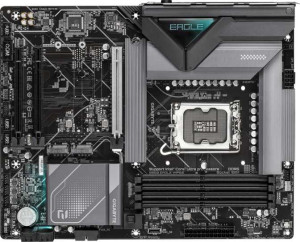
Gigabyte B860 Eagle WiFi6E

Asus Prime B860-Plus Gigabyte B860 Eagle WiFi6E

Overview

Welcome to our in-depth specification comparison between the Asus Prime B860-Plus and the Gigabyte B860 Eagle WiFi6E. Both boards share the same LGA 1851 socket and B860 chipset foundation, yet they diverge in meaningful ways across connectivity, expansion slots, and wireless capabilities. Whether you prioritize onboard Wi-Fi and Bluetooth or prefer a more traditional wired setup with extra USB ports, this head-to-head breakdown will help you find the right fit for your next build.

Common Features

  • Both products use the LGA 1851 CPU socket.
  • Both products feature the B860 chipset.
  • Both products have an ATX form factor.
  • Both products support HDMI 2.1.
  • Both products are easy to overclock.
  • Both products have dual BIOS.
  • Both products have a single CPU socket.
  • Integrated graphics are not available on either product.
  • Both products support a maximum memory amount of 256GB.
  • Both products have 4 memory slots.
  • Both products use DDR5 memory.
  • Both products have 2 memory channels.
  • ECC memory is not supported on either product.
  • Neither product has USB 3.2 Gen 2 ports in USB-C format.
  • Neither product has USB 3.2 Gen 1 ports in USB-C format.
  • Both products have 1 USB 3.2 Gen 2x2 port.
  • Neither product has USB 4 40Gbps ports.
  • Neither product has USB 4 20Gbps ports.
  • Neither product has Thunderbolt 4 or Thunderbolt 3 ports.
  • Both products have an HDMI output.
  • Both products have 2 USB 3.2 Gen 1 ports through expansion.
  • Both products have 4 USB 2.0 ports through expansion.
  • Both products have 4 SATA 3 connectors.
  • Both products have 6 fan headers.
  • Both products have 2 USB 3.0 ports through expansion.
  • Both products have 3 M.2 sockets.
  • Both products have a TPM connector.
  • Neither product has U.2 sockets.
  • Both products have 1 PCIe 5.0 x16 slot.
  • Neither product has PCIe 3.0 x16, PCI, PCIe 2.0 x16, PCIe x4, or PCIe x8 slots.
  • Both products support 7.1 audio channels.
  • S/PDIF Out port is not available on either product.
  • Both products have 3 audio connectors.
  • Both products support RAID 0, RAID 1, RAID 5, and RAID 10.
  • RAID 0+1 is not supported on either product.

Main Differences

  • Wi-Fi support is present on Gigabyte B860 Eagle WiFi6E but not available on Asus Prime B860-Plus.
  • Bluetooth support is present on Gigabyte B860 Eagle WiFi6E but not available on Asus Prime B860-Plus.
  • RGB lighting is present on Asus Prime B860-Plus but not available on Gigabyte B860 Eagle WiFi6E.
  • Easy BIOS reset is available on Asus Prime B860-Plus but not on Gigabyte B860 Eagle WiFi6E.
  • Maximum overclocked RAM speed is 8666 MHz on Asus Prime B860-Plus and 9066 MHz on Gigabyte B860 Eagle WiFi6E.
  • USB 3.2 Gen 2 ports (USB-A) count is 2 on Asus Prime B860-Plus and 1 on Gigabyte B860 Eagle WiFi6E.
  • USB 3.2 Gen 1 ports (USB-A) count is 1 on Asus Prime B860-Plus and 0 on Gigabyte B860 Eagle WiFi6E.
  • USB 2.0 ports count is 2 on Asus Prime B860-Plus and 4 on Gigabyte B860 Eagle WiFi6E.
  • PS/2 port count is 0 on Asus Prime B860-Plus and 1 on Gigabyte B860 Eagle WiFi6E.
  • PCIe 4.0 x16 slot count is 1 on Asus Prime B860-Plus and 0 on Gigabyte B860 Eagle WiFi6E.
  • PCIe x1 slot count is 0 on Asus Prime B860-Plus and 2 on Gigabyte B860 Eagle WiFi6E.
Specs Comparison
Asus Prime B860-Plus

Asus Prime B860-Plus

Gigabyte B860 Eagle WiFi6E

Gigabyte B860 Eagle WiFi6E

General info:
CPU socket LGA 1851 LGA 1851
chipset B860 B860
form factor ATX ATX
release date January 2025 January 2025
supports Wi-Fi
Has Bluetooth
HDMI version HDMI 2.1 HDMI 2.1
Easy to overclock
has RGB lighting
Easy to reset BIOS
Has dual BIOS
CPU sockets 1 1
Has integrated graphics
warranty period 3 years 3 years
height 244 mm 244 mm
width 305 mm 305 mm
Has integrated CPU

Both boards share a solid and identical foundation: the LGA 1851 socket, B860 chipset, standard ATX form factor (244 × 305 mm), and HDMI 2.1 output. They also match on warranty length (3 years), dual BIOS support, and overclocking accessibility — meaning neither board disadvantages the user on the core platform-level features that matter most for build compatibility and longevity.

The sharpest divide is connectivity. The Gigabyte B860 Eagle WiFi6E includes built-in Wi-Fi 6E and Bluetooth, which eliminates the need for a separate PCIe adapter or USB dongle — a real convenience advantage in compact or cable-managed builds, and particularly valuable in environments where running an Ethernet cable is impractical. The Asus Prime B860-Plus omits both entirely, meaning wireless connectivity must be added at extra cost and potentially sacrificing a PCIe slot. On the flip side, the Asus board offers RGB lighting and an easy BIOS reset mechanism — features the Gigabyte lacks — which appeal to aesthetics-focused builders and those who want simpler BIOS recovery without physical intervention.

For most users, the Gigabyte B860 Eagle WiFi6E holds a practical edge in this group, since built-in wireless connectivity is a functional necessity for many setups, while RGB and easy BIOS reset, though convenient, are secondary concerns. However, for wired-only desktop builds where aesthetics and ease of maintenance matter, the Asus Prime B860-Plus is a competitive alternative rather than a clear loser.
Memory:
maximum memory amount 256GB 256GB
overclocked RAM speed 8666 MHz 9066 MHz
memory slots 4 4
DDR memory version 5 5
memory channels 2 2
Supports ECC memory

Both the Asus Prime B860-Plus and Gigabyte B860 Eagle WiFi6E support a maximum memory amount of 256GB. They also have the same number of memory slots, with 4 available slots in each motherboard. Both motherboards use DDR5 memory, and they support dual memory channels. Additionally, neither of the boards supports ECC memory.

When it comes to overclocked RAM speeds, the Asus Prime B860-Plus can reach up to 8666 MHz, while the Gigabyte B860 Eagle WiFi6E supports a higher overclocked RAM speed of 9066 MHz.

Ports:
USB 3.2 Gen 2 ports (USB-A) 2 1
USB 3.2 Gen 1 ports (USB-A) 1 0
USB 3.2 Gen 2 ports (USB-C) 0 0
USB 3.2 Gen 1 ports (USB-C) 0 0
USB 2.0 ports 2 4
USB 3.2 Gen 2x2 ports 1 1
USB 4 40Gbps ports 0 0
USB 4 20Gbps ports 0 0
Thunderbolt 4 ports 0 0
Thunderbolt 3 ports 0 0
has an HDMI output
DisplayPort outputs 1 1
RJ45 ports 1 1
Has USB Type-C
eSATA ports 0 0
DVI outputs 0 0
has a VGA connector
PS/2 ports 0 1

The Asus Prime B860-Plus and Gigabyte B860 Eagle WiFi6E both offer a similar range of ports. The Asus board provides 2 USB 3.2 Gen 2 USB-A ports, 1 USB 3.2 Gen 1 USB-A port, and 2 USB 2.0 ports. It also includes 1 USB 3.2 Gen 2x2 port, but lacks USB-C ports. On the other hand, the Gigabyte B860 Eagle WiFi6E has 1 USB 3.2 Gen 2 USB-A port, 4 USB 2.0 ports, and also 1 USB 3.2 Gen 2x2 port, but similarly lacks USB-C ports. The Asus board offers a broader mix of USB-A ports, while the Gigabyte board has more USB 2.0 ports.

Both motherboards come with an HDMI output, a DisplayPort output, and 1 RJ45 port for networking. The Asus board has 1 USB Type-C port, while the Gigabyte board also includes a USB Type-C port, making these features identical in both models. Neither motherboard includes USB 4, Thunderbolt, eSATA, DVI, or VGA connectors, though the Asus model lacks a PS/2 port, whereas the Gigabyte board includes one.

Connectors:
USB 3.2 Gen 1 ports (through expansion) 2 2
USB 2.0 ports (through expansion) 4 4
SATA 3 connectors 4 4
fan headers 6 6
USB 3.0 ports (through expansion) 2 2
M.2 sockets 3 3
Has TPM connector
U.2 sockets 0 0
Has mSATA connector
SATA 2 connectors 0 0

The Asus Prime B860-Plus and Gigabyte B860 Eagle WiFi6E offer identical configurations for connectors. Both motherboards feature 2 USB 3.2 Gen 1 ports, 4 USB 2.0 ports, and 2 USB 3.0 ports through expansion. They also each provide 4 SATA 3 connectors, 6 fan headers, and 3 M.2 sockets. Additionally, both have a TPM connector, and neither motherboard includes U.2 sockets or mSATA connectors. The number of SATA 2 connectors is also 0 on both boards.

In summary, the connector options are the same for both the Asus and Gigabyte motherboards, with no differences in this group.

Expansion slots:
PCIe 4.0 x16 slots 1 0
PCIe 5.0 x16 slots 1 1
PCIe 3.0 x16 slots 0 0
PCIe x1 slots 0 2
PCI slots 0 0
PCIe 2.0 x16 slots 0 0
PCIe x4 slots 0 0
PCIe x8 slots 0 0

The Asus Prime B860-Plus and Gigabyte B860 Eagle WiFi6E differ in their expansion slot configurations. The Asus board has 1 PCIe 4.0 x16 slot and 1 PCIe 5.0 x16 slot, but no PCIe x1, PCIe x4, or PCIe x8 slots. In contrast, the Gigabyte board features 1 PCIe 5.0 x16 slot, but lacks a PCIe 4.0 x16 slot. It also provides 2 PCIe x1 slots and no PCIe x4 or PCIe x8 slots.

Both boards lack PCI slots, PCIe 2.0 x16 slots, and expansion slots for older interfaces. Additionally, neither motherboard includes any PCIe x4 or PCIe x8 slots, focusing on the more common x16 and x1 configurations.

Audio:
audio channels 7.1 7.1
Has S/PDIF Out port
audio connectors 3 3

Both the Asus Prime B860-Plus and Gigabyte B860 Eagle WiFi6E motherboards offer 7.1 audio channels, providing high-quality sound output. Neither motherboard includes an S/PDIF Out port, which means they both lack support for digital audio output through this connector. Additionally, both motherboards feature 3 audio connectors, which can be used for various audio devices such as speakers, headphones, and microphones.

In summary, the audio capabilities of these two motherboards are identical across all key specifications.

Storage:
Supports RAID 1
Supports RAID 10 (1+0)
Supports RAID 5
Supports RAID 0
Supports RAID 0+1

Both the Asus Prime B860-Plus and Gigabyte B860 Eagle WiFi6E motherboards support the same RAID configurations. They both support RAID 1, RAID 10 (1+0), RAID 5, and RAID 0, which provide flexibility in setting up various types of storage arrays. Neither motherboard supports RAID 0+1, meaning they cannot configure storage in this specific arrangement.

In summary, both motherboards have identical RAID support capabilities, offering the same range of RAID options for storage management.

Comparison Summary & Verdict

After examining every specification, it is clear that both motherboards offer a solid B860 platform, but each caters to a different type of builder. The Gigabyte B860 Eagle WiFi6E stands out for users who need integrated Wi-Fi 6E and Bluetooth connectivity right out of the box, along with a slightly higher overclocked RAM ceiling of 9066 MHz and an extra PS/2 port. On the other hand, the Asus Prime B860-Plus appeals to those who value a cleaner wired setup with more USB 3.2 Gen 2 and Gen 1 Type-A ports, an additional PCIe 4.0 x16 slot for extra expansion, easy BIOS reset functionality, and onboard RGB lighting for aesthetics-focused builds. Neither board is a clear overall winner; your ideal choice simply depends on your connectivity preferences and expansion needs.

Asus Prime B860-Plus
Buy Asus Prime B860-Plus if...

Buy the Asus Prime B860-Plus if you prefer a wired setup with more USB 3.2 ports, need an extra PCIe 4.0 x16 expansion slot, or want easy BIOS reset and RGB lighting in your build.

Gigabyte B860 Eagle WiFi6E
Buy Gigabyte B860 Eagle WiFi6E if...

Buy the Gigabyte B860 Eagle WiFi6E if you need built-in Wi-Fi 6E and Bluetooth connectivity, or want to push overclocked RAM speeds up to 9066 MHz without adding extra cards.