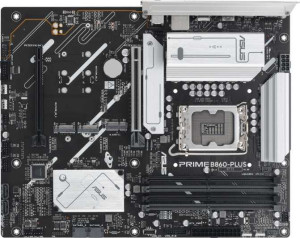
Asus Prime B860-Plus
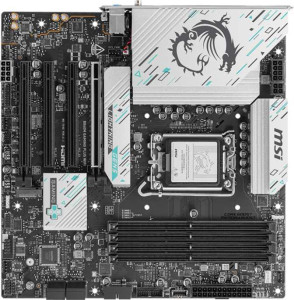
MSI B860M Gaming Plus WiFi

Asus Prime B860-Plus MSI B860M Gaming Plus WiFi

Overview

Choosing between the Asus Prime B860-Plus and the MSI B860M Gaming Plus WiFi means weighing two distinct visions of Intel's B860 platform. Both boards share the LGA 1851 socket, DDR5 support, and a capable core feature set, yet they part ways on form factor, built-in wireless connectivity, and cutting-edge port selection. Whether you are planning a full-size ATX tower build or a compact Micro-ATX system, this side-by-side comparison digs into the specs that matter most to help you find the right fit.

Common Features

  • Both boards use the LGA 1851 CPU socket.
  • Both boards are built on the B860 chipset.
  • Both boards support HDMI 2.1 output.
  • Overclocking capability is available on both boards.
  • RGB lighting is present on both boards.
  • Easy BIOS reset functionality is available on both boards.
  • Dual BIOS is present on both boards.
  • Both boards have a single CPU socket.
  • Both boards support up to 256GB of maximum memory.
  • Both boards have 4 memory slots.
  • Both boards use DDR5 memory.
  • Both boards operate in dual-channel memory mode.
  • ECC memory is not supported on either board.
  • Neither board has USB 3.2 Gen 2 Type-C ports on the rear.
  • Both boards provide 2 USB 2.0 rear ports.
  • Neither board has USB 4 20Gbps ports.
  • Neither board includes Thunderbolt 3 ports.
  • Both boards have an HDMI output.
  • Both boards include 1 DisplayPort output.
  • Both boards have 1 RJ45 port.
  • Both boards include a USB Type-C connector.
  • Both boards provide 4 USB 2.0 ports through expansion headers.
  • Both boards have 4 SATA 3 connectors.
  • Both boards include 3 M.2 sockets.
  • Both boards have a TPM connector.
  • Neither board has a U.2 socket.
  • Neither board includes an mSATA connector.
  • Neither board has SATA 2 connectors.
  • Both boards include 1 PCIe 4.0 x16 slot.
  • Both boards include 1 PCIe 5.0 x16 slot.
  • Neither board has PCIe 3.0 x16, PCIe 2.0 x16, PCIe x4, PCIe x8, or PCI slots.
  • Both boards support 7.1 audio channels.
  • Neither board has an S/PDIF Out port.
  • Both boards have 3 audio connectors.
  • Both boards support RAID 0, RAID 1, RAID 5, and RAID 10.
  • RAID 0+1 is not supported on either board.

Main Differences

  • The form factor is ATX on the Asus Prime B860-Plus and Micro-ATX on the MSI B860M Gaming Plus WiFi.
  • Wi-Fi support is present on the MSI B860M Gaming Plus WiFi but not available on the Asus Prime B860-Plus.
  • Bluetooth support is present on the MSI B860M Gaming Plus WiFi but not available on the Asus Prime B860-Plus.
  • The board height is 244 mm on the Asus Prime B860-Plus and 243.8 mm on the MSI B860M Gaming Plus WiFi.
  • The board width is 305 mm on the Asus Prime B860-Plus and 243.8 mm on the MSI B860M Gaming Plus WiFi.
  • The maximum overclocked RAM speed is 8666 MHz on the Asus Prime B860-Plus and 8600 MHz on the MSI B860M Gaming Plus WiFi.
  • USB 3.2 Gen 2 Type-A rear ports number 2 on the Asus Prime B860-Plus and 1 on the MSI B860M Gaming Plus WiFi.
  • USB 3.2 Gen 1 Type-A rear ports number 1 on the Asus Prime B860-Plus and 2 on the MSI B860M Gaming Plus WiFi.
  • USB 3.2 Gen 1 Type-C rear ports number 0 on the Asus Prime B860-Plus and 1 on the MSI B860M Gaming Plus WiFi.
  • USB 3.2 Gen 2x2 rear ports number 1 on the Asus Prime B860-Plus and 0 on the MSI B860M Gaming Plus WiFi.
  • USB 4 40Gbps ports are absent on the Asus Prime B860-Plus but 1 is present on the MSI B860M Gaming Plus WiFi.
  • Thunderbolt 4 ports are absent on the Asus Prime B860-Plus but 1 is present on the MSI B860M Gaming Plus WiFi.
  • USB 3.2 Gen 1 expansion header ports number 2 on the Asus Prime B860-Plus and 4 on the MSI B860M Gaming Plus WiFi.
  • USB 3.0 expansion header ports number 2 on the Asus Prime B860-Plus and 4 on the MSI B860M Gaming Plus WiFi.
  • Fan headers number 6 on the Asus Prime B860-Plus and 5 on the MSI B860M Gaming Plus WiFi.
  • PCIe x1 slots number 0 on the Asus Prime B860-Plus and 2 on the MSI B860M Gaming Plus WiFi.
Specs Comparison
Asus Prime B860-Plus

Asus Prime B860-Plus

MSI B860M Gaming Plus WiFi

MSI B860M Gaming Plus WiFi

General info:
CPU socket LGA 1851 LGA 1851
chipset B860 B860
form factor ATX Micro-ATX
release date January 2025 January 2025
supports Wi-Fi
Has Bluetooth
HDMI version HDMI 2.1 HDMI 2.1
Easy to overclock
has RGB lighting
Easy to reset BIOS
Has dual BIOS
CPU sockets 1 1
Has integrated graphics
warranty period 3 years 3 years
height 244 mm 243.8 mm
width 305 mm 243.8 mm
Has integrated CPU

Both boards share the same LGA 1851 socket and B860 chipset, meaning they support the same CPU lineup and offer identical overclocking headroom within that chipset's limits. They also match on HDMI 2.1 output, dual BIOS, easy BIOS reset, RGB lighting, and a 3-year warranty — so neither has an edge on the core feature checklist most buyers scan first.

The real divide is in form factor and connectivity. The Asus Prime B860-Plus is a full ATX board (305 × 244 mm), giving it more PCIe slots, RAM slots, and header space for complex builds — but it ships with no Wi-Fi and no Bluetooth, meaning wireless connectivity requires an add-in card or adapter. The MSI B860M Gaming Plus WiFi is a Micro-ATX board (243.8 × 243.8 mm), which fits smaller cases and is noticeably more compact, yet it includes built-in Wi-Fi and Bluetooth — a meaningful convenience advantage, especially in tighter builds where a PCIe slot is too valuable to spend on a wireless card.

The MSI holds a clear general-spec edge for anyone building a compact or wireless-first system: it packs more connectivity into less space at no loss in chipset capability or warranty coverage. The Asus is the better pick only when a full ATX footprint is a hard requirement — for maximum expansion slots or chassis compatibility — and the builder is comfortable adding wireless separately.

Memory:
maximum memory amount 256GB 256GB
overclocked RAM speed 8666 MHz 8600 MHz
memory slots 4 4
DDR memory version 5 5
memory channels 2 2
Supports ECC memory

The memory specifications of the Asus Prime B860-Plus and MSI B860M Gaming Plus WiFi are largely similar. Both motherboards support a maximum memory amount of 256GB and feature 4 memory slots. They also both support DDR5 memory with dual memory channels. In terms of ECC memory support, neither board offers this feature.

The main difference between the two products lies in their overclocked RAM speed. The Asus Prime B860-Plus can achieve a slightly higher overclocked RAM speed of 8666 MHz, compared to the MSI B860M Gaming Plus WiFi, which is limited to 8600 MHz.

Overall, these two boards have almost identical memory specifications, with the only noticeable difference being the minor overclocked RAM speed discrepancy.

Ports:
USB 3.2 Gen 2 ports (USB-A) 2 1
USB 3.2 Gen 1 ports (USB-A) 1 2
USB 3.2 Gen 2 ports (USB-C) 0 0
USB 3.2 Gen 1 ports (USB-C) 0 1
USB 2.0 ports 2 2
USB 3.2 Gen 2x2 ports 1 0
USB 4 40Gbps ports 0 1
USB 4 20Gbps ports 0 0
Thunderbolt 4 ports 0 1
Thunderbolt 3 ports 0 0
has an HDMI output
DisplayPort outputs 1 1
RJ45 ports 1 1
Has USB Type-C
eSATA ports 0 0
DVI outputs 0 0
has a VGA connector
PS/2 ports 0 0

The ports available on the Asus Prime B860-Plus and MSI B860M Gaming Plus WiFi are quite similar, but with some differences in the number and types of USB ports. The Asus Prime B860-Plus has 2 USB 3.2 Gen 2 ports (USB-A), 1 USB 3.2 Gen 1 port (USB-A), and 2 USB 2.0 ports. It also includes 1 USB 3.2 Gen 2x2 port, but lacks USB 3.2 Gen 2 ports (USB-C), USB 4, Thunderbolt, or eSATA ports. Additionally, it offers 1 HDMI output, 1 DisplayPort output, and 1 RJ45 port.

The MSI B860M Gaming Plus WiFi has a different distribution of USB ports, with 1 USB 3.2 Gen 2 port (USB-A), 2 USB 3.2 Gen 1 ports (USB-A), and 1 USB 3.2 Gen 1 port (USB-C). Notably, the MSI board lacks the USB 3.2 Gen 2x2 port that the Asus board offers, but it does include 1 USB 4 40Gbps port and 1 Thunderbolt 4 port, which the Asus board does not. Like the Asus board, it includes 1 HDMI output, 1 DisplayPort output, and 1 RJ45 port.

Both motherboards have the same number of USB 2.0 ports (2) and a lack of VGA and PS/2 connectors. Overall, while both boards offer similar core port features, the MSI B860M Gaming Plus WiFi stands out with additional support for USB 4 and Thunderbolt 4 ports.

Connectors:
USB 3.2 Gen 1 ports (through expansion) 2 4
USB 2.0 ports (through expansion) 4 4
SATA 3 connectors 4 4
fan headers 6 5
USB 3.0 ports (through expansion) 2 4
M.2 sockets 3 3
Has TPM connector
U.2 sockets 0 0
Has mSATA connector
SATA 2 connectors 0 0

The connectors available on the Asus Prime B860-Plus and MSI B860M Gaming Plus WiFi are similar in several aspects, but with some key differences. Both motherboards provide 4 SATA 3 connectors and 3 M.2 sockets. They also offer 4 USB 2.0 ports (through expansion) and have no SATA 2 connectors or mSATA connectors.

In terms of USB expansion, the Asus Prime B860-Plus has 2 USB 3.2 Gen 1 ports and 2 USB 3.0 ports, while the MSI B860M Gaming Plus WiFi offers 4 USB 3.2 Gen 1 ports and 4 USB 3.0 ports. The Asus board also features 6 fan headers, whereas the MSI board has 5.

Both boards are equipped with TPM connectors and lack U.2 sockets. Overall, the MSI B860M Gaming Plus WiFi offers slightly more USB 3.2 Gen 1 and USB 3.0 ports but falls short by 1 fan header compared to the Asus Prime B860-Plus.

Expansion slots:
PCIe 4.0 x16 slots 1 1
PCIe 5.0 x16 slots 1 1
PCIe 3.0 x16 slots 0 0
PCIe x1 slots 0 2
PCI slots 0 0
PCIe 2.0 x16 slots 0 0
PCIe x4 slots 0 0
PCIe x8 slots 0 0

Both the Asus Prime B860-Plus and MSI B860M Gaming Plus WiFi feature a mix of PCIe slots, but with some differences in their configuration. Both boards include 1 PCIe 4.0 x16 slot and 1 PCIe 5.0 x16 slot. Neither motherboard has PCIe 3.0 x16, PCIe 2.0 x16, PCIe x4, or PCIe x8 slots.

The key difference lies in the PCIe x1 slots: the Asus Prime B860-Plus does not have any, while the MSI B860M Gaming Plus WiFi offers 2 PCIe x1 slots. Both motherboards lack PCI slots altogether.

In summary, the MSI B860M Gaming Plus WiFi provides more flexibility with the addition of PCIe x1 slots, while the Asus Prime B860-Plus focuses on higher bandwidth PCIe 4.0 and PCIe 5.0 x16 slots without offering PCIe x1 slots.

Audio:
audio channels 7.1 7.1
Has S/PDIF Out port
audio connectors 3 3

Both the Asus Prime B860-Plus and MSI B860M Gaming Plus WiFi share identical audio specifications. Both motherboards support 7.1 audio channels and come with 3 audio connectors. Additionally, neither of the boards includes an S/PDIF Out port.

There are no differences in the audio capabilities between these two models, as they both offer the same number of channels and audio connectors, as well as lacking an S/PDIF Out port.

In summary, the audio features are identical for both the Asus Prime B860-Plus and MSI B860M Gaming Plus WiFi, with both offering 7.1 channel support and 3 audio connectors, without the S/PDIF Out option.

Storage:
Supports RAID 1
Supports RAID 10 (1+0)
Supports RAID 5
Supports RAID 0
Supports RAID 0+1

The storage capabilities of the Asus Prime B860-Plus and MSI B860M Gaming Plus WiFi are identical in terms of RAID support. Both motherboards support RAID 1, RAID 10 (1+0), RAID 5, and RAID 0. Neither board supports RAID 0+1.

With identical RAID options, both boards provide the same level of flexibility for storage configurations and redundancy.

In summary, the storage features of the Asus Prime B860-Plus and MSI B860M Gaming Plus WiFi are perfectly matched, offering the same RAID support without any differences.

Comparison Summary & Verdict

Both boards are competent B860 options that share strong fundamentals, but they clearly target different builders. The Asus Prime B860-Plus suits those who want a full-size ATX layout, a slightly higher overclocked RAM ceiling of 8666 MHz, more fan headers for elaborate cooling setups, and a USB 3.2 Gen 2x2 port for high-speed peripherals. The MSI B860M Gaming Plus WiFi, on the other hand, is the stronger pick for compact builds thanks to its Micro-ATX form factor, and it wins outright on modern connectivity with built-in Wi-Fi and Bluetooth, a Thunderbolt 4 port, and a USB 4 40Gbps port — features entirely absent on the Asus board. Choose the Asus if space and budget allow a larger chassis and wired-only connectivity works for you; choose the MSI if wireless freedom and next-generation port support are priorities in a smaller footprint.

Asus Prime B860-Plus
Buy Asus Prime B860-Plus if...

Choose the Asus Prime B860-Plus if you are building in a full-size ATX case, want more fan headers for advanced cooling, and do not need built-in Wi-Fi or Bluetooth.

MSI B860M Gaming Plus WiFi
Buy MSI B860M Gaming Plus WiFi if...

Choose the MSI B860M Gaming Plus WiFi if you need a compact Micro-ATX board with built-in Wi-Fi, Bluetooth, Thunderbolt 4, and USB 4 40Gbps connectivity out of the box.