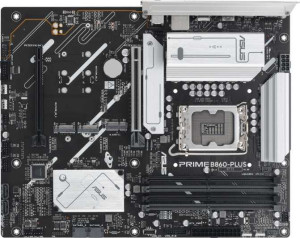
Asus Prime B860-Plus
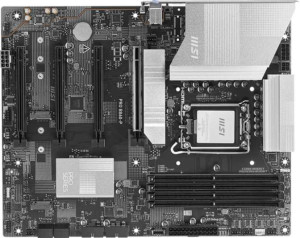
MSI Pro B860-P

Asus Prime B860-Plus MSI Pro B860-P

Overview

When choosing between the Asus Prime B860-Plus and the MSI Pro B860-P, both ATX motherboards share the same LGA 1851 socket and B860 chipset foundation, making the finer details all the more important. This comparison digs into the key battlegrounds: USB connectivity options, memory overclocking headroom, expansion slot availability, and warranty coverage, to help you decide which board is truly the right fit for your next build.

Common Features

  • Both boards use the LGA 1851 CPU socket.
  • Both boards feature the B860 chipset.
  • Both boards have an ATX form factor.
  • Wi-Fi is not available on either product.
  • Bluetooth is not available on either product.
  • Both boards include an HDMI 2.1 output.
  • Overclocking support is available on both products.
  • RGB lighting is present on both products.
  • Both boards support a maximum memory amount of 256 GB.
  • Both boards have 4 memory slots.
  • Both boards use DDR5 memory.
  • Both boards have 2 memory channels.
  • ECC memory is not supported on either product.
  • Both boards have 2 USB 3.2 Gen 2 Type-A ports.
  • Neither board has USB 3.2 Gen 2 Type-C, USB 3.2 Gen 1 Type-C, USB 4 20 Gbps, or Thunderbolt 3 ports.
  • Both boards have 1 DisplayPort output and 1 RJ45 port.
  • Both boards provide 4 USB 2.0 ports through expansion and 4 SATA 3 connectors.
  • Both boards have 6 fan headers and 3 M.2 sockets.
  • A TPM connector is present on both products.
  • Both boards offer 1 PCIe 5.0 x16 slot and 1 PCIe 4.0 x16 slot.
  • Both boards support 7.1 audio channels with 3 audio connectors.
  • An S/PDIF Out port is not available on either product.
  • Both boards support RAID 0, RAID 1, RAID 5, and RAID 10, but neither supports RAID 0+1.

Main Differences

  • The warranty period is 3 years on the Asus Prime B860-Plus and 2 years on the MSI Pro B860-P.
  • The board height is 244 mm on the Asus Prime B860-Plus and 243.8 mm on the MSI Pro B860-P.
  • The board width is 305 mm on the Asus Prime B860-Plus and 304.8 mm on the MSI Pro B860-P.
  • The maximum overclocked RAM speed is 8666 MHz on the Asus Prime B860-Plus and 8600 MHz on the MSI Pro B860-P.
  • There is 1 USB 3.2 Gen 1 Type-A port on the Asus Prime B860-Plus and 2 on the MSI Pro B860-P.
  • There are 2 USB 2.0 ports on the Asus Prime B860-Plus and 4 on the MSI Pro B860-P.
  • A USB 3.2 Gen 2x2 port is present on the Asus Prime B860-Plus but not available on the MSI Pro B860-P.
  • A USB 4 40 Gbps port is available on the MSI Pro B860-P but not present on the Asus Prime B860-Plus.
  • A Thunderbolt 4 port is available on the MSI Pro B860-P but not present on the Asus Prime B860-Plus.
  • There are 2 USB 3.2 Gen 1 ports through expansion on the Asus Prime B860-Plus and 4 on the MSI Pro B860-P.
  • There are 2 USB 3.0 ports through expansion on the Asus Prime B860-Plus and 4 on the MSI Pro B860-P.
  • There are no PCIe x1 slots on the Asus Prime B860-Plus, while the MSI Pro B860-P has 1 PCIe x1 slot.
Specs Comparison
Asus Prime B860-Plus

Asus Prime B860-Plus

MSI Pro B860-P

MSI Pro B860-P

General info:
CPU socket LGA 1851 LGA 1851
chipset B860 B860
form factor ATX ATX
release date January 2025 January 2025
supports Wi-Fi
Has Bluetooth
HDMI version HDMI 2.1 HDMI 2.1
Easy to overclock
has RGB lighting
Easy to reset BIOS
Has dual BIOS
CPU sockets 1 1
Has integrated graphics
warranty period 3 years 2 years
height 244 mm 243.8 mm
width 305 mm 304.8 mm
Has integrated CPU

At the platform level, the Asus Prime B860-Plus and MSI Pro B860-P are virtually identical: both use the LGA 1851 socket with the B860 chipset, adopt the standard ATX form factor, and output video via HDMI 2.1. Neither board includes integrated graphics, Wi-Fi, or Bluetooth, so users planning a wireless setup will need to budget for an add-in card or adapter. Their physical dimensions are essentially the same — differing by less than 0.2 mm in both height and width — meaning installation experience and case compatibility will be indistinguishable between the two.

On the feature checklist, the boards are again in lockstep: both support easy overclocking, offer easy BIOS reset, include a dual BIOS safety net, and come with RGB lighting. The dual BIOS is particularly worth noting for a B860-class board, as it provides a meaningful recovery fallback if a firmware update goes wrong — and finding it on both models is a genuine value-add at this tier.

The only concrete differentiator in this group is the warranty period: the Asus Prime B860-Plus carries a 3-year warranty versus the MSI Pro B860-P's 2-year warranty. For long-term system builders or those prioritizing peace of mind, that extra year of coverage gives the Asus a clear edge in this category, even if the two boards are otherwise functionally equivalent on general specs.

Memory:
maximum memory amount 256GB 256GB
overclocked RAM speed 8666 MHz 8600 MHz
memory slots 4 4
DDR memory version 5 5
memory channels 2 2
Supports ECC memory

Both the Asus Prime B860-Plus and MSI Pro B860-P offer a maximum memory amount of 256GB, which ensures plenty of room for high-performance RAM configurations. Both motherboards are also equipped with 4 memory slots and support DDR5 memory, as well as dual memory channels for improved bandwidth.

In terms of memory performance, the Asus Prime B860-Plus supports an overclocked RAM speed of 8666 MHz, which is slightly higher than the MSI Pro B860-P, which supports an overclocked RAM speed of 8600 MHz. This difference, while minimal, may slightly impact the maximum RAM speed achievable with each board when overclocking.

Neither motherboard supports ECC memory, which is typical for consumer-grade boards that are not aimed at servers or workstations requiring error-correcting code support.

Ports:
USB 3.2 Gen 2 ports (USB-A) 2 2
USB 3.2 Gen 1 ports (USB-A) 1 2
USB 3.2 Gen 2 ports (USB-C) 0 0
USB 3.2 Gen 1 ports (USB-C) 0 0
USB 2.0 ports 2 4
USB 3.2 Gen 2x2 ports 1 0
USB 4 40Gbps ports 0 1
USB 4 20Gbps ports 0 0
Thunderbolt 4 ports 0 1
Thunderbolt 3 ports 0 0
has an HDMI output
DisplayPort outputs 1 1
RJ45 ports 1 1
Has USB Type-C
eSATA ports 0 0
DVI outputs 0 0
has a VGA connector
PS/2 ports 0 0

The Asus Prime B860-Plus and MSI Pro B860-P have similar port offerings, though there are some differences. Both motherboards provide 2 USB 3.2 Gen 2 ports (USB-A) and 1 DisplayPort output. The Asus Prime B860-Plus has an additional USB 3.2 Gen 1 port (USB-A) and a USB 3.2 Gen 2x2 port, while the MSI Pro B860-P features 2 USB 3.2 Gen 1 ports (USB-A) but does not have the USB 3.2 Gen 2x2 port. Additionally, the MSI board includes a USB 4 40Gbps port and Thunderbolt 4 support, which the Asus board does not offer.

Both motherboards feature an HDMI output and a single RJ45 port for networking. Neither has a VGA connector or DVI outputs. Additionally, both boards lack eSATA ports, PS/2 ports, and USB 3.2 Gen 2 or Gen 1 USB-C ports. However, the Asus Prime B860-Plus provides 2 USB 2.0 ports, whereas the MSI Pro B860-P has 4 USB 2.0 ports, giving it a slight edge in terms of USB 2.0 connectivity.

Both motherboards offer USB Type-C support, but only the MSI Pro B860-P includes a Thunderbolt 4 port, offering greater flexibility for high-speed connections. The Asus Prime B860-Plus lacks this feature but compensates with a USB 3.2 Gen 2x2 port.

Connectors:
USB 3.2 Gen 1 ports (through expansion) 2 4
USB 2.0 ports (through expansion) 4 4
SATA 3 connectors 4 4
fan headers 6 6
USB 3.0 ports (through expansion) 2 4
M.2 sockets 3 3
Has TPM connector
U.2 sockets 0 0
Has mSATA connector
SATA 2 connectors 0 0

The Asus Prime B860-Plus and MSI Pro B860-P share many common connectors, including 4 SATA 3 connectors, 6 fan headers, and 3 M.2 sockets. Both motherboards also feature 4 USB 2.0 ports (through expansion) and have the same number of SATA 2 connectors (0) and mSATA connectors (0), meaning there are no significant differences in these areas.

In terms of expansion ports, the Asus Prime B860-Plus provides 2 USB 3.2 Gen 1 ports and 2 USB 3.0 ports (through expansion), while the MSI Pro B860-P offers 4 USB 3.2 Gen 1 ports and 4 USB 3.0 ports (through expansion). This gives the MSI board an advantage in terms of more expansion options for USB ports.

Both motherboards come with a TPM connector and lack U.2 sockets and mSATA connectors, so there are no notable differences in these aspects either.

Expansion slots:
PCIe 4.0 x16 slots 1 1
PCIe 5.0 x16 slots 1 1
PCIe 3.0 x16 slots 0 0
PCIe x1 slots 0 1
PCI slots 0 0
PCIe 2.0 x16 slots 0 0
PCIe x4 slots 0 0
PCIe x8 slots 0 0

The Asus Prime B860-Plus and MSI Pro B860-P both feature 1 PCIe 4.0 x16 slot and 1 PCIe 5.0 x16 slot, offering high-speed expansion options for graphics and other cards. Both motherboards also lack PCIe 3.0 x16 slots, PCIe 2.0 x16 slots, PCIe x4 slots, and PCIe x8 slots, meaning neither board offers additional mid-tier PCIe slot options.

However, the MSI Pro B860-P includes 1 PCIe x1 slot, while the Asus Prime B860-Plus does not provide any PCIe x1 slots. This gives the MSI board an edge in terms of expansion flexibility for smaller cards such as sound cards, network cards, or USB expansion cards.

Neither motherboard has PCI slots, and both provide the same number of PCIe x16 slots, ensuring similar high-speed expansion capabilities for modern GPUs and other components.

Audio:
audio channels 7.1 7.1
Has S/PDIF Out port
audio connectors 3 3

Both the Asus Prime B860-Plus and MSI Pro B860-P offer identical audio features. Both motherboards support 7.1 audio channels, providing full surround sound capabilities. Additionally, neither motherboard includes an S/PDIF Out port, which would allow for digital audio output to compatible devices.

Both motherboards are equipped with 3 audio connectors, which should be sufficient for standard audio setups, including microphone, line-in, and speaker connections.

There are no differences in the audio capabilities between the two motherboards, as both offer the same audio configuration and connectors.

Storage:
Supports RAID 1
Supports RAID 10 (1+0)
Supports RAID 5
Supports RAID 0
Supports RAID 0+1

Both the Asus Prime B860-Plus and MSI Pro B860-P support a wide range of RAID configurations. They both support RAID 1 (mirroring), RAID 10 (1+0) (combining mirroring and striping), RAID 5 (striped with parity), and RAID 0 (striping). Neither motherboard, however, supports RAID 0+1 (a combination of RAID 0 and RAID 1).

The RAID support is identical between the two motherboards, with no differences in the configurations they support or lack. Both motherboards offer similar capabilities for users interested in data redundancy or improved storage performance.

In summary, there are no distinctions between the Asus Prime B860-Plus and MSI Pro B860-P in terms of storage features, as they both offer the same RAID support.

Comparison Summary & Verdict

Both the Asus Prime B860-Plus and the MSI Pro B860-P are well-matched B860 ATX boards, sharing DDR5 support, three M.2 sockets, PCIe 5.0, and 7.1 audio. However, their differences reveal distinct strengths. The Asus Prime B860-Plus stands out with a slightly higher overclocked RAM speed of 8666 MHz, a USB 3.2 Gen 2x2 port, and a longer 3-year warranty, making it appealing for users who value future-proofing and extended support. The MSI Pro B860-P counters with a Thunderbolt 4 port, a USB 4 40 Gbps port, more USB 2.0 and expansion headers, and an additional PCIe x1 slot, making it the stronger pick for users who need versatile, high-bandwidth connectivity and greater peripheral flexibility.

Asus Prime B860-Plus
Buy Asus Prime B860-Plus if...

Buy the Asus Prime B860-Plus if you want a slightly higher overclocked RAM ceiling, a USB 3.2 Gen 2x2 port, and the added peace of mind of a 3-year warranty.

MSI Pro B860-P
Buy MSI Pro B860-P if...

Buy the MSI Pro B860-P if you need cutting-edge connectivity with a Thunderbolt 4 port and a USB 4 40 Gbps port, plus more USB headers and an extra PCIe x1 slot for greater expansion flexibility.