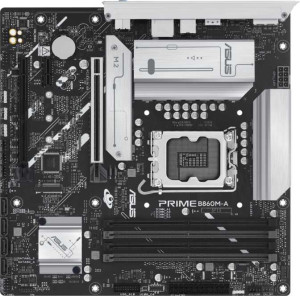
Asus Prime B860M-A
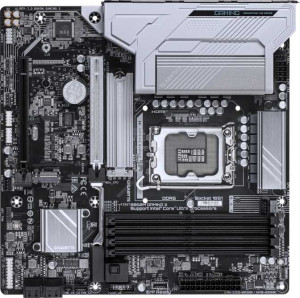
Gigabyte B860M Gaming X

Asus Prime B860M-A Gigabyte B860M Gaming X

Overview

Welcome to our detailed spec comparison between the Asus Prime B860M-A and the Gigabyte B860M Gaming X, two Micro-ATX motherboards sharing the B860 chipset and LGA 1851 socket. While they have much in common, key battlegrounds emerge around USB connectivity, expansion slot configurations, and overclocked RAM speeds. Read on to see which board better suits your build.

Common Features

  • Both boards use the LGA 1851 CPU socket.
  • Both use the B860 chipset.
  • Both feature a Micro-ATX form factor.
  • Neither board supports Wi-Fi.
  • Neither board has Bluetooth.
  • Both have an HDMI 2.1 output.
  • Both support overclocking.
  • RGB lighting is present on both boards.
  • Both support a maximum of 256GB of memory.
  • Both have 4 memory slots.
  • Both use DDR5 memory.
  • Both operate on a dual-channel memory configuration.
  • Neither board supports ECC memory.
  • Neither board has USB 3.2 Gen 2 ports in USB-C format.
  • Neither board has USB 3.2 Gen 1 ports in USB-C format.
  • Neither board has USB 4 20Gbps ports.
  • Neither board has Thunderbolt 3 ports.
  • Both boards have one RJ45 port.
  • Both boards include a USB Type-C port.
  • Neither board has eSATA ports.
  • Both boards provide 2 USB 3.2 Gen 1 ports through expansion headers.
  • Both boards have 4 SATA 3 connectors.
  • Both boards have 2 M.2 sockets.
  • Both boards include a TPM connector.
  • Neither board has a U.2 socket.
  • Neither board has an mSATA connector.
  • Neither board has SATA 2 connectors.
  • Both boards feature one PCIe 5.0 x16 slot.
  • Neither board has PCIe 3.0 x16, PCIe 2.0 x16, PCIe x8, or PCI slots.
  • Both boards support 7.1 audio channels.
  • Neither board has an S/PDIF Out port.
  • Both boards have 3 audio connectors.
  • Both boards support RAID 0, RAID 1, RAID 5, and RAID 10.
  • Neither board supports RAID 0+1.

Main Differences

  • Easy BIOS reset is supported on the Asus Prime B860M-A but not available on the Gigabyte B860M Gaming X.
  • The maximum overclocked RAM speed is 8666 MHz on the Asus Prime B860M-A and 9200 MHz on the Gigabyte B860M Gaming X.
  • USB 3.2 Gen 2 ports (USB-A) count is 1 on the Asus Prime B860M-A and 0 on the Gigabyte B860M Gaming X.
  • USB 3.2 Gen 1 ports (USB-A) count is 2 on the Asus Prime B860M-A and 3 on the Gigabyte B860M Gaming X.
  • USB 2.0 ports count is 4 on the Asus Prime B860M-A and 5 on the Gigabyte B860M Gaming X.
  • USB 3.2 Gen 2x2 ports count is 1 on the Asus Prime B860M-A and 0 on the Gigabyte B860M Gaming X.
  • USB 4 40Gbps port support is present on the Gigabyte B860M Gaming X but not available on the Asus Prime B860M-A.
  • Thunderbolt 4 port support is present on the Gigabyte B860M Gaming X but not available on the Asus Prime B860M-A.
  • DisplayPort outputs count is 2 on the Asus Prime B860M-A and 1 on the Gigabyte B860M Gaming X.
  • USB 2.0 ports through expansion count is 2 on the Asus Prime B860M-A and 4 on the Gigabyte B860M Gaming X.
  • Fan headers count is 5 on the Asus Prime B860M-A and 4 on the Gigabyte B860M Gaming X.
  • PCIe 4.0 x16 slots count is 1 on the Asus Prime B860M-A and 0 on the Gigabyte B860M Gaming X.
  • PCIe x1 slots count is 1 on the Asus Prime B860M-A and 0 on the Gigabyte B860M Gaming X.
  • PCIe x4 slots count is 0 on the Asus Prime B860M-A and 1 on the Gigabyte B860M Gaming X.
Specs Comparison
Asus Prime B860M-A

Asus Prime B860M-A

Gigabyte B860M Gaming X

Gigabyte B860M Gaming X

General info:
CPU socket LGA 1851 LGA 1851
chipset B860 B860
form factor Micro-ATX Micro-ATX
release date January 2025 January 2025
supports Wi-Fi
Has Bluetooth
HDMI version HDMI 2.1 HDMI 2.1
Easy to overclock
has RGB lighting
Easy to reset BIOS
Has dual BIOS
CPU sockets 1 1
Has integrated graphics
warranty period 3 years 3 years
height 244 mm 244 mm
width 244 mm 244 mm
Has integrated CPU

At the platform level, the Asus Prime B860M-A and Gigabyte B860M Gaming X are near-identical twins: both use the LGA 1851 socket with the B860 chipset, share the same Micro-ATX footprint at 244 × 244 mm, output video over HDMI 2.1, and carry a 3-year warranty. Neither board includes integrated Wi-Fi, Bluetooth, an integrated CPU, or onboard graphics, so buyers of either will need to factor in a discrete GPU and, if wireless connectivity matters, a separate adapter or PCIe card.

Both boards also share a strong feature set for their class: dual BIOS protection provides a recovery fallback if a firmware update goes wrong, RGB lighting is present on each, and both are rated easy to overclock — a notable inclusion given that the B860 chipset imposes memory overclocking limits compared to Z-series boards, so ease of access to those settings still matters.

The sole differentiator in this group is easy BIOS reset: the Prime B860M-A supports it, while the B860M Gaming X does not. In practice this means the Asus board offers a more accessible recovery path — typically a dedicated button or jumper that lets users clear the CMOS without disassembling the system or shorting pins — which is a genuine convenience advantage for builders who experiment with settings. On this group's data alone, the Asus Prime B860M-A holds a narrow but real edge for ease of maintenance and recovery.

Memory:
maximum memory amount 256GB 256GB
overclocked RAM speed 8666 MHz 9200 MHz
memory slots 4 4
DDR memory version 5 5
memory channels 2 2
Supports ECC memory

Both the Asus Prime B860M-A and the Gigabyte B860M Gaming X support a maximum memory amount of 256GB and feature 4 memory slots. They also both use DDR5 memory and support dual memory channels, ensuring good memory bandwidth for tasks that require high-speed access.

One key difference between the two is the overclocked RAM speed. The Asus Prime B860M-A supports an overclocked RAM speed of up to 8666 MHz, while the Gigabyte B860M Gaming X offers a higher overclocked RAM speed of 9200 MHz. Both motherboards do not support ECC memory, so they are not designed for error-correcting code functionality.

In summary, both motherboards are similar in terms of maximum memory support and general memory configuration, with the Gigabyte B860M Gaming X offering a slight edge in overclocked RAM speed compared to the Asus Prime B860M-A.

Ports:
USB 3.2 Gen 2 ports (USB-A) 1 0
USB 3.2 Gen 1 ports (USB-A) 2 3
USB 3.2 Gen 2 ports (USB-C) 0 0
USB 3.2 Gen 1 ports (USB-C) 0 0
USB 2.0 ports 4 5
USB 3.2 Gen 2x2 ports 1 0
USB 4 40Gbps ports 0 1
USB 4 20Gbps ports 0 0
Thunderbolt 4 ports 0 1
Thunderbolt 3 ports 0 0
has an HDMI output
DisplayPort outputs 2 1
RJ45 ports 1 1
Has USB Type-C
eSATA ports 0 0
DVI outputs 0 0
has a VGA connector
PS/2 ports 0 0

The Asus Prime B860M-A and the Gigabyte B860M Gaming X both offer HDMI outputs, with the Asus model also providing two DisplayPort outputs, while the Gigabyte model has only one. Both motherboards feature an RJ45 port for network connectivity and USB Type-C support, but they differ in their USB port configurations. The Asus Prime B860M-A has 1 USB 3.2 Gen 2 (USB-A), 2 USB 3.2 Gen 1 (USB-A), and 4 USB 2.0 ports, while the Gigabyte B860M Gaming X offers 3 USB 3.2 Gen 1 (USB-A), 5 USB 2.0 ports, and includes 1 USB 4 40Gbps port and 1 Thunderbolt 4 port, which are absent on the Asus motherboard.

Additionally, the Asus Prime B860M-A includes 1 USB 3.2 Gen 2x2 port, which is not found on the Gigabyte model. Neither motherboard includes eSATA ports, DVI outputs, a VGA connector, or PS/2 ports.

In terms of USB and video outputs, the Gigabyte model has a slight edge with its inclusion of USB 4 and Thunderbolt 4 ports, while the Asus model stands out with its USB 3.2 Gen 2x2 port and dual DisplayPort outputs.

Connectors:
USB 3.2 Gen 1 ports (through expansion) 2 2
USB 2.0 ports (through expansion) 2 4
SATA 3 connectors 4 4
fan headers 5 4
USB 3.0 ports (through expansion) 2 2
M.2 sockets 2 2
Has TPM connector
U.2 sockets 0 0
Has mSATA connector
SATA 2 connectors 0 0

The Asus Prime B860M-A and the Gigabyte B860M Gaming X are quite similar in terms of connectors. Both offer 2 USB 3.2 Gen 1 ports and 2 USB 2.0 ports through expansion, as well as 4 SATA 3 connectors. They also provide 2 M.2 sockets and feature a TPM connector, which is available on both models. However, the Asus motherboard includes 5 fan headers, while the Gigabyte model has only 4.

Both motherboards have 2 USB 3.0 ports through expansion, and neither includes U.2 or mSATA connectors. Additionally, both lack SATA 2 connectors.

Overall, the main difference between the two models in this category is the number of fan headers, with the Asus Prime B860M-A providing one additional header compared to the Gigabyte B860M Gaming X.

Expansion slots:
PCIe 4.0 x16 slots 1 0
PCIe 5.0 x16 slots 1 1
PCIe 3.0 x16 slots 0 0
PCIe x1 slots 1 0
PCI slots 0 0
PCIe 2.0 x16 slots 0 0
PCIe x4 slots 0 1
PCIe x8 slots 0 0

The Asus Prime B860M-A and the Gigabyte B860M Gaming X both feature a PCIe 5.0 x16 slot. The Asus model includes one PCIe 4.0 x16 slot, while the Gigabyte model does not. Additionally, the Asus motherboard has one PCIe x1 slot, while the Gigabyte motherboard does not include any PCIe x1 slots. The Gigabyte model does feature one PCIe x4 slot, which is not present on the Asus model.

Neither motherboard includes PCI slots, PCIe 2.0 x16 slots, or PCIe x8 slots.

In summary, the main differences between the two motherboards in terms of expansion slots are the inclusion of an additional PCIe 4.0 x16 slot on the Asus Prime B860M-A and the PCIe x4 slot on the Gigabyte B860M Gaming X.

Audio:
audio channels 7.1 7.1
Has S/PDIF Out port
audio connectors 3 3

Both the Asus Prime B860M-A and the Gigabyte B860M Gaming X offer 7.1 audio channels, ensuring high-quality sound for gaming and media. Neither motherboard has an S/PDIF Out port, and both feature 3 audio connectors, providing the same audio connectivity options.

In summary, the audio specifications of both motherboards are identical, with both offering 7.1 audio channels, no S/PDIF Out port, and 3 audio connectors.

Storage:
Supports RAID 1
Supports RAID 10 (1+0)
Supports RAID 5
Supports RAID 0
Supports RAID 0+1

Both the Asus Prime B860M-A and the Gigabyte B860M Gaming X support RAID 1, RAID 10 (1+0), and RAID 5 configurations, providing flexibility for users looking to set up different types of storage arrays. Neither motherboard supports RAID 0+1, but they both allow for RAID 0, which is commonly used for performance-oriented setups.

In summary, the storage capabilities of both motherboards are identical, as they support the same RAID configurations, including RAID 1, RAID 10 (1+0), RAID 5, and RAID 0, while excluding RAID 0+1.

Comparison Summary & Verdict

Both the Asus Prime B860M-A and the Gigabyte B860M Gaming X are competent B860 Micro-ATX boards with strong shared foundations, including DDR5 support up to 256GB, a PCIe 5.0 x16 slot, dual M.2 sockets, and 7.1 audio. The Asus Prime B860M-A stands out with its easy BIOS reset, more fan headers, an extra DisplayPort output, a PCIe 4.0 x16 slot, and USB 3.2 Gen 2x2 support. The Gigabyte B860M Gaming X counters with a higher overclocked RAM speed of 9200 MHz, a Thunderbolt 4 and USB 4 40Gbps port, and more USB 2.0 expansion headers. Choose the Asus for a more versatile expansion and management-friendly build, or the Gigabyte if cutting-edge connectivity and maximum memory bandwidth are your priorities.

Asus Prime B860M-A
Buy Asus Prime B860M-A if...

Buy the Asus Prime B860M-A if you want easier BIOS management, more fan headers for complex cooling setups, an extra DisplayPort output, and broader PCIe expansion options including a PCIe 4.0 x16 slot and USB 3.2 Gen 2x2.

Gigabyte B860M Gaming X
Buy Gigabyte B860M Gaming X if...

Buy the Gigabyte B860M Gaming X if you need the fastest overclocked RAM speeds, a Thunderbolt 4 port, or USB 4 40Gbps connectivity for high-bandwidth peripherals and future-proof device support.