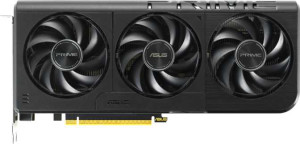
Asus Prime GeForce RTX 5050
Nvidia GeForce RTX 5050

Asus Prime GeForce RTX 5050 Nvidia GeForce RTX 5050

Common Features

  • GPU memory speed is 1750 MHz on both products.
  • Both products have 2560 shading units.
  • Texture mapping units are 80 on both products.
  • Render output units count is 32 on both products.
  • Double Precision Floating Point support is available on both products.
  • Effective memory speed is 20000 MHz on both products.
  • Maximum memory bandwidth is 320 GB/s on both products.
  • VRAM capacity is 8GB on both products.
  • The GDDR version is GDDR6 on both products.
  • Memory bus width is 128-bit on both products.
  • ECC memory support is available on both products.
  • DirectX version support is DirectX 12 Ultimate on both products.
  • Both products support ray tracing.
  • Both products include one HDMI output using HDMI 2.1b.
  • Thermal Design Power is rated at 130W on both products.

Main Differences

  • GPU clock speed is 2317 MHz on Asus Prime GeForce RTX 5050 and 2310 MHz on Nvidia GeForce RTX 5050.
  • GPU turbo frequency is 2602 MHz on Asus Prime GeForce RTX 5050 and 2570 MHz on Nvidia GeForce RTX 5050.
  • Pixel rate is 83.26 GPixel/s on Asus Prime GeForce RTX 5050 and 82.24 GPixel/s on Nvidia GeForce RTX 5050.
  • Floating-point performance is 13.32 TFLOPS on Asus Prime GeForce RTX 5050 and 13.16 TFLOPS on Nvidia GeForce RTX 5050.
  • Texture rate is 208.2 GTexels/s on Asus Prime GeForce RTX 5050 and 205.6 GTexels/s on Nvidia GeForce RTX 5050.
Specs Comparison
Asus Prime GeForce RTX 5050

Asus Prime GeForce RTX 5050

Nvidia GeForce RTX 5050

Nvidia GeForce RTX 5050

Performance:
GPU clock speed 2317 MHz 2310 MHz
GPU turbo 2602 MHz 2570 MHz
pixel rate 83.26 GPixel/s 82.24 GPixel/s
floating-point performance 13.32 TFLOPS 13.16 TFLOPS
texture rate 208.2 GTexels/s 205.6 GTexels/s
GPU memory speed 1750 MHz 1750 MHz
shading units 2560 2560
texture mapping units (TMUs) 80 80
render output units (ROPs) 32 32
Has Double Precision Floating Point (DPFP)

The Asus Prime GeForce RTX 5050 and Nvidia GeForce RTX 5050 are both equipped with similar core specifications in terms of performance. The GPU clock speed of the Asus Prime is slightly higher at 2317 MHz, compared to the Nvidia's 2310 MHz. However, the Nvidia model offers a higher turbo boost of 2570 MHz, while the Asus reaches 2602 MHz.

Both cards deliver impressive pixel and texture rates. The Asus Prime has a pixel rate of 83.26 GPixel/s, while the Nvidia reaches 82.24 GPixel/s, so there's a slight difference here. The texture rate of the Asus is 208.2 GTexels/s, which is higher than the Nvidia’s 205.6 GTexels/s, indicating a marginal advantage in texture handling for the Asus model.

Floating-point performance is similarly competitive, with the Asus offering 13.32 TFLOPS, slightly ahead of the Nvidia’s 13.16 TFLOPS. Both cards share the same GPU memory speed of 1750 MHz, and both feature 2560 shading units, 80 texture mapping units (TMUs), 32 render output units (ROPs), and support for double precision floating point (DPFP), ensuring balanced high-end performance across both models.

Memory:
effective memory speed 20000 MHz 20000 MHz
maximum memory bandwidth 320 GB/s 320 GB/s
VRAM 8GB 8GB
GDDR version GDDR6 GDDR6
memory bus width 128-bit 128-bit
Supports ECC memory

When it comes to memory specifications, the Asus Prime GeForce RTX 5050 and Nvidia GeForce RTX 5050 are virtually identical. Both feature an effective memory speed of 20000 MHz, and they both offer a maximum memory bandwidth of 320 GB/s.

Both cards are equipped with 8GB of VRAM, which is standard for high-performance gaming and professional applications. Additionally, both models use GDDR6 memory and have a 128-bit memory bus width, ensuring they can handle large datasets and high resolutions with ease.

Both the Asus and Nvidia models support ECC memory, which helps ensure data integrity by detecting and correcting errors in memory. With identical memory specifications across the board, neither card has a distinct advantage in this area.

Features:
DirectX version DirectX 12 Ultimate DirectX 12 Ultimate
OpenGL version 4.6 4.6
OpenCL version 3 3
Supports multi-display technology
supports ray tracing
Supports 3D
supports DLSS
has XeSS (XMX)
AMD SAM / Intel Resizable BAR Intel Resizable BAR Intel Resizable BAR
has LHR
has RGB lighting
supported displays 4 4

The Asus Prime GeForce RTX 5050 and Nvidia GeForce RTX 5050 are quite similar in terms of features. Both cards support DirectX 12 Ultimate, OpenGL 4.6, and OpenCL 3, ensuring compatibility with a wide range of modern applications and games. They also support multi-display technology, ray tracing, 3D rendering, and DLSS, offering a comprehensive set of features for high-end gaming and graphics performance.

Both models do not include XeSS (XMX) support, and neither has RGB lighting. They both also support Intel Resizable BAR (AMD SAM is not mentioned for either card). Additionally, neither has LHR (Lite Hash Rate) limitations, which is beneficial for users concerned with mining restrictions.

In terms of display support, both cards can handle up to 4 displays, offering plenty of flexibility for multi-monitor setups. With all features matching across both models, there is no significant difference between them in this category.

Ports:
has an HDMI output
HDMI ports 1 1
HDMI version HDMI 2.1b HDMI 2.1b
DisplayPort outputs 3 3
USB-C ports 0 0
DVI outputs 0 0
mini DisplayPort outputs 0 0

The Asus Prime GeForce RTX 5050 and Nvidia GeForce RTX 5050 offer identical port configurations. Both cards feature 1 HDMI output with HDMI 2.1b support, 3 DisplayPort outputs, and no USB-C, DVI, or mini DisplayPort outputs.

With the same set of video outputs, both cards are equipped to handle multiple display setups, but neither offers additional options like USB-C or mini DisplayPort. The HDMI and DisplayPort outputs are suited for modern high-definition displays, ensuring that either model can handle demanding visual tasks efficiently.

Overall, there is no difference in the ports or output capabilities between the two models; both provide the same connectivity options.

General info:
GPU architecture Blackwell Blackwell
release date June 2025 June 2025
Thermal Design Power (TDP) 130W 130W
PCI Express (PCIe) version 5 5
semiconductor size 5 nm 5 nm
number of transistors 16900 million 16900 million
Has air-water cooling

The Asus Prime GeForce RTX 5050 and Nvidia GeForce RTX 5050 share identical general specifications. Both cards utilize the Blackwell GPU architecture and are built on a 5 nm semiconductor process, with 16,900 million transistors. They also both have a Thermal Design Power (TDP) of 130W, indicating similar power requirements.

In terms of connectivity, both cards support PCI Express version 5, which provides high bandwidth for modern applications. Neither card includes air-water cooling systems, relying instead on traditional cooling methods.

Overall, the general specifications for both the Asus and Nvidia models are the same, with no differences in architecture, power, or cooling capabilities.

Comparison Summary

This is a specification comparison between Asus Prime GeForce RTX 5050 and Nvidia GeForce RTX 5050. Both graphics cards share GPU memory speed of 1750 MHz, 2560 shading units, 8GB GDDR6 VRAM, and DirectX 12 Ultimate support. The Asus Prime GeForce RTX 5050 has a slightly higher GPU clock speed of 2317 MHz compared to 2310 MHz on Nvidia GeForce RTX 5050, and a higher GPU turbo frequency of 2602 MHz versus 2570 MHz. Pixel rate is 83.26 GPixel/s on Asus and 82.24 GPixel/s on Nvidia, while floating-point performance is 13.32 TFLOPS versus 13.16 TFLOPS. Texture rate is 208.2 GTexels/s on Asus and 205.6 GTexels/s on Nvidia, with other features such as thermal design power of 130W and ECC memory support remaining consistent across both models.