Asus Prime GeForce RTX 5060 Ti 16GB
Asus Prime GeForce RTX 5060 Ti OC Edition 16GB

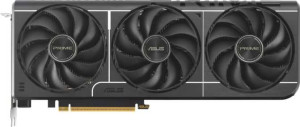
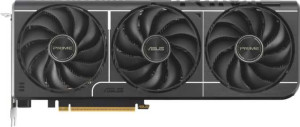
Asus Prime GeForce RTX 5060 Ti 16GB Asus Prime GeForce RTX 5060 Ti OC Edition 16GB

Overview

When deciding between the Asus Prime GeForce RTX 5060 Ti 16GB and the Asus Prime GeForce RTX 5060 Ti OC Edition 16GB, the choice is surprisingly focused. Both cards are built on the same Blackwell architecture and share identical memory, port configurations, and feature sets. The real battleground lies in their GPU turbo clocks and resulting throughput figures. In this side-by-side comparison, we examine every specification to help you determine which of these two closely matched cards is the right fit for your needs.

Common Features

  • Both products have a base GPU clock speed of 2407 MHz.
  • Both products have a GPU memory speed of 1750 MHz.
  • Both products feature 4608 shading units.
  • Both products have 144 texture mapping units (TMUs).
  • Both products have 48 render output units (ROPs).
  • Double Precision Floating Point (DPFP) support is available on both products.
  • Both products have an effective memory speed of 28000 MHz.
  • Both products offer a maximum memory bandwidth of 448 GB/s.
  • Both products come with 16GB of VRAM.
  • Both products use GDDR7 memory.
  • Both products have a 128-bit memory bus width.
  • ECC memory support is available on both products.
  • Both products support DirectX 12 Ultimate.
  • Both products support OpenGL version 4.6.
  • Both products support OpenCL version 3.
  • Multi-display technology support is available on both products.
  • Ray tracing support is available on both products.
  • 3D support is available on both products.
  • DLSS support is available on both products.
  • XeSS (XMX) support is not available on either product.
  • Both products have one HDMI 2.1b output.
  • Both products have three DisplayPort outputs.
  • Neither product has a USB-C port, a DVI output, or a mini DisplayPort output.
  • Both products are built on the Blackwell GPU architecture.
  • Both products have a Thermal Design Power (TDP) of 180W.
  • Both products use PCIe version 5.
  • Both products are manufactured on a 5 nm semiconductor process.
  • Both products feature 21900 million transistors.
  • Air-water cooling is not available on either product.
  • Both products share the same dimensions: 304 mm width and 120 mm height.

Main Differences

  • GPU turbo clock speed is 2572 MHz on the Asus Prime GeForce RTX 5060 Ti 16GB and 2617 MHz on the Asus Prime GeForce RTX 5060 Ti OC Edition 16GB.
  • Pixel rate is 123.5 GPixel/s on the Asus Prime GeForce RTX 5060 Ti 16GB and 125.6 GPixel/s on the Asus Prime GeForce RTX 5060 Ti OC Edition 16GB.
  • Floating-point performance is 23.7 TFLOPS on the Asus Prime GeForce RTX 5060 Ti 16GB and 24.12 TFLOPS on the Asus Prime GeForce RTX 5060 Ti OC Edition 16GB.
  • Texture rate is 370.4 GTexels/s on the Asus Prime GeForce RTX 5060 Ti 16GB and 376.8 GTexels/s on the Asus Prime GeForce RTX 5060 Ti OC Edition 16GB.
Specs Comparison
Asus Prime GeForce RTX 5060 Ti 16GB

Asus Prime GeForce RTX 5060 Ti 16GB

Asus Prime GeForce RTX 5060 Ti OC Edition 16GB

Asus Prime GeForce RTX 5060 Ti OC Edition 16GB

Performance:
GPU clock speed 2407 MHz 2407 MHz
GPU turbo 2572 MHz 2617 MHz
pixel rate 123.5 GPixel/s 125.6 GPixel/s
floating-point performance 23.7 TFLOPS 24.12 TFLOPS
texture rate 370.4 GTexels/s 376.8 GTexels/s
GPU memory speed 1750 MHz 1750 MHz
shading units 4608 4608
texture mapping units (TMUs) 144 144
render output units (ROPs) 48 48
Has Double Precision Floating Point (DPFP)

Both cards share an identical foundation: the same 2407 MHz base clock, 4608 shading units, 144 TMUs, and 48 ROPs. This means the underlying silicon is the same, and any performance delta between them comes purely from how aggressively each card is factory-tuned. The standard Prime and the OC Edition are, in essence, the same GPU running at different boost ceilings.

The real differentiator is the GPU turbo clock: the OC Edition reaches 2617 MHz versus 2572 MHz on the standard Prime — a 45 MHz advantage (roughly +1.75%). This directly cascades into every throughput metric: the OC Edition leads with 24.12 TFLOPS of floating-point performance versus 23.7 TFLOPS, a 376.8 GTexels/s texture rate versus 370.4 GTexels/s, and 125.6 GPixel/s pixel rate versus 123.5 GPixel/s. In practice, a ~1.75% clock uplift translates to a similarly marginal gain in real-world frame rates — noticeable in benchmarks, but unlikely to be perceptible in everyday gameplay.

The OC Edition holds a narrow but consistent edge across every performance metric in this group, and it does so without any architectural compromise since memory speed, shader count, and fixed-function units are identical. That said, the advantage is slim by any practical measure. Users who prioritize maximum out-of-the-box performance should lean toward the OC Edition, while those indifferent to single-digit percentage gains will find the standard Prime functionally equivalent.
Memory:
effective memory speed 28000 MHz 28000 MHz
maximum memory bandwidth 448 GB/s 448 GB/s
VRAM 16GB 16GB
GDDR version GDDR7 GDDR7
memory bus width 128-bit 128-bit
Supports ECC memory

On the memory front, these two cards are completely identical — and that's actually worth highlighting because the specs are genuinely strong. Both feature 16GB of GDDR7 VRAM on a 128-bit bus, delivering an effective memory speed of 28000 MHz and a peak bandwidth of 448 GB/s. GDDR7 is a significant generational leap over GDDR6X, offering higher throughput per pin, which helps compensate for the narrower 128-bit bus width that budget-conscious designs typically carry.

The 128-bit bus is the one architectural constraint worth contextualizing. While wider buses (192-bit or 256-bit) appear on higher-tier cards, the combination of GDDR7's high data rate and 16GB capacity means this configuration punches above its bus-width class. The 448 GB/s bandwidth is competitive for this segment, and 16GB of VRAM provides meaningful headroom for high-resolution textures and modern workloads — including AI-assisted features — without the tight capacity constraints seen on 8GB alternatives.

Since every memory specification is a perfect match between the two cards, this group is a complete tie. Memory performance will be indistinguishable in any real-world scenario, and this spec group offers no basis for choosing one card over the other.

Features:
DirectX version DirectX 12 Ultimate DirectX 12 Ultimate
OpenGL version 4.6 4.6
OpenCL version 3 3
Supports multi-display technology
supports ray tracing
Supports 3D
supports DLSS
has XeSS (XMX)
AMD SAM / Intel Resizable BAR Intel Resizable BAR Intel Resizable BAR
has LHR
has RGB lighting
supported displays 4 4

Feature parity between these two cards is absolute — every capability listed is shared identically. The most consequential of these is DLSS support, which enables AI-driven upscaling to boost frame rates while preserving image quality, and ray tracing support, which allows for physically accurate lighting and reflections in compatible titles. Together, these two features define the modern gaming experience on NVIDIA hardware and are fully present on both cards.

DirectX 12 Ultimate is the other standout — it's the API tier that unlocks hardware-accelerated ray tracing, variable rate shading, mesh shaders, and sampler feedback, ensuring both cards are compatible with the full scope of current and near-future game rendering techniques. Support for up to 4 simultaneous displays and Intel Resizable BAR rounds out a solid, well-equipped feature set for both productivity and gaming multi-monitor setups.

There is no differentiator to weigh here — this group is a complete tie. Whichever card a buyer chooses, they receive an identical software and API feature set with no trade-offs on either side.

Ports:
has an HDMI output
HDMI ports 1 1
HDMI version HDMI 2.1b HDMI 2.1b
DisplayPort outputs 3 3
USB-C ports 0 0
DVI outputs 0 0
mini DisplayPort outputs 0 0

The port configurations of the Asus Prime GeForce RTX 5060 Ti 16GB and the Asus Prime GeForce RTX 5060 Ti OC Edition 16GB are identical. Both models include 1 HDMI port with HDMI 2.1b support, 3 DisplayPort outputs, and no USB-C, DVI, or mini DisplayPort outputs.

These specifications are the same for both products, offering a similar range of connectivity options for monitors and displays.

In summary, there are no differences in the port setup between the two models, with both providing the same display output options.

General info:
GPU architecture Blackwell Blackwell
release date April 2025 April 2025
Thermal Design Power (TDP) 180W 180W
PCI Express (PCIe) version 5 5
semiconductor size 5 nm 5 nm
number of transistors 21900 million 21900 million
Has air-water cooling
width 304 mm 304 mm
height 120 mm 120 mm

At the architectural level, both cards are built on the same foundation: NVIDIA's Blackwell architecture, fabbed on a 5nm process with 21.9 billion transistors. The move to 5nm brings meaningful efficiency gains over prior generations, enabling more compute density without a proportional increase in power draw — which is reflected in the shared 180W TDP. For a card at this performance tier, 180W is a reasonable thermal envelope that should be manageable by mid-range cases and cooling setups without requiring exotic power delivery.

Both cards also share PCIe 5.0 connectivity, which future-proofs them for next-generation motherboard platforms while remaining fully backward compatible with PCIe 4.0 and 3.0 slots. The physical dimensions are identical too — 304mm long and 120mm tall — so case compatibility and slot considerations are exactly the same for both. Builders working with tighter chassis should take note of the 304mm length.

This group is a complete tie in every respect. The shared architecture, process node, transistor count, TDP, and physical size confirm that these two cards are the same hardware at their core — the only variable between them, as established in the Performance group, is the factory clock ceiling on the OC Edition.

Comparison Summary & Verdict

After examining all available specifications, the Asus Prime GeForce RTX 5060 Ti 16GB and the Asus Prime GeForce RTX 5060 Ti OC Edition 16GB are exceptionally similar cards. They share the same Blackwell GPU architecture, 16GB of GDDR7 memory on a 128-bit bus, a 180W TDP, and an identical feature set including ray tracing and DLSS support. The sole differentiator is the OC Edition’s factory-raised GPU turbo clock of 2617 MHz versus 2572 MHz, which yields slightly higher pixel rate, texture rate, and floating-point performance. Users who demand every last drop of throughput will appreciate the OC Edition’s edge, while those prioritizing value without sacrificing core capabilities will find the standard model a compelling and fully capable alternative.

Asus Prime GeForce RTX 5060 Ti 16GB
Buy Asus Prime GeForce RTX 5060 Ti 16GB if...

Buy the Asus Prime GeForce RTX 5060 Ti 16GB if you want the full Blackwell experience with 16GB of GDDR7 memory and are happy to forgo the incremental clock speed bump offered by the OC Edition.

Asus Prime GeForce RTX 5060 Ti OC Edition 16GB
Buy Asus Prime GeForce RTX 5060 Ti OC Edition 16GB if...

Buy the Asus Prime GeForce RTX 5060 Ti OC Edition 16GB if you want the highest GPU turbo clock speed in this lineup, along with the best pixel rate, texture rate, and floating-point performance this card family has to offer.