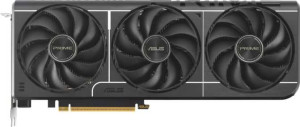
Asus Prime GeForce RTX 5060 Ti 16GB
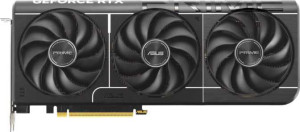
Asus Prime GeForce RTX 5070 OC Edition

Asus Prime GeForce RTX 5060 Ti 16GB Asus Prime GeForce RTX 5070 OC Edition

Overview

Welcome to our in-depth specification comparison between the Asus Prime GeForce RTX 5060 Ti 16GB and the Asus Prime GeForce RTX 5070 OC Edition. Both cards are built on the same Blackwell architecture and share a strong foundation of modern features, yet they diverge significantly when it comes to raw rendering power, memory configuration, and power consumption. Read on to discover how these two GPUs stack up across performance, memory bandwidth, and physical design.

Common Features

  • Both cards share a GPU memory speed of 1750 MHz.
  • Double Precision Floating Point (DPFP) is supported on both products.
  • Both cards use GDDR7 memory with an effective memory speed of 28000 MHz.
  • ECC memory is supported on both products.
  • Both cards support DirectX 12 Ultimate.
  • Both cards support OpenGL version 4.6.
  • Both cards support OpenCL version 3.
  • Multi-display technology is supported on both products.
  • Ray tracing is supported on both products.
  • 3D is supported on both products.
  • DLSS is supported on both products.
  • XeSS (XMX) is not available on either product.
  • Both cards feature one HDMI output running HDMI 2.1b.
  • Both cards include three DisplayPort outputs.
  • Neither card has USB-C ports, DVI outputs, or mini DisplayPort outputs.
  • Both cards are built on the Blackwell GPU architecture.
  • Both cards use PCIe version 5.
  • Both cards are manufactured on a 5 nm semiconductor process.
  • Neither card features air-water cooling.
  • Both cards share a width of 304 mm.

Main Differences

  • GPU clock speed is 2407 MHz on the Asus Prime GeForce RTX 5060 Ti 16GB and 2325 MHz on the Asus Prime GeForce RTX 5070 OC Edition.
  • GPU turbo speed is 2572 MHz on the Asus Prime GeForce RTX 5060 Ti 16GB and 2557 MHz on the Asus Prime GeForce RTX 5070 OC Edition.
  • Pixel rate is 123.5 GPixel/s on the Asus Prime GeForce RTX 5060 Ti 16GB and 204.6 GPixel/s on the Asus Prime GeForce RTX 5070 OC Edition.
  • Floating-point performance is 23.7 TFLOPS on the Asus Prime GeForce RTX 5060 Ti 16GB and 31.42 TFLOPS on the Asus Prime GeForce RTX 5070 OC Edition.
  • Texture rate is 370.4 GTexels/s on the Asus Prime GeForce RTX 5060 Ti 16GB and 490.9 GTexels/s on the Asus Prime GeForce RTX 5070 OC Edition.
  • Shading units total 4608 on the Asus Prime GeForce RTX 5060 Ti 16GB and 6144 on the Asus Prime GeForce RTX 5070 OC Edition.
  • Texture mapping units (TMUs) number 144 on the Asus Prime GeForce RTX 5060 Ti 16GB and 192 on the Asus Prime GeForce RTX 5070 OC Edition.
  • Render output units (ROPs) total 48 on the Asus Prime GeForce RTX 5060 Ti 16GB and 80 on the Asus Prime GeForce RTX 5070 OC Edition.
  • Maximum memory bandwidth is 448 GB/s on the Asus Prime GeForce RTX 5060 Ti 16GB and 672 GB/s on the Asus Prime GeForce RTX 5070 OC Edition.
  • VRAM is 16 GB on the Asus Prime GeForce RTX 5060 Ti 16GB and 12 GB on the Asus Prime GeForce RTX 5070 OC Edition.
  • Memory bus width is 128-bit on the Asus Prime GeForce RTX 5060 Ti 16GB and 192-bit on the Asus Prime GeForce RTX 5070 OC Edition.
  • Thermal Design Power (TDP) is 180W on the Asus Prime GeForce RTX 5060 Ti 16GB and 250W on the Asus Prime GeForce RTX 5070 OC Edition.
  • The number of transistors is 21,900 million on the Asus Prime GeForce RTX 5060 Ti 16GB and 31,100 million on the Asus Prime GeForce RTX 5070 OC Edition.
  • Card height is 120 mm on the Asus Prime GeForce RTX 5060 Ti 16GB and 126 mm on the Asus Prime GeForce RTX 5070 OC Edition.
Specs Comparison
Asus Prime GeForce RTX 5060 Ti 16GB

Asus Prime GeForce RTX 5060 Ti 16GB

Asus Prime GeForce RTX 5070 OC Edition

Asus Prime GeForce RTX 5070 OC Edition

Performance:
GPU clock speed 2407 MHz 2325 MHz
GPU turbo 2572 MHz 2557 MHz
pixel rate 123.5 GPixel/s 204.6 GPixel/s
floating-point performance 23.7 TFLOPS 31.42 TFLOPS
texture rate 370.4 GTexels/s 490.9 GTexels/s
GPU memory speed 1750 MHz 1750 MHz
shading units 4608 6144
texture mapping units (TMUs) 144 192
render output units (ROPs) 48 80
Has Double Precision Floating Point (DPFP)

At first glance, the RTX 5060 Ti appears to have a clock speed advantage, running a higher base clock of 2407 MHz versus the RTX 5070 OC's 2325 MHz, with turbo clocks also marginally ahead (2572 vs 2557 MHz). In isolation, faster clocks suggest each shader does more work per second — but clock speed only tells part of the story. The real picture emerges when you look at how many execution units are doing that work.

The RTX 5070 OC Edition fields 6144 shading units against the 5060 Ti's 4608 — a 33% increase — and scales proportionally across 192 TMUs and 80 ROPs versus 144 and 48 respectively. ROPs in particular are critical for high-resolution rendering throughput, and the 5070's 66% ROP advantage translates directly into its pixel rate of 204.6 GPixel/s versus 123.5 GPixel/s on the 5060 Ti. Similarly, the 5070's 31.42 TFLOPS of floating-point performance dwarfs the 5060 Ti's 23.7 TFLOPS — a gap of roughly 33% that will manifest as a meaningful frame rate lead in demanding, GPU-limited workloads. Both cards share identical memory speeds of 1750 MHz and both support Double Precision Floating Point, so neither has an edge on those fronts.

The conclusion here is clear: the slightly higher clock speed of the RTX 5060 Ti cannot compensate for the RTX 5070 OC Edition's substantially wider execution pipeline. The RTX 5070 OC Edition holds a decisive performance advantage in this group across every throughput metric that matters — pixel fill rate, shader compute, and texture processing — making it the stronger card for users who prioritize raw rendering performance.

Memory:
effective memory speed 28000 MHz 28000 MHz
maximum memory bandwidth 448 GB/s 672 GB/s
VRAM 16GB 12GB
GDDR version GDDR7 GDDR7
memory bus width 128-bit 192-bit
Supports ECC memory

The Asus Prime GeForce RTX 5060 Ti 16GB and the Asus Prime GeForce RTX 5070 OC Edition share several similar memory specifications but also have key differences. Both cards feature an effective memory speed of 28000 MHz and use GDDR7 memory. Additionally, both support ECC memory, ensuring data integrity during intensive computing tasks.

When it comes to VRAM, the 5060 Ti is equipped with 16GB of memory, while the 5070 OC Edition has 12GB. This gives the 5060 Ti a slight advantage in memory capacity for handling larger workloads. In terms of memory bandwidth, the 5060 Ti has a maximum bandwidth of 448 GB/s, while the 5070 OC Edition offers a significantly higher 672 GB/s, suggesting a greater capability for handling high-volume data transfers.

Another notable difference is the memory bus width. The 5060 Ti uses a 128-bit bus width, while the 5070 OC Edition has a wider 192-bit bus width, which contributes to the higher memory bandwidth. Overall, the two cards have similar memory technologies, but the 5070 OC Edition benefits from a wider bus and higher bandwidth, even though the 5060 Ti offers more VRAM.

Features:
DirectX version DirectX 12 Ultimate DirectX 12 Ultimate
OpenGL version 4.6 4.6
OpenCL version 3 3
Supports multi-display technology
supports ray tracing
Supports 3D
supports DLSS
has XeSS (XMX)
AMD SAM / Intel Resizable BAR Intel Resizable BAR Intel Resizable BAR
has LHR
has RGB lighting
supported displays 4 4

The Asus Prime GeForce RTX 5060 Ti 16GB and the Asus Prime GeForce RTX 5070 OC Edition share identical feature sets across several categories. Both cards support DirectX 12 Ultimate, OpenGL 4.6, and OpenCL 3. Additionally, they both support multi-display technology, ray tracing, and 3D rendering. Both models are also compatible with DLSS (Deep Learning Super Sampling) and Intel Resizable BAR (AMD SAM is not mentioned for either).

Neither card includes XeSS (XMX), indicating that neither supports Intel's specific upscaling technology. Both models are free from LHR (Lite Hash Rate), meaning they do not have mining restrictions. Furthermore, neither card features RGB lighting, focusing purely on performance and utility.

Finally, both cards support up to 4 displays, providing ample multi-monitor setups for demanding tasks or gaming experiences. In summary, both the 5060 Ti and 5070 OC Edition offer identical features, with no differences in the specified categories.

Ports:
has an HDMI output
HDMI ports 1 1
HDMI version HDMI 2.1b HDMI 2.1b
DisplayPort outputs 3 3
USB-C ports 0 0
DVI outputs 0 0
mini DisplayPort outputs 0 0

The Asus Prime GeForce RTX 5060 Ti 16GB and the Asus Prime GeForce RTX 5070 OC Edition have identical port configurations. Both cards feature one HDMI output with HDMI version 2.1b, along with three DisplayPort outputs. Neither card includes any USB-C ports, DVI outputs, or mini DisplayPort outputs, ensuring that the available ports are limited to the HDMI and DisplayPort interfaces.

Both models provide the same connectivity options, with no distinctions in terms of the types or numbers of outputs.

General info:
GPU architecture Blackwell Blackwell
release date April 2025 January 2025
Thermal Design Power (TDP) 180W 250W
PCI Express (PCIe) version 5 5
semiconductor size 5 nm 5 nm
number of transistors 21900 million 31100 million
Has air-water cooling
width 304 mm 304 mm
height 120 mm 126 mm

The Asus Prime GeForce RTX 5060 Ti 16GB and the Asus Prime GeForce RTX 5070 OC Edition share the same GPU architecture, both utilizing Blackwell architecture and a 5 nm semiconductor size. However, they differ in several key specifications. The 5060 Ti has a Thermal Design Power (TDP) of 180W, while the 5070 OC Edition has a higher TDP of 250W, indicating that it requires more power for operation.

Both cards use PCI Express (PCIe) version 5, and the number of transistors differs slightly, with the 5060 Ti featuring 21,900 million transistors and the 5070 OC Edition having 31,100 million transistors, suggesting a higher transistor count for the 5070 OC Edition.

In terms of size, the 5060 Ti measures 304 mm in width and 120 mm in height, while the 5070 OC Edition is slightly taller, measuring 304 mm in width and 126 mm in height. Neither card features air-water cooling, both relying on traditional cooling methods.

Comparison Summary & Verdict

After examining the full specification breakdown, it is clear that these two cards are built for different types of buyers. The Asus Prime GeForce RTX 5070 OC Edition pulls ahead in sheer GPU muscle, offering 6144 shading units, 31.42 TFLOPS of floating-point performance, a wider 192-bit memory bus, and 672 GB/s of bandwidth, making it the stronger choice for demanding workloads and high-resolution gaming. The Asus Prime GeForce RTX 5060 Ti 16GB, on the other hand, compensates with a notably larger 16 GB VRAM pool and a much lower 180W TDP, making it more attractive for users running memory-intensive tasks or working within tighter power budgets. Both cards share the same modern feature set, ports, and architecture, so the decision ultimately comes down to whether you prioritize raw throughput or memory capacity and efficiency.

Asus Prime GeForce RTX 5060 Ti 16GB
Buy Asus Prime GeForce RTX 5060 Ti 16GB if...

Buy the Asus Prime GeForce RTX 5060 Ti 16GB if you need a larger 16 GB VRAM buffer for memory-intensive workloads and want a more power-efficient card with a 180W TDP.

Asus Prime GeForce RTX 5070 OC Edition
Buy Asus Prime GeForce RTX 5070 OC Edition if...

Buy the Asus Prime GeForce RTX 5070 OC Edition if you want significantly higher raw performance, with 31.42 TFLOPS, a 192-bit memory bus, and 672 GB/s of bandwidth for demanding, high-throughput tasks.