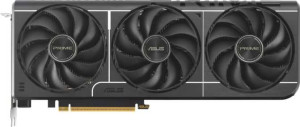
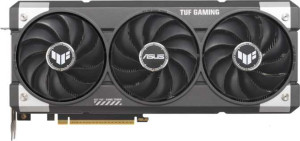
The memory configuration of both the Asus Prime RTX 5060 Ti 16GB and the Asus TUF Gaming RTX 5060 Ti 16GB is where these cards make a strong generational statement — and where they remain perfectly matched against each other. Both feature 16GB of GDDR7 VRAM running at an effective speed of 28000 MHz, delivering a maximum memory bandwidth of 448 GB/s over a 128-bit bus.
The GDDR7 standard is a meaningful leap over GDDR6X, offering significantly higher data rates that partially compensate for the relatively narrow 128-bit bus. In practice, 448 GB/s of bandwidth keeps textures, frame buffers, and shader data flowing quickly enough to sustain high frame rates at 1440p, and makes the cards reasonably competitive even at 4K for less bandwidth-hungry titles. The 16GB VRAM capacity is a genuine asset for modern workflows — comfortably handling large texture packs, high-resolution assets, and memory-intensive creative applications without the risk of VRAM overflow that plagues smaller 8GB configurations. ECC memory support is an added bonus for users doing GPU compute or professional work, as it adds a layer of data integrity protection.
As with performance, this group ends in a complete tie. Every memory specification — capacity, speed, bandwidth, bus width, GDDR generation, and ECC support — is identical across both cards. Neither the Prime nor the TUF Gaming variant holds any memory advantage, so this category offers no basis for differentiation between the two.