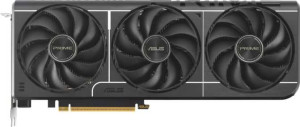
Asus Prime GeForce RTX 5060 Ti 16GB
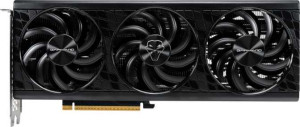
Gainward GeForce RTX 5070 Python III

Asus Prime GeForce RTX 5060 Ti 16GB Gainward GeForce RTX 5070 Python III

Overview

Choosing between the Asus Prime GeForce RTX 5060 Ti 16GB and the Gainward GeForce RTX 5070 Python III means navigating some genuinely interesting trade-offs. Both cards are built on the same Blackwell architecture, share GDDR7 memory technology, and arrive with a comprehensive modern feature set including ray tracing and DLSS. Yet they diverge meaningfully on raw compute throughput, memory capacity versus bandwidth, and power consumption. Read on as we break down every specification to help you find the right fit.

Common Features

  • GPU memory speed is 1750 MHz on both products.
  • Both products support Double Precision Floating Point (DPFP).
  • Effective memory speed is 28000 MHz on both products.
  • Both products use GDDR7 memory.
  • Both products support ECC memory.
  • Both products support DirectX 12 Ultimate.
  • OpenGL version is 4.6 on both products.
  • OpenCL version is 3 on both products.
  • Both products support multi-display technology.
  • Both products support ray tracing.
  • Both products support 3D.
  • Both products support DLSS.
  • XeSS (XMX) support is not available on either product.
  • Both products have an HDMI output.
  • Both products have 1 HDMI port.
  • HDMI version is HDMI 2.1b on both products.
  • Both products have 3 DisplayPort outputs.
  • Neither product has USB-C ports, DVI outputs, or mini DisplayPort outputs.
  • Both products are based on the Blackwell GPU architecture.
  • Both products use PCIe version 5.
  • Both products are manufactured on a 5 nm semiconductor process.
  • Neither product has air-water cooling.

Main Differences

  • GPU clock speed is 2407 MHz on Asus Prime GeForce RTX 5060 Ti 16GB and 2325 MHz on Gainward GeForce RTX 5070 Python III.
  • GPU turbo clock is 2572 MHz on Asus Prime GeForce RTX 5060 Ti 16GB and 2512 MHz on Gainward GeForce RTX 5070 Python III.
  • Pixel rate is 123.5 GPixel/s on Asus Prime GeForce RTX 5060 Ti 16GB and 201 GPixel/s on Gainward GeForce RTX 5070 Python III.
  • Floating-point performance is 23.7 TFLOPS on Asus Prime GeForce RTX 5060 Ti 16GB and 30.87 TFLOPS on Gainward GeForce RTX 5070 Python III.
  • Texture rate is 370.4 GTexels/s on Asus Prime GeForce RTX 5060 Ti 16GB and 482.3 GTexels/s on Gainward GeForce RTX 5070 Python III.
  • Shading units number 4608 on Asus Prime GeForce RTX 5060 Ti 16GB and 6144 on Gainward GeForce RTX 5070 Python III.
  • Texture mapping units (TMUs) total 144 on Asus Prime GeForce RTX 5060 Ti 16GB and 192 on Gainward GeForce RTX 5070 Python III.
  • Render output units (ROPs) total 48 on Asus Prime GeForce RTX 5060 Ti 16GB and 80 on Gainward GeForce RTX 5070 Python III.
  • Maximum memory bandwidth is 448 GB/s on Asus Prime GeForce RTX 5060 Ti 16GB and 672 GB/s on Gainward GeForce RTX 5070 Python III.
  • VRAM is 16 GB on Asus Prime GeForce RTX 5060 Ti 16GB and 12 GB on Gainward GeForce RTX 5070 Python III.
  • Memory bus width is 128-bit on Asus Prime GeForce RTX 5060 Ti 16GB and 192-bit on Gainward GeForce RTX 5070 Python III.
  • RGB lighting is present on Gainward GeForce RTX 5070 Python III but not available on Asus Prime GeForce RTX 5060 Ti 16GB.
  • Thermal Design Power (TDP) is 180W on Asus Prime GeForce RTX 5060 Ti 16GB and 250W on Gainward GeForce RTX 5070 Python III.
  • Number of transistors is 21900 million on Asus Prime GeForce RTX 5060 Ti 16GB and 31100 million on Gainward GeForce RTX 5070 Python III.
  • Width is 304 mm on Asus Prime GeForce RTX 5060 Ti 16GB and 291.9 mm on Gainward GeForce RTX 5070 Python III.
  • Height is 120 mm on Asus Prime GeForce RTX 5060 Ti 16GB and 116.5 mm on Gainward GeForce RTX 5070 Python III.
Specs Comparison
Asus Prime GeForce RTX 5060 Ti 16GB

Asus Prime GeForce RTX 5060 Ti 16GB

Gainward GeForce RTX 5070 Python III

Gainward GeForce RTX 5070 Python III

Performance:
GPU clock speed 2407 MHz 2325 MHz
GPU turbo 2572 MHz 2512 MHz
pixel rate 123.5 GPixel/s 201 GPixel/s
floating-point performance 23.7 TFLOPS 30.87 TFLOPS
texture rate 370.4 GTexels/s 482.3 GTexels/s
GPU memory speed 1750 MHz 1750 MHz
shading units 4608 6144
texture mapping units (TMUs) 144 192
render output units (ROPs) 48 80
Has Double Precision Floating Point (DPFP)

At first glance, the Asus Prime RTX 5060 Ti actually edges out the Gainward RTX 5070 Python III in raw clock speed — its base and turbo clocks of 2407 MHz / 2572 MHz slightly outpace the 5070's 2325 MHz / 2512 MHz. However, clock speed alone tells only a small part of the performance story. What truly defines throughput is how many execution units those clocks are feeding, and here the gap is substantial.

The RTX 5070 Python III carries 6144 shading units versus the 5060 Ti's 4608 — a 33% wider shader array. That advantage cascades directly into every other throughput metric: the 5070 delivers 30.87 TFLOPS of floating-point performance against the 5060 Ti's 23.7 TFLOPS, a roughly 30% lead that translates to noticeably faster frame generation, ray tracing workloads, and compute tasks. The texture rate gap is similarly wide (482.3 vs 370.4 GTexels/s), meaning the 5070 can fill texture detail faster — relevant in high-resolution and detail-rich scenes. Most striking is the render output advantage: 80 ROPs on the 5070 versus 48 on the 5060 Ti, a 67% lead that directly boosts pixel fill rate (201 vs 123.5 GPixel/s) and benefits anti-aliasing and high-refresh-rate rendering. Memory speed is identical at 1750 MHz, so neither card has a bandwidth edge from that angle. Both also support Double Precision Floating Point, making them equally capable for DPFP compute workloads.

The Gainward RTX 5070 Python III holds a clear and decisive performance advantage in this group. The 5060 Ti's marginally higher clocks are not enough to overcome a 33% deficit in shader count and a 67% deficit in ROPs — the 5070 simply has far more raw compute and rendering hardware. Users prioritizing peak graphical throughput should consider the 5070 the stronger performer across the board.

Memory:
effective memory speed 28000 MHz 28000 MHz
maximum memory bandwidth 448 GB/s 672 GB/s
VRAM 16GB 12GB
GDDR version GDDR7 GDDR7
memory bus width 128-bit 192-bit
Supports ECC memory

Both cards share the same GDDR7 memory standard and identical effective memory speed of 28000 MHz, so neither has an edge in raw memory clock. The real divergence lies in how wide a pipe that memory flows through. The Gainward RTX 5070 uses a 192-bit memory bus versus the 128-bit bus on the Asus Prime RTX 5060 Ti — a 50% wider channel that directly multiplies available bandwidth.

The downstream impact is significant: the 5070 achieves 672 GB/s of maximum memory bandwidth compared to 448 GB/s on the 5060 Ti. That extra bandwidth matters most in scenarios where the GPU is constantly feeding large datasets to its shader array — high resolutions, texture-heavy scenes, and workloads like video editing or machine learning inference. A bandwidth-starved GPU will stall even if its compute units are capable. The 5060 Ti does, however, offer more VRAM at 16GB versus the 5070's 12GB, which is a notable counterpoint: larger VRAM allows more scene data, textures, or model weights to reside on-card at once, reducing costly transfers from system memory and benefiting very high-resolution textures or large AI models.

This group presents a genuine tradeoff rather than a clean sweep. The RTX 5070 Python III holds the bandwidth advantage — and bandwidth is typically the more performance-critical metric in fast-moving rendering workloads. The RTX 5060 Ti counters with a 4GB VRAM lead, which becomes meaningful when VRAM capacity itself is the bottleneck, such as running large generative AI models or modding-heavy games with high-resolution texture packs. Both cards support ECC memory equally. Overall, the 5070 edges ahead for bandwidth-sensitive use cases, while the 5060 Ti is the stronger choice when raw capacity matters most.

Features:
DirectX version DirectX 12 Ultimate DirectX 12 Ultimate
OpenGL version 4.6 4.6
OpenCL version 3 3
Supports multi-display technology
supports ray tracing
Supports 3D
supports DLSS
has XeSS (XMX)
AMD SAM / Intel Resizable BAR Intel Resizable BAR Intel Resizable BAR
has LHR
has RGB lighting
supported displays 4 4

From a feature compatibility standpoint, these two cards are essentially mirror images of each other. Both support DirectX 12 Ultimate, ray tracing, DLSS, and OpenCL 3, meaning users of either card get access to the same generation of rendering and upscaling technologies. The shared Intel Resizable BAR support also ensures that compatible systems can feed the GPU more efficiently, and neither card carries an LHR limiter. Up to 4 simultaneous displays are supported on both.

The only differentiator the provided data reveals is RGB lighting: the Gainward RTX 5070 Python III has it, the Asus Prime RTX 5060 Ti does not. This is purely an aesthetic consideration — it has no bearing on gaming performance, compute capability, or compatibility. For builders assembling a themed system with RGB synchronization, the 5070 offers that integration out of the box; for those who prefer a cleaner, understated look or simply don't care about lighting, the 5060 Ti's omission is irrelevant.

In this group, the two cards are effectively tied on every functionally meaningful spec. The RTX 5070 gains a cosmetic edge via RGB, but no performance or compatibility advantage can be declared from the data provided here. A buyer's decision in this category should rest entirely on whether onboard lighting matters to their build aesthetic.

Ports:
has an HDMI output
HDMI ports 1 1
HDMI version HDMI 2.1b HDMI 2.1b
DisplayPort outputs 3 3
USB-C ports 0 0
DVI outputs 0 0
mini DisplayPort outputs 0 0

Port selection is identical across both cards, making this a straightforward group to assess. Each offers 1 HDMI 2.1b output and 3 DisplayPort outputs, totaling four display connections — consistent with the four-display limit noted in the Features group. Neither card includes USB-C or any legacy outputs such as DVI or mini DisplayPort.

The presence of HDMI 2.1b on both is worth highlighting: this version supports up to 4K at high refresh rates and 8K output, making either card future-compatible with high-end displays and TVs without requiring an adapter. The three DisplayPort outputs complement this well for multi-monitor desktop setups, where DisplayPort is typically the preferred connection for gaming monitors.

This group is a complete tie — there is no distinction whatsoever between the Asus Prime RTX 5060 Ti and the Gainward RTX 5070 Python III in terms of connectivity. Buyers with specific port requirements, such as needing USB-C passthrough for certain monitors, will find neither card accommodates that directly and should plan for an adapter regardless of which card they choose.

General info:
GPU architecture Blackwell Blackwell
release date April 2025 March 2025
Thermal Design Power (TDP) 180W 250W
PCI Express (PCIe) version 5 5
semiconductor size 5 nm 5 nm
number of transistors 21900 million 31100 million
Has air-water cooling
width 304 mm 291.9 mm
height 120 mm 116.5 mm

Sharing the same Blackwell architecture, 5nm process node, and PCIe 5.0 interface, both cards come from the same generational foundation — but the silicon underneath tells a different story. The Gainward RTX 5070 Python III packs 31,100 million transistors against the Asus Prime RTX 5060 Ti's 21,900 million, a roughly 42% larger die. This directly explains the wider shader and ROP counts seen in the Performance group — more transistors means more functional units, and that translates to the compute throughput gap already observed.

The most practically impactful difference here is TDP: the RTX 5070 requires 250W versus the 5060 Ti's 180W. That 70W gap has real consequences — it demands a more capable PSU, produces more heat that the system must dissipate, and will contribute to higher sustained power draw under load. For small form factor or thermally constrained builds, the 5060 Ti's lower TDP makes it meaningfully easier to accommodate. Neither card offers an air-water hybrid cooling option, so both rely entirely on their respective air cooler designs.

Physical dimensions are close, with the RTX 5060 Ti being very slightly longer (304 mm vs 291.9 mm) while the 5070 is marginally taller. Neither difference is large enough to be a deciding factor for most cases. Overall, the RTX 5060 Ti holds a clear efficiency and build-compatibility advantage in this group thanks to its significantly lower TDP, while the 5070's larger transistor count underpins its performance lead — the two cards represent a deliberate power-performance tradeoff within the same architectural family.

Comparison Summary & Verdict

Both GPUs share a strong common foundation: Blackwell architecture, GDDR7 memory, PCIe 5 connectivity, ray tracing, and DLSS support. The Gainward GeForce RTX 5070 Python III pulls ahead in outright horsepower, delivering 30.87 TFLOPS of floating-point performance, a wider 192-bit memory bus, 672 GB/s of bandwidth, and 6144 shading units, making it the stronger choice for high-resolution gaming and compute-intensive workloads. The Asus Prime GeForce RTX 5060 Ti 16GB fights back with a larger 16 GB VRAM pool and a significantly lower 180W TDP, giving it a decisive edge in memory-hungry tasks and power-constrained systems. Choose the Asus if ample video memory and energy efficiency are your priorities; opt for the Gainward if maximum GPU throughput and bandwidth are what your workloads demand.

Asus Prime GeForce RTX 5060 Ti 16GB
Buy Asus Prime GeForce RTX 5060 Ti 16GB if...

Buy the Asus Prime GeForce RTX 5060 Ti 16GB if you prioritize a large 16 GB VRAM buffer for memory-intensive tasks and want a more power-efficient card with a 180W TDP.

Gainward GeForce RTX 5070 Python III
Buy Gainward GeForce RTX 5070 Python III if...

Choose the Gainward GeForce RTX 5070 Python III if you need superior raw compute performance, higher memory bandwidth via a 192-bit bus, and want RGB lighting for your build.