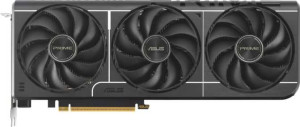
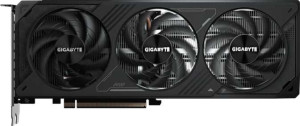
At first glance, the clock speed story slightly favors the Asus Prime RTX 5060 Ti, which edges out the Gigabyte RTX 5070 WindForce OC SFF with a base clock of 2407 MHz vs 2325 MHz and a turbo of 2572 MHz vs 2542 MHz. However, raw clock speed is only one piece of the performance equation — and here, it is the least important one. The 5070 WindForce compensates with a substantially larger GPU architecture, and the downstream numbers tell that story clearly.
The most telling differentiators are the compute and throughput metrics. The RTX 5070 WindForce delivers 31.24 TFLOPS of floating-point performance versus 23.7 TFLOPS on the 5060 Ti — a roughly 32% advantage that directly translates to faster shader workloads, better ray tracing headroom, and more capable AI-accelerated rendering. This gap is reinforced by the 5070's higher pixel rate (203.4 vs 123.5 GPixel/s) and texture rate (488.1 vs 370.4 GTexels/s), driven by its significantly larger pool of 6144 shading units, 192 TMUs, and 80 ROPs compared to the 5060 Ti's 4608, 144, and 48 respectively. More ROPs in particular means the 5070 can push more pixels per clock — a real advantage at higher resolutions like 1440p and 4K. Both cards share identical GPU memory speed of 1750 MHz and both support Double Precision Floating Point, so those metrics contribute nothing to differentiation here.
The Gigabyte RTX 5070 WindForce OC SFF holds a clear and meaningful performance advantage across every compute and rasterization metric that matters. Despite the 5060 Ti's marginally higher clock speeds, the 5070's architectural muscle — more shaders, more TMUs, more ROPs, and over 30% more raw compute throughput — makes it the stronger GPU for demanding games, content creation workloads, and future-proofing at higher resolutions.