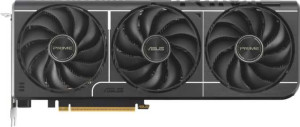
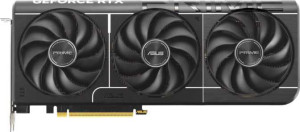
Asus Prime GeForce RTX 5060 Ti OC Edition 16GB
Asus Prime GeForce RTX 5070 OC Edition

Asus Prime GeForce RTX 5060 Ti OC Edition 16GB Asus Prime GeForce RTX 5070 OC Edition

Overview

Welcome to this in-depth specification showdown between the Asus Prime GeForce RTX 5060 Ti OC Edition 16GB and the Asus Prime GeForce RTX 5070 OC Edition. Both cards share Nvidia’s cutting-edge Blackwell architecture on a 5 nm process, yet they diverge sharply when it comes to raw compute throughput, memory configuration, and power consumption. Which card delivers the right balance of performance and value for your needs? Read on to find out.

Common Features

  • Both cards share a GPU memory speed of 1750 MHz.
  • Double Precision Floating Point (DPFP) is supported on both cards.
  • Both cards use GDDR7 memory with an effective memory speed of 28000 MHz.
  • ECC memory support is available on both cards.
  • Both cards are compatible with DirectX 12 Ultimate.
  • Both cards support OpenGL version 4.6.
  • Both cards support OpenCL version 3.
  • Multi-display technology is supported on both cards.
  • Ray tracing is supported on both cards.
  • 3D support is available on both cards.
  • DLSS support is available on both cards.
  • XeSS (XMX) support is not available on either card.
  • Both cards feature one HDMI 2.1b output.
  • Both cards include three DisplayPort outputs.
  • Neither card has USB-C or DVI outputs.
  • Both cards are built on the Blackwell GPU architecture.
  • Both cards use a 5 nm semiconductor manufacturing process.
  • Both cards connect via PCI Express 5.
  • Neither card features air-water cooling.
  • Both cards share a width of 304 mm.

Main Differences

  • GPU base clock speed is 2407 MHz on the Asus Prime GeForce RTX 5060 Ti OC Edition 16GB and 2325 MHz on the Asus Prime GeForce RTX 5070 OC Edition.
  • GPU turbo clock speed is 2617 MHz on the Asus Prime GeForce RTX 5060 Ti OC Edition 16GB and 2557 MHz on the Asus Prime GeForce RTX 5070 OC Edition.
  • Pixel rate is 125.6 GPixel/s on the Asus Prime GeForce RTX 5060 Ti OC Edition 16GB and 204.6 GPixel/s on the Asus Prime GeForce RTX 5070 OC Edition.
  • Floating-point performance is 24.12 TFLOPS on the Asus Prime GeForce RTX 5060 Ti OC Edition 16GB and 31.42 TFLOPS on the Asus Prime GeForce RTX 5070 OC Edition.
  • Texture rate is 376.8 GTexels/s on the Asus Prime GeForce RTX 5060 Ti OC Edition 16GB and 490.9 GTexels/s on the Asus Prime GeForce RTX 5070 OC Edition.
  • Shading units number 4608 on the Asus Prime GeForce RTX 5060 Ti OC Edition 16GB and 6144 on the Asus Prime GeForce RTX 5070 OC Edition.
  • Texture mapping units (TMUs) total 144 on the Asus Prime GeForce RTX 5060 Ti OC Edition 16GB and 192 on the Asus Prime GeForce RTX 5070 OC Edition.
  • Render output units (ROPs) number 48 on the Asus Prime GeForce RTX 5060 Ti OC Edition 16GB and 80 on the Asus Prime GeForce RTX 5070 OC Edition.
  • Maximum memory bandwidth is 448 GB/s on the Asus Prime GeForce RTX 5060 Ti OC Edition 16GB and 672 GB/s on the Asus Prime GeForce RTX 5070 OC Edition.
  • VRAM is 16 GB on the Asus Prime GeForce RTX 5060 Ti OC Edition 16GB and 12 GB on the Asus Prime GeForce RTX 5070 OC Edition.
  • Memory bus width is 128-bit on the Asus Prime GeForce RTX 5060 Ti OC Edition 16GB and 192-bit on the Asus Prime GeForce RTX 5070 OC Edition.
  • Thermal Design Power (TDP) is 180W on the Asus Prime GeForce RTX 5060 Ti OC Edition 16GB and 250W on the Asus Prime GeForce RTX 5070 OC Edition.
  • The number of transistors is 21,900 million on the Asus Prime GeForce RTX 5060 Ti OC Edition 16GB and 31,100 million on the Asus Prime GeForce RTX 5070 OC Edition.
  • Card height is 120 mm on the Asus Prime GeForce RTX 5060 Ti OC Edition 16GB and 126 mm on the Asus Prime GeForce RTX 5070 OC Edition.
Specs Comparison
Asus Prime GeForce RTX 5060 Ti OC Edition 16GB

Asus Prime GeForce RTX 5060 Ti OC Edition 16GB

Asus Prime GeForce RTX 5070 OC Edition

Asus Prime GeForce RTX 5070 OC Edition

Performance:
GPU clock speed 2407 MHz 2325 MHz
GPU turbo 2617 MHz 2557 MHz
pixel rate 125.6 GPixel/s 204.6 GPixel/s
floating-point performance 24.12 TFLOPS 31.42 TFLOPS
texture rate 376.8 GTexels/s 490.9 GTexels/s
GPU memory speed 1750 MHz 1750 MHz
shading units 4608 6144
texture mapping units (TMUs) 144 192
render output units (ROPs) 48 80
Has Double Precision Floating Point (DPFP)

At first glance, the RTX 5060 Ti OC Edition appears to have a clock speed edge, running its base and boost frequencies about 60–80 MHz higher than the RTX 5070 OC Edition. However, clock speed alone is a poor proxy for GPU performance — what matters is how many execution units are being clocked, and here the 5070 pulls decisively ahead. With 6144 shading units versus 4608, the 5070 packs 33% more parallel compute muscle, which directly translates into its 31.42 TFLOPS of floating-point throughput compared to the 5060 Ti's 24.12 TFLOPS — a ~30% lead in raw compute that will be felt in shader-heavy workloads, ray tracing, and AI-accelerated features.

The gap widens further when looking at rasterization and texturing throughput. The 5070's 80 ROPs versus the 5060 Ti's 48 represent a ~67% advantage in pixel output capacity, reflected in its 204.6 GPixel/s pixel rate versus 125.6 GPixel/s. In practice, ROPs are the final bottleneck in pushing fully rendered pixels to the framebuffer — more ROPs means the 5070 sustains higher frame rates at high resolutions more comfortably. Texture fill rate tells a similar story: 490.9 GTexels/s on the 5070 versus 376.8 GTexels/s, a ~30% edge that benefits texture-heavy open-world scenes. One shared highlight is the identical 1750 MHz memory speed and the presence of Double Precision Floating Point on both cards.

The verdict for this group is clear: the RTX 5070 OC Edition holds a substantial performance advantage across every meaningful throughput metric. The 5060 Ti's marginally higher clock speeds are more than offset by the 5070's significantly larger shader array and ROP count. Users prioritizing raw GPU horsepower — especially at 1440p or 4K — will find the 5070 the stronger card in this comparison.

Memory:
effective memory speed 28000 MHz 28000 MHz
maximum memory bandwidth 448 GB/s 672 GB/s
VRAM 16GB 12GB
GDDR version GDDR7 GDDR7
memory bus width 128-bit 192-bit
Supports ECC memory

The memory specifications of the Asus Prime GeForce RTX 5060 Ti OC Edition 16GB and the Asus Prime GeForce RTX 5070 OC Edition show some important differences. Both products feature GDDR7 memory, with an effective memory speed of 28000 MHz, so there is no difference in memory speed. However, the 5060 Ti is equipped with 16GB of VRAM, while the 5070 has 12GB of VRAM, which means the 5060 Ti offers a higher memory capacity.

The maximum memory bandwidth also differs. The 5060 Ti has a maximum memory bandwidth of 448 GB/s, while the 5070 offers a much higher bandwidth of 672 GB/s, providing faster memory access for the 5070. In terms of memory bus width, the 5060 Ti uses a 128-bit bus, whereas the 5070 utilizes a 192-bit bus, again favoring the 5070 with a wider data path for memory transfer.

Both cards support ECC (Error Correction Code) memory, which helps in maintaining data integrity during intensive tasks. This ensures both products are reliable for tasks requiring high memory stability, such as in computational and professional environments.

Features:
DirectX version DirectX 12 Ultimate DirectX 12 Ultimate
OpenGL version 4.6 4.6
OpenCL version 3 3
Supports multi-display technology
supports ray tracing
Supports 3D
supports DLSS
has XeSS (XMX)
AMD SAM / Intel Resizable BAR Intel Resizable BAR Intel Resizable BAR
has LHR
has RGB lighting
supported displays 4 4

The Asus Prime GeForce RTX 5060 Ti OC Edition 16GB and Asus Prime GeForce RTX 5070 OC Edition share a nearly identical set of features. Both cards support DirectX 12 Ultimate, OpenGL 4.6, and OpenCL 3, making them compatible with a wide range of modern games and applications. They also both support multi-display technology, ray tracing, and 3D, providing a rich, immersive experience for users who require advanced graphical capabilities.

Additionally, both products support DLSS (Deep Learning Super Sampling), enhancing the performance of compatible games through AI-powered upscaling. Neither card has XeSS (XMX) support, so both lack the additional AI-based graphics technology from Intel. Both cards also support Intel Resizable BAR, a feature that allows better memory access between the CPU and GPU.

Both the 5060 Ti and 5070 OC Edition lack RGB lighting and LHR (Lite Hash Rate) features, so they are not optimized for cryptocurrency mining but maintain standard graphics performance. They are also both capable of supporting up to four displays, making them suitable for multi-monitor setups in both gaming and professional use cases.

Ports:
has an HDMI output
HDMI ports 1 1
HDMI version HDMI 2.1b HDMI 2.1b
DisplayPort outputs 3 3
USB-C ports 0 0
DVI outputs 0 0
mini DisplayPort outputs 0 0

The ports available on the Asus Prime GeForce RTX 5060 Ti OC Edition 16GB and the Asus Prime GeForce RTX 5070 OC Edition are identical. Both products feature one HDMI 2.1b output, and both have three DisplayPort outputs. Neither card includes USB-C ports, DVI outputs, or mini DisplayPort outputs, meaning the connectivity options are limited to HDMI and DisplayPort for both models.

Thus, the two cards offer the same set of ports, making them comparable in terms of video output capabilities, with no distinction between the two in this category.

General info:
GPU architecture Blackwell Blackwell
release date April 2025 January 2025
Thermal Design Power (TDP) 180W 250W
PCI Express (PCIe) version 5 5
semiconductor size 5 nm 5 nm
number of transistors 21900 million 31100 million
Has air-water cooling
width 304 mm 304 mm
height 120 mm 126 mm

The Asus Prime GeForce RTX 5060 Ti OC Edition 16GB and Asus Prime GeForce RTX 5070 OC Edition share the same GPU architecture, Blackwell, and both use a 5 nm semiconductor size, indicating similar technological advancements in their core design. The 5060 Ti has a Thermal Design Power (TDP) of 180W, while the 5070 has a higher TDP of 250W, reflecting its increased power demands.

Both cards utilize the PCI Express (PCIe) version 5, ensuring fast data transfer between the GPU and the rest of the system. The 5060 Ti has 21,900 million transistors, while the 5070 contains more at 31,100 million transistors, indicating a higher level of processing complexity in the 5070.

In terms of physical dimensions, both cards are 304 mm in width, but the 5070 is slightly taller at 126 mm compared to the 5060 Ti's 120 mm. Neither card includes air-water cooling, which is a factor to consider for users planning custom cooling solutions.

Comparison Summary & Verdict

After examining every specification, these two cards serve distinct audiences. The Asus Prime GeForce RTX 5060 Ti OC Edition 16GB stands out with its generous 16 GB of VRAM and a leaner 180W TDP, making it a compelling choice for users who need ample video memory while keeping power draw in check. Its slightly higher base and turbo clock speeds are a bonus. The Asus Prime GeForce RTX 5070 OC Edition, on the other hand, pulls ahead with 31.42 TFLOPS of floating-point performance, a wider 192-bit memory bus delivering 672 GB/s of bandwidth, 6144 shading units, and substantially higher pixel and texture rates — all translating to superior rendering throughput for demanding workloads. Choose the RTX 5060 Ti OC 16GB if VRAM capacity and power efficiency are your priorities; opt for the RTX 5070 OC if outright graphics horsepower is what matters most.

Asus Prime GeForce RTX 5060 Ti OC Edition 16GB
Buy Asus Prime GeForce RTX 5060 Ti OC Edition 16GB if...

Buy the Asus Prime GeForce RTX 5060 Ti OC Edition 16GB if you prioritize a larger 16 GB VRAM pool and a more power-efficient 180W TDP without sacrificing Blackwell-generation features.

Asus Prime GeForce RTX 5070 OC Edition
Buy Asus Prime GeForce RTX 5070 OC Edition if...

Buy the Asus Prime GeForce RTX 5070 OC Edition if you need maximum graphics throughput, with significantly higher floating-point performance, more shading units, and greater memory bandwidth via its wider 192-bit bus.