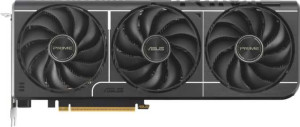
Asus Prime GeForce RTX 5060 Ti OC Edition 16GB
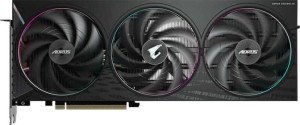
Gigabyte Aorus GeForce RTX 5060 Ti Elite 16GB

Asus Prime GeForce RTX 5060 Ti OC Edition 16GB Gigabyte Aorus GeForce RTX 5060 Ti Elite 16GB

Overview

Welcome to our in-depth specification comparison between the Asus Prime GeForce RTX 5060 Ti OC Edition 16GB and the Gigabyte Aorus GeForce RTX 5060 Ti Elite 16GB. Both cards are built on the same Blackwell architecture and share an identical memory configuration, yet they diverge in areas like boost clock speeds, raw compute throughput, physical dimensions, and aesthetics — making the choice between them far from straightforward.

Common Features

  • Both cards share the same base GPU clock speed of 2407 MHz.
  • Both cards have a GPU memory speed of 1750 MHz.
  • Both cards feature 4608 shading units.
  • Both cards have 144 texture mapping units (TMUs).
  • Both cards have 48 render output units (ROPs).
  • Double Precision Floating Point (DPFP) is supported on both cards.
  • Both cards have an effective memory speed of 28000 MHz.
  • Both cards offer a maximum memory bandwidth of 448 GB/s.
  • Both cards come with 16GB of VRAM.
  • Both cards use GDDR7 memory.
  • Both cards have a 128-bit memory bus width.
  • ECC memory is supported on both cards.
  • Both cards support DirectX 12 Ultimate.
  • Both cards support OpenGL version 4.6.
  • Both cards support OpenCL version 3.
  • Multi-display technology is supported on both cards.
  • Ray tracing is supported on both cards.
  • DLSS is supported on both cards.
  • 3D support is available on both cards.
  • XeSS (XMX) is not available on either card.
  • Both cards have one HDMI 2.1b output.
  • Both cards include three DisplayPort outputs.
  • Neither card has USB-C or DVI outputs.
  • Both cards are based on the Blackwell GPU architecture.
  • Both cards have a Thermal Design Power (TDP) of 180W.
  • Both cards use PCIe version 5.
  • Both cards are manufactured on a 5 nm semiconductor process.
  • Both cards contain 21900 million transistors.
  • Neither card features air-water cooling.

Main Differences

  • GPU turbo clock speed is 2617 MHz on Asus Prime GeForce RTX 5060 Ti OC Edition 16GB and 2722 MHz on Gigabyte Aorus GeForce RTX 5060 Ti Elite 16GB.
  • Pixel rate is 125.6 GPixel/s on Asus Prime GeForce RTX 5060 Ti OC Edition 16GB and 130.7 GPixel/s on Gigabyte Aorus GeForce RTX 5060 Ti Elite 16GB.
  • Floating-point performance is 24.12 TFLOPS on Asus Prime GeForce RTX 5060 Ti OC Edition 16GB and 25.09 TFLOPS on Gigabyte Aorus GeForce RTX 5060 Ti Elite 16GB.
  • Texture rate is 376.8 GTexels/s on Asus Prime GeForce RTX 5060 Ti OC Edition 16GB and 392 GTexels/s on Gigabyte Aorus GeForce RTX 5060 Ti Elite 16GB.
  • RGB lighting is present on Gigabyte Aorus GeForce RTX 5060 Ti Elite 16GB but not available on Asus Prime GeForce RTX 5060 Ti OC Edition 16GB.
  • Card width is 304 mm on Asus Prime GeForce RTX 5060 Ti OC Edition 16GB and 329 mm on Gigabyte Aorus GeForce RTX 5060 Ti Elite 16GB.
  • Card height is 120 mm on Asus Prime GeForce RTX 5060 Ti OC Edition 16GB and 128 mm on Gigabyte Aorus GeForce RTX 5060 Ti Elite 16GB.
Specs Comparison
Asus Prime GeForce RTX 5060 Ti OC Edition 16GB

Asus Prime GeForce RTX 5060 Ti OC Edition 16GB

Gigabyte Aorus GeForce RTX 5060 Ti Elite 16GB

Gigabyte Aorus GeForce RTX 5060 Ti Elite 16GB

Performance:
GPU clock speed 2407 MHz 2407 MHz
GPU turbo 2617 MHz 2722 MHz
pixel rate 125.6 GPixel/s 130.7 GPixel/s
floating-point performance 24.12 TFLOPS 25.09 TFLOPS
texture rate 376.8 GTexels/s 392 GTexels/s
GPU memory speed 1750 MHz 1750 MHz
shading units 4608 4608
texture mapping units (TMUs) 144 144
render output units (ROPs) 48 48
Has Double Precision Floating Point (DPFP)

Both the Asus Prime RTX 5060 Ti OC and the Gigabyte Aorus RTX 5060 Ti Elite share an identical foundation at the architectural level: the same 2407 MHz base clock, the same 4608 shading units, 144 TMUs, 48 ROPs, and 1750 MHz memory speed. This means any performance gap between them comes down entirely to how aggressively each card boosts beyond that base frequency.

That is precisely where the Aorus Elite pulls ahead. Its 2722 MHz GPU turbo outpaces the Prime OC's 2617 MHz by 105 MHz — roughly a 4% higher sustained peak clock. That difference compounds directly into the throughput metrics: the Aorus delivers 25.09 TFLOPS of floating-point performance versus 24.12 TFLOPS, and a texture rate of 392 GTexels/s against 376.8 GTexels/s. In real-world terms, a consistent 4% clock advantage translates to a measurable but not transformative uplift in GPU-bound workloads — think slightly smoother frame pacing at high resolutions or a modest edge in compute tasks like AI inference and rendering.

The verdict for this group is clear: the Aorus Elite holds a consistent performance edge across every throughput metric, driven solely by its higher boost clock. The Prime OC is by no means slow — its ″OC″ designation means it already runs above reference — but if raw peak performance is the priority, the Aorus Elite is the stronger card of the two.

Memory:
effective memory speed 28000 MHz 28000 MHz
maximum memory bandwidth 448 GB/s 448 GB/s
VRAM 16GB 16GB
GDDR version GDDR7 GDDR7
memory bus width 128-bit 128-bit
Supports ECC memory

On memory, these two cards are carbon copies of each other. Both carry 16GB of GDDR7 VRAM running at an effective 28000 MHz across a 128-bit bus, resulting in identical peak bandwidth of 448 GB/s. There is no scenario in which one will outperform the other due to memory configuration alone.

What matters here is what those shared specs represent in context. GDDR7 at 28 Gbps effective speed is a significant generational step, and 448 GB/s of bandwidth from a 128-bit interface is notably efficient — achieving what previous generations needed a wider bus to accomplish. For a card in this tier, 16GB is a generous framebuffer that comfortably handles 4K texture packs, large generative AI models, and high-resolution creative workloads without the VRAM pressure that 8GB or 12GB cards increasingly face. ECC memory support is an added practical bonus for users doing double-duty with professional or compute workloads alongside gaming.

This group is a complete tie. Every single memory specification is identical across the Prime OC and the Aorus Elite — capacity, speed, bandwidth, bus width, memory type, and ECC support all match exactly. The memory subsystem will not be a differentiator between these two cards under any workload.

Features:
DirectX version DirectX 12 Ultimate DirectX 12 Ultimate
OpenGL version 4.6 4.6
OpenCL version 3 3
Supports multi-display technology
supports ray tracing
Supports 3D
supports DLSS
has XeSS (XMX)
AMD SAM / Intel Resizable BAR Intel Resizable BAR Intel Resizable BAR
has LHR
has RGB lighting
supported displays 4 4

Functionally, these two cards are indistinguishable. Both support DirectX 12 Ultimate, ray tracing, DLSS, and up to 4 simultaneous displays — covering every major modern gaming and productivity feature a user could reasonably need. Intel Resizable BAR support is present on both, enabling the CPU to access the full VRAM pool at once, which can yield modest frame rate improvements in supported titles.

The only concrete differentiator in this group is RGB lighting: the Aorus Elite has it, the Prime OC does not. For users building a themed or illuminated system, this is a genuine distinction — the Aorus Elite integrates into RGB ecosystems while the Prime OC takes a purely utilitarian approach to aesthetics. Neither choice affects rendering capability, performance, or software feature access in any way.

For this group, the cards are essentially tied on all functional features. The Aorus Elite has a cosmetic edge with RGB lighting, which may matter to some buyers but carries no technical weight. If aesthetics are irrelevant to your decision, this category offers no meaningful basis for choosing one card over the other.

Ports:
has an HDMI output
HDMI ports 1 1
HDMI version HDMI 2.1b HDMI 2.1b
DisplayPort outputs 3 3
USB-C ports 0 0
DVI outputs 0 0
mini DisplayPort outputs 0 0

Port selection is identical across both cards: one HDMI 2.1b output and three DisplayPort outputs, totaling four display connections — which aligns with the four-display limit noted in their features specs. Neither card offers USB-C or any legacy outputs like DVI or mini DisplayPort.

The practical takeaway is that both cards are well-equipped for modern multi-monitor setups. HDMI 2.1b is the latest revision of the standard, supporting high refresh rates at 4K and beyond, while three DisplayPort outputs give flexibility for users running multiple high-resolution panels simultaneously. The absence of USB-C is worth noting for anyone hoping to drive a USB-C or Thunderbolt-connected display directly from the GPU, though this is uncommon in typical gaming or workstation configurations.

Another complete tie — every port type, count, and version is identical between the Prime OC and the Aorus Elite. Connectivity will not factor into a decision between these two cards.

General info:
GPU architecture Blackwell Blackwell
release date April 2025 April 2025
Thermal Design Power (TDP) 180W 180W
PCI Express (PCIe) version 5 5
semiconductor size 5 nm 5 nm
number of transistors 21900 million 21900 million
Has air-water cooling
width 304 mm 329 mm
height 120 mm 128 mm

At their core, these two cards are built on the exact same silicon: identical Blackwell architecture, 5nm process node, 21.9 billion transistors, and a 180W TDP. PCIe 5.0 support is shared as well, though both will also run fine in PCIe 4.0 slots with negligible real-world impact. From a power and engineering standpoint, they are the same card underneath their respective coolers.

Where they diverge is physical size. The Aorus Elite measures 329 mm × 128 mm compared to the Prime OC's more compact 304 mm × 120 mm — a difference of 25 mm in length and 8 mm in height. That larger footprint on the Aorus Elite is directly tied to its bigger cooling solution, which in turn enables the higher boost clocks observed in the Performance group. For users with smaller mid-tower cases or tight GPU clearance, the Prime OC's shorter length is a genuine practical advantage worth checking against case specifications before purchasing.

The overall picture here slightly favors the Prime OC for build flexibility, given its more compact dimensions with no penalty in TDP or platform compatibility. The Aorus Elite's larger size is a deliberate engineering trade-off to support its more aggressive cooling and boost behavior — neither approach is inherently superior, but case constraints may make the decision for some buyers.

Comparison Summary & Verdict

After examining every specification, these two cards share a remarkably similar foundation: identical 16GB GDDR7 memory, the same 180W TDP, and equivalent port configurations. The key differentiator lies in performance headroom — the Gigabyte Aorus GeForce RTX 5060 Ti Elite 16GB pulls ahead with a higher GPU turbo clock of 2722 MHz, a superior floating-point throughput of 25.09 TFLOPS, and a faster texture rate, making it the stronger pick for enthusiasts chasing every last frame. On the other hand, the Asus Prime GeForce RTX 5060 Ti OC Edition 16GB is notably more compact at 304 mm in length and 120 mm in height, suiting builds where space is at a premium. The Gigabyte card also adds RGB lighting for users who value aesthetics. Neither card is objectively superior in every dimension — your ideal choice depends on whether raw performance or a smaller form factor matters most to you.

Asus Prime GeForce RTX 5060 Ti OC Edition 16GB
Buy Asus Prime GeForce RTX 5060 Ti OC Edition 16GB if...

Buy the Asus Prime GeForce RTX 5060 Ti OC Edition 16GB if you need a more compact card that fits in smaller cases, without sacrificing the same memory configuration and core feature set.

Gigabyte Aorus GeForce RTX 5060 Ti Elite 16GB
Buy Gigabyte Aorus GeForce RTX 5060 Ti Elite 16GB if...

Buy the Gigabyte Aorus GeForce RTX 5060 Ti Elite 16GB if you want higher boost clocks, greater floating-point performance, and RGB lighting for a more visually striking and performance-focused build.