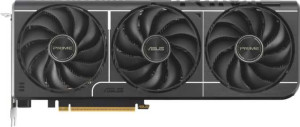
Asus Prime GeForce RTX 5060 Ti OC Edition 16GB
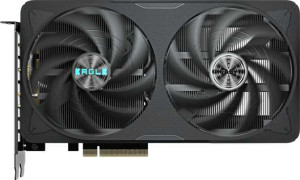
Gigabyte GeForce RTX 5060 Ti Eagle OC 16GB

Asus Prime GeForce RTX 5060 Ti OC Edition 16GB Gigabyte GeForce RTX 5060 Ti Eagle OC 16GB

Overview

Welcome to this detailed spec comparison between the Asus Prime GeForce RTX 5060 Ti OC Edition 16GB and the Gigabyte GeForce RTX 5060 Ti Eagle OC 16GB. Both cards are built on the same Blackwell architecture and share identical clock speeds, memory configurations, and feature sets, making this a uniquely focused matchup. The real questions come down to physical dimensions and aesthetic preferences — factors that can matter greatly depending on your case and build style.

Common Features

  • Both cards have a GPU clock speed of 2407 MHz.
  • Both cards have a GPU turbo speed of 2617 MHz.
  • Both cards deliver a pixel rate of 125.6 GPixel/s.
  • Both cards offer 24.12 TFLOPS of floating-point performance.
  • Both cards have a texture rate of 376.8 GTexels/s.
  • Both cards feature a GPU memory speed of 1750 MHz.
  • Both cards include 4608 shading units.
  • Both cards have 144 texture mapping units (TMUs).
  • Both cards have an effective memory speed of 28000 MHz.
  • Both cards provide a maximum memory bandwidth of 448 GB/s.
  • Both cards come with 16GB of VRAM.
  • Both cards use GDDR7 memory.
  • Both cards have a 128-bit memory bus width.
  • ECC memory is supported on both cards.
  • Both cards support DirectX 12 Ultimate.
  • Both cards support OpenGL version 4.6.
  • Both cards support OpenCL version 3.
  • Multi-display technology is supported on both cards.
  • Ray tracing is supported on both cards.
  • DLSS is supported on both cards.
  • 3D support is available on both cards.
  • XeSS (XMX) is not available on either card.
  • Both cards include one HDMI 2.1b output.
  • Both cards include three DisplayPort outputs.
  • Neither card includes USB-C ports, DVI outputs, or mini DisplayPort outputs.
  • Both cards are based on the Blackwell GPU architecture.
  • Both cards have a Thermal Design Power (TDP) of 180W.
  • Both cards use PCIe version 5.
  • Both cards are built on a 5 nm semiconductor process.
  • Both cards feature 21900 million transistors.
  • Neither card uses air-water cooling.

Main Differences

  • RGB lighting is present on the Gigabyte GeForce RTX 5060 Ti Eagle OC 16GB but not available on the Asus Prime GeForce RTX 5060 Ti OC Edition 16GB.
  • Width is 304 mm on the Asus Prime GeForce RTX 5060 Ti OC Edition 16GB and 215 mm on the Gigabyte GeForce RTX 5060 Ti Eagle OC 16GB.
  • Height is 120 mm on the Asus Prime GeForce RTX 5060 Ti OC Edition 16GB and 122 mm on the Gigabyte GeForce RTX 5060 Ti Eagle OC 16GB.
Specs Comparison
Asus Prime GeForce RTX 5060 Ti OC Edition 16GB

Asus Prime GeForce RTX 5060 Ti OC Edition 16GB

Gigabyte GeForce RTX 5060 Ti Eagle OC 16GB

Gigabyte GeForce RTX 5060 Ti Eagle OC 16GB

Performance:
GPU clock speed 2407 MHz 2407 MHz
GPU turbo 2617 MHz 2617 MHz
pixel rate 125.6 GPixel/s 125.6 GPixel/s
floating-point performance 24.12 TFLOPS 24.12 TFLOPS
texture rate 376.8 GTexels/s 376.8 GTexels/s
GPU memory speed 1750 MHz 1750 MHz
shading units 4608 4608
texture mapping units (TMUs) 144 144
render output units (ROPs) 48 48
Has Double Precision Floating Point (DPFP)

In terms of raw performance, the Asus Prime RTX 5060 Ti OC and the Gigabyte RTX 5060 Ti Eagle OC are in complete lockstep. Both cards share identical core clock configurations — a base of 2407 MHz and a boost of 2617 MHz — and this carries through to every derived performance metric: 24.12 TFLOPS of floating-point throughput, a pixel fill rate of 125.6 GPixel/s, and a texture rate of 376.8 GTexels/s. These figures reflect a GPU architecture tuned for strong rasterization and solid compute headroom.

Under the hood, both cards field the same compute unit configuration: 4608 shading units, 144 TMUs, and 48 ROPs. The TMU count drives texture throughput in complex scenes, while the ROP count governs how quickly the GPU can write final pixels to the framebuffer — both are relevant to high-resolution, high-detail rendering. Memory bandwidth potential is also equal, with both running at 1750 MHz GPU memory speed. The inclusion of Double Precision Floating Point (DPFP) support on both cards is a minor but noteworthy feature for users with compute or prosumer workloads alongside gaming.

From a performance standpoint, this is a clear tie. There is no measurable advantage for either card based on the provided specs — every figure is numerically identical. Buyers choosing between these two should look to other factors such as cooling design, physical dimensions, price, or warranty rather than expecting any performance delta between them.

Memory:
effective memory speed 28000 MHz 28000 MHz
maximum memory bandwidth 448 GB/s 448 GB/s
VRAM 16GB 16GB
GDDR version GDDR7 GDDR7
memory bus width 128-bit 128-bit
Supports ECC memory

The memory subsystems of the Asus Prime RTX 5060 Ti OC and the Gigabyte RTX 5060 Ti Eagle OC are, spec-for-spec, completely identical. Both cards deploy 16GB of GDDR7 across a 128-bit memory bus, achieving an effective memory speed of 28000 MHz and a peak bandwidth of 448 GB/s. For a 128-bit bus, that bandwidth figure is notably strong — GDDR7 extracts significantly more throughput per pin than its predecessor, making the narrower bus much less of a bottleneck than it would have been in prior generations.

The 16GB frame buffer is a meaningful asset at this tier, providing ample headroom for texture-heavy workloads, high-resolution assets, and GPU-accelerated tasks that can exhaust smaller VRAM pools quickly. ECC memory support on both cards is a practical bonus for users doing double duty between gaming and compute or creative workloads, as it enables error correction that protects data integrity under sustained professional use.

As with performance, this group is a definitive tie. Every memory specification — capacity, type, bus width, speed, and bandwidth — is numerically identical across both cards. Neither the Asus Prime nor the Gigabyte Eagle OC holds any memory advantage, and the decision between them should rest entirely on other criteria such as cooling, form factor, or price.

Features:
DirectX version DirectX 12 Ultimate DirectX 12 Ultimate
OpenGL version 4.6 4.6
OpenCL version 3 3
Supports multi-display technology
supports ray tracing
Supports 3D
supports DLSS
has XeSS (XMX)
AMD SAM / Intel Resizable BAR Intel Resizable BAR Intel Resizable BAR
has LHR
has RGB lighting
supported displays 4 4

Feature parity between the Asus Prime RTX 5060 Ti OC and the Gigabyte RTX 5060 Ti Eagle OC is nearly total in this category. Both support DirectX 12 Ultimate and ray tracing, meaning neither card cuts corners on modern rendering pipeline compatibility. DLSS support is present on both, giving users access to AI-driven upscaling that can meaningfully boost frame rates with minimal visual cost — a significant practical advantage in supported titles. Multi-display output across up to 4 screens and Intel Resizable BAR support round out a feature set that is thoroughly modern on both cards.

The sole differentiator in this group is RGB lighting: the Gigabyte Eagle OC includes it, while the Asus Prime does not. This is purely an aesthetic consideration with no bearing on gaming or compute performance, but it is a genuine distinction for users building visually themed rigs where illuminated components matter.

For feature capability, these cards are effectively tied on every specification that affects real-world functionality. The Gigabyte Eagle OC earns a marginal edge here solely due to its RGB lighting, which may be a deciding factor for aesthetics-conscious builders but is irrelevant to users who prioritize performance and functionality alone.

Ports:
has an HDMI output
HDMI ports 1 1
HDMI version HDMI 2.1b HDMI 2.1b
DisplayPort outputs 3 3
USB-C ports 0 0
DVI outputs 0 0
mini DisplayPort outputs 0 0

Both the Asus Prime RTX 5060 Ti OC and the Gigabyte RTX 5060 Ti Eagle OC offer an identical connectivity layout: 3 DisplayPort outputs and 1 HDMI 2.1b port, totaling four display outputs — which aligns precisely with the four-screen multi-display support noted in their feature specifications. The triple DisplayPort configuration is well-suited for high-refresh-rate and high-resolution monitor setups, while the single HDMI port covers TV connections or secondary displays that lack DisplayPort inputs.

HDMI 2.1b is the most capable version of the HDMI standard available at the time of these cards' release, supporting bandwidth sufficient for 4K at very high refresh rates and 8K output — a meaningful future-proofing element for users who may upgrade their display over the card's lifespan. The absence of USB-C and legacy DVI outputs is consistent with modern GPU design trends and unlikely to be a limitation for the vast majority of users.

This group is another clean tie. The port configuration is byte-for-byte identical between the two cards, and neither offers any connectivity advantage over the other. Users with specific cabling or display requirements can expect the same options regardless of which card they choose.

General info:
GPU architecture Blackwell Blackwell
release date April 2025 April 2025
Thermal Design Power (TDP) 180W 180W
PCI Express (PCIe) version 5 5
semiconductor size 5 nm 5 nm
number of transistors 21900 million 21900 million
Has air-water cooling
width 304 mm 215 mm
height 120 mm 122 mm

At the foundational level, the Asus Prime RTX 5060 Ti OC and the Gigabyte RTX 5060 Ti Eagle OC are built on the same silicon: NVIDIA's Blackwell architecture, manufactured on a 5 nm process with 21.9 billion transistors. Both cards carry a 180W TDP and use PCIe 5.0, ensuring full compatibility with current-generation motherboards while also being backward compatible with PCIe 4.0 slots. These shared fundamentals mean both cards draw the same power and will behave identically from a system integration standpoint.

The one area where these cards genuinely diverge is physical size. The Asus Prime measures 304 mm in length, while the Gigabyte Eagle OC comes in considerably shorter at 215 mm — a difference of 89 mm that is far from trivial. In practical terms, the Gigabyte's more compact footprint makes it significantly more suitable for smaller mid-tower or mini-ITX-adjacent builds where GPU clearance is limited. The Asus Prime, at over 300 mm, will require careful case compatibility checks and may not fit at all in more compact enclosures.

For this group, the Gigabyte Eagle OC holds a clear, practical advantage for anyone working with space-constrained builds. Users in full-tower cases where length is a non-issue will find no meaningful difference, but for the sizeable segment of builders where GPU length matters, the Gigabyte's 215 mm form factor is a concrete benefit that the Asus Prime cannot match.

Comparison Summary & Verdict

After a thorough review of the specifications, the Asus Prime GeForce RTX 5060 Ti OC Edition 16GB and the Gigabyte GeForce RTX 5060 Ti Eagle OC 16GB are functionally identical in every meaningful performance category, sharing the same GPU clocks, 16GB GDDR7 memory, 180W TDP, and full feature support including ray tracing and DLSS. The distinction between them is purely physical and aesthetic. The Gigabyte Eagle OC is notably more compact at 215 mm wide versus the Asus at 304 mm, making it the clear choice for smaller builds or tighter cases. The Gigabyte also adds RGB lighting for those who prioritize a visually expressive rig. The Asus Prime, meanwhile, suits builders who prefer a clean, no-frills aesthetic and are working with a full-size case that accommodates its larger footprint.

Asus Prime GeForce RTX 5060 Ti OC Edition 16GB
Buy Asus Prime GeForce RTX 5060 Ti OC Edition 16GB if...

Buy the Asus Prime GeForce RTX 5060 Ti OC Edition 16GB if you prefer a clean, no-RGB aesthetic and have a full-size case that comfortably fits a 304 mm card.

Gigabyte GeForce RTX 5060 Ti Eagle OC 16GB
Buy Gigabyte GeForce RTX 5060 Ti Eagle OC 16GB if...

Buy the Gigabyte GeForce RTX 5060 Ti Eagle OC 16GB if you have a compact build that requires a shorter card, or if you want RGB lighting to complement your setup.