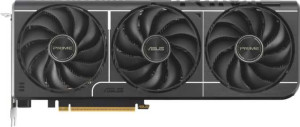
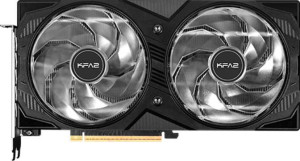
In terms of raw GPU performance, the Asus Prime RTX 5060 Ti OC and the KFA2 RTX 5060 Ti EX are in perfect lockstep. Both cards share identical clock speeds — a base of 2407 MHz and a boost of 2617 MHz — and consequently produce the exact same throughput figures: 24.12 TFLOPS of floating-point performance, a pixel rate of 125.6 GPixel/s, and a texture rate of 376.8 GTexels/s. This is not a coincidence; both are built on the same GPU die with the same shader, TMU, and ROP counts (4608 / 144 / 48 respectively), running at the same memory speed of 1750 MHz.
What this means in practice is that neither card holds a compute or rendering throughput advantage over the other. Frame rates in GPU-bound workloads, shader throughput in creative applications, and rasterization output will all be functionally identical between these two models. The shared support for Double Precision Floating Point (DPFP) also puts them on equal footing for any compute tasks that require it, though DPFP throughput on consumer GeForce cards is typically limited and not a primary differentiator for gaming.
For this performance group, the verdict is a clear tie. Every measurable GPU compute and throughput metric is identical. Any real-world performance difference between these two cards would have to come from outside this spec group — such as memory capacity, cooling behavior under sustained load, or power delivery — not from the core GPU engine itself.