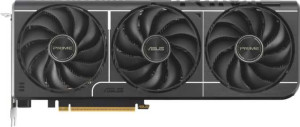
Asus Prime GeForce RTX 5060 Ti OC Edition 16GB
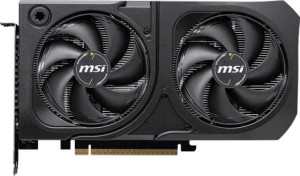
MSI GeForce RTX 5060 Ti Shadow 2X OC Plus 16GB

Asus Prime GeForce RTX 5060 Ti OC Edition 16GB MSI GeForce RTX 5060 Ti Shadow 2X OC Plus 16GB

Overview

When two cards share the same Blackwell architecture, 16GB of GDDR7 memory, and a 180W TDP, the details start to matter more than ever. This head-to-head comparison between the Asus Prime GeForce RTX 5060 Ti OC Edition 16GB and the MSI GeForce RTX 5060 Ti Shadow 2X OC Plus 16GB dives into the subtle but meaningful distinctions across boost clocks, real-world throughput figures, and physical dimensions to help you decide which card earns a place in your build.

Common Features

  • Both cards share a base GPU clock speed of 2407 MHz.
  • Both cards have a GPU memory speed of 1750 MHz.
  • Both cards feature 4608 shading units.
  • Both cards include 144 texture mapping units (TMUs).
  • Both cards have 48 render output units (ROPs).
  • Double Precision Floating Point (DPFP) support is available on both cards.
  • Both cards use GDDR7 memory with an effective speed of 28000 MHz.
  • Both cards come with 16GB of VRAM.
  • Both cards have a maximum memory bandwidth of 448 GB/s.
  • Both cards use a 128-bit memory bus width.
  • ECC memory support is available on both cards.
  • Both cards support DirectX 12 Ultimate.
  • Both cards support OpenGL version 4.6.
  • Both cards support OpenCL version 3.
  • Multi-display technology support is available on both cards.
  • Ray tracing support is available on both cards.
  • 3D support is available on both cards.
  • DLSS support is available on both cards.
  • XeSS (XMX) support is not available on either card.
  • Both cards feature 1 HDMI 2.1b port and 3 DisplayPort outputs, with no USB-C, DVI, or mini DisplayPort outputs.
  • Both cards are built on the Blackwell GPU architecture using a 5 nm semiconductor process.
  • Both cards have a Thermal Design Power (TDP) of 180W.
  • Both cards use PCIe version 5.
  • Both cards contain 21900 million transistors.
  • Air-water cooling is not available on either card.

Main Differences

  • GPU turbo clock speed is 2617 MHz on Asus Prime GeForce RTX 5060 Ti OC Edition 16GB and 2602 MHz on MSI GeForce RTX 5060 Ti Shadow 2X OC Plus 16GB.
  • Pixel rate is 125.6 GPixel/s on Asus Prime GeForce RTX 5060 Ti OC Edition 16GB and 124.9 GPixel/s on MSI GeForce RTX 5060 Ti Shadow 2X OC Plus 16GB.
  • Floating-point performance is 24.12 TFLOPS on Asus Prime GeForce RTX 5060 Ti OC Edition 16GB and 23.98 TFLOPS on MSI GeForce RTX 5060 Ti Shadow 2X OC Plus 16GB.
  • Texture rate is 376.8 GTexels/s on Asus Prime GeForce RTX 5060 Ti OC Edition 16GB and 374.7 GTexels/s on MSI GeForce RTX 5060 Ti Shadow 2X OC Plus 16GB.
  • Card width is 304 mm on Asus Prime GeForce RTX 5060 Ti OC Edition 16GB and 226 mm on MSI GeForce RTX 5060 Ti Shadow 2X OC Plus 16GB.
  • Card height is 120 mm on Asus Prime GeForce RTX 5060 Ti OC Edition 16GB and 126 mm on MSI GeForce RTX 5060 Ti Shadow 2X OC Plus 16GB.
Specs Comparison
Asus Prime GeForce RTX 5060 Ti OC Edition 16GB

Asus Prime GeForce RTX 5060 Ti OC Edition 16GB

MSI GeForce RTX 5060 Ti Shadow 2X OC Plus 16GB

MSI GeForce RTX 5060 Ti Shadow 2X OC Plus 16GB

Performance:
GPU clock speed 2407 MHz 2407 MHz
GPU turbo 2617 MHz 2602 MHz
pixel rate 125.6 GPixel/s 124.9 GPixel/s
floating-point performance 24.12 TFLOPS 23.98 TFLOPS
texture rate 376.8 GTexels/s 374.7 GTexels/s
GPU memory speed 1750 MHz 1750 MHz
shading units 4608 4608
texture mapping units (TMUs) 144 144
render output units (ROPs) 48 48
Has Double Precision Floating Point (DPFP)

At their core, both cards share the same fundamental compute architecture: identical base clocks of 2407 MHz, the same 4608 shading units, 144 TMUs, 48 ROPs, and equal memory speeds of 1750 MHz. This means the theoretical ceiling for raw throughput is defined by the same silicon, and any performance difference will come down entirely to how aggressively each board partner has set the GPU boost target.

That single differentiator is the GPU turbo clock. The Asus Prime RTX 5060 Ti OC Edition boosts to 2617 MHz, while the MSI Shadow 2X OC Plus peaks at 2602 MHz — a gap of just 15 MHz. This 0.58% clock advantage cascades into similarly marginal leads for the Asus across every derived metric: floating-point performance at 24.12 TFLOPS versus 23.98 TFLOPS, and texture throughput at 376.8 GTexels/s versus 374.7 GTexels/s. In real-world gaming or rendering workloads, differences of this magnitude fall well within frame-to-frame variance and are effectively imperceptible.

The Asus holds a technical edge in this group, but it is a paper-thin one driven solely by a slightly higher factory boost clock. Both cards support Double Precision Floating Point, which matters for compute and professional workloads. For pure gaming, buyers should not treat these performance figures as a deciding factor — thermals, acoustics, and price-to-performance ratio will be far more meaningful differentiators between the two.

Memory:
effective memory speed 28000 MHz 28000 MHz
maximum memory bandwidth 448 GB/s 448 GB/s
VRAM 16GB 16GB
GDDR version GDDR7 GDDR7
memory bus width 128-bit 128-bit
Supports ECC memory

Memory is where differentiation between board partners often emerges — but not here. Every single memory specification is identical across the Asus Prime RTX 5060 Ti OC Edition and the MSI Shadow 2X OC Plus: 16GB of GDDR7 running at an effective 28000 MHz over a 128-bit bus, delivering 448 GB/s of bandwidth. There is simply nothing to separate them on paper.

What these shared numbers do tell us is meaningful context for the platform itself. GDDR7 is a significant generational leap in memory efficiency, allowing a narrower 128-bit bus to punch well above its width — 448 GB/s is competitive bandwidth that would have required a 192-bit or wider GDDR6 bus to match. The 16GB frame buffer is a genuine asset for high-resolution textures, large generative AI models running locally, and future-proofing against increasingly VRAM-hungry game engines. ECC memory support on both cards is a practical bonus for creators and compute users who need data integrity assurance.

This group is a dead tie. No matter which card a buyer chooses, they receive an identical memory subsystem with no trade-offs whatsoever. Memory should not factor into the decision between these two products — the comparison is better settled by other spec groups such as cooling, power, or price.

Features:
DirectX version DirectX 12 Ultimate DirectX 12 Ultimate
OpenGL version 4.6 4.6
OpenCL version 3 3
Supports multi-display technology
supports ray tracing
Supports 3D
supports DLSS
has XeSS (XMX)
AMD SAM / Intel Resizable BAR Intel Resizable BAR Intel Resizable BAR
has LHR
has RGB lighting
supported displays 4 4

Feature parity is total between these two cards. Both carry DirectX 12 Ultimate support — the highest current DirectX tier, enabling hardware-accelerated ray tracing, mesh shaders, and variable-rate shading in supported titles. Paired with DLSS support, users on either card can leverage NVIDIA's AI-driven upscaling to recover performance headroom when ray tracing taxes the GPU, which is a genuinely important real-world combination rather than a checkbox feature.

Neither card supports XeSS, which is expected given that is Intel's upscaling technology and irrelevant to NVIDIA hardware. Both support Intel Resizable BAR, allowing the CPU to access the full GPU frame buffer simultaneously — a tangible performance uplift of a few percent in many modern games when enabled in BIOS. The 4-display output ceiling covers virtually every multi-monitor setup a user would realistically build around a card at this tier.

Once again, this group is a complete tie. Every feature, API version, and capability is shared identically. Buyers who prioritize a specific software ecosystem or display configuration will find no reason to favor one card over the other based on features alone.

Ports:
has an HDMI output
HDMI ports 1 1
HDMI version HDMI 2.1b HDMI 2.1b
DisplayPort outputs 3 3
USB-C ports 0 0
DVI outputs 0 0
mini DisplayPort outputs 0 0

The port layout on both cards is identical: one HDMI 2.1b output and three DisplayPort outputs, totalling four physical connectors — consistent with the four-display maximum noted in the features group. HDMI 2.1b is the current top-tier HDMI specification, capable of driving 4K at high refresh rates or 8K displays, and is the connector of choice for pairing a PC with a modern television. The three DisplayPort outputs cover the standard multi-monitor desktop use case comfortably.

The absence of USB-C is worth noting for users who own USB-C or Thunderbolt-connected monitors, as they would require an active adapter. However, since both cards share this limitation equally, it is a platform-level consideration rather than a differentiator between the two.

This is another complete tie. The connectivity layout is a carbon copy across both the Asus Prime and the MSI Shadow 2X OC Plus, offering no basis for preference. Buyers with specific cabling or display compatibility requirements will face the same options — and the same constraints — regardless of which card they choose.

General info:
GPU architecture Blackwell Blackwell
release date April 2025 April 2025
Thermal Design Power (TDP) 180W 180W
PCI Express (PCIe) version 5 5
semiconductor size 5 nm 5 nm
number of transistors 21900 million 21900 million
Has air-water cooling
width 304 mm 226 mm
height 120 mm 126 mm

Underneath the heatsink, these two cards are built on the same foundation: NVIDIA's Blackwell architecture on a 5nm process node, housing 21.9 billion transistors, with a 180W TDP and PCIe 5.0 interface. The shared TDP means both cards draw identical power from the system and impose the same requirements on PSU headroom and case airflow. PCIe 5.0 ensures neither card will be bottlenecked by slot bandwidth on any current or near-future platform.

The one meaningful divergence in this group is physical size. The Asus Prime measures 304 mm in length, while the MSI Shadow 2X OC Plus comes in notably shorter at 226 mm — a difference of 78 mm. That gap is substantial in practice: the MSI card will fit comfortably in compact mid-tower and smaller cases that would outright reject the Asus. Height is nearly equivalent at 120 mm versus 126 mm, so slot clearance is a non-issue for either.

The MSI Shadow 2X OC Plus holds a clear advantage here for anyone building in a space-constrained enclosure. For standard full-tower or mid-tower builds with ample GPU clearance, the size difference is irrelevant and the two cards are otherwise identical in every general specification. Case compatibility should be the deciding factor when consulting this group.

Comparison Summary & Verdict

Both the Asus Prime GeForce RTX 5060 Ti OC Edition 16GB and the MSI GeForce RTX 5060 Ti Shadow 2X OC Plus 16GB are built on the same Blackwell foundation, sharing identical memory specs, feature sets, port layouts, and power requirements. The Asus card edges ahead in every measured performance metric, offering a slightly higher GPU turbo clock of 2617 MHz, a floating-point performance of 24.12 TFLOPS, and a texture rate of 376.8 GTexels/s. However, it achieves this in a noticeably larger 304 mm wide footprint. The MSI card, with its compact 226 mm width, trades a marginal performance lead for significantly better case compatibility, making it the smarter choice for space-constrained builds.

Asus Prime GeForce RTX 5060 Ti OC Edition 16GB
Buy Asus Prime GeForce RTX 5060 Ti OC Edition 16GB if...

Buy the Asus Prime GeForce RTX 5060 Ti OC Edition 16GB if you want the highest boost clock and peak throughput figures available between these two cards and have a case with ample room to accommodate a 304 mm wide GPU.

MSI GeForce RTX 5060 Ti Shadow 2X OC Plus 16GB
Buy MSI GeForce RTX 5060 Ti Shadow 2X OC Plus 16GB if...

Buy the MSI GeForce RTX 5060 Ti Shadow 2X OC Plus 16GB if you are working with a compact or mid-tower build where the significantly smaller 226 mm width makes installation practical without a meaningful sacrifice in day-to-day performance.