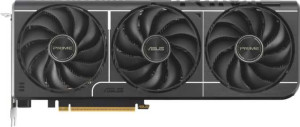
Asus Prime GeForce RTX 5060 Ti OC Edition 16GB
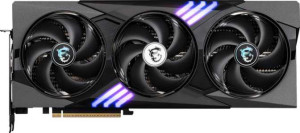
MSI GeForce RTX 5070 Ti Gaming Trio Plus

Asus Prime GeForce RTX 5060 Ti OC Edition 16GB MSI GeForce RTX 5070 Ti Gaming Trio Plus

Overview

Welcome to our in-depth spec comparison between the Asus Prime GeForce RTX 5060 Ti OC Edition 16GB and the MSI GeForce RTX 5070 Ti Gaming Trio Plus. Both cards share the same Blackwell architecture, GDDR7 memory, and a feature-rich software stack, yet they diverge sharply in areas like raw compute throughput, memory bandwidth, power consumption, and physical size — making this a fascinating matchup across the GPU performance ladder.

Common Features

  • Both cards share the same GPU memory speed of 1750 MHz.
  • Double Precision Floating Point (DPFP) support is available on both products.
  • Both cards have an effective memory speed of 28000 MHz.
  • Both cards come with 16GB of VRAM.
  • Both cards use GDDR7 memory.
  • ECC memory support is available on both products.
  • Both cards support DirectX 12 Ultimate.
  • Both cards support OpenGL version 4.6.
  • Both cards support OpenCL version 3.
  • Multi-display technology support is available on both products.
  • Ray tracing support is available on both products.
  • 3D support is available on both products.
  • DLSS support is available on both products.
  • XeSS (XMX) support is not available on either product.
  • Both cards include one HDMI output using HDMI version 2.1b.
  • Both cards feature three DisplayPort outputs.
  • Neither card includes USB-C, DVI, or mini DisplayPort outputs.
  • Both cards are built on the Blackwell GPU architecture.
  • Both cards use PCIe version 5.
  • Both cards are manufactured on a 5 nm semiconductor process.
  • Air-water cooling is not available on either product.

Main Differences

  • GPU base clock speed is 2407 MHz on Asus Prime GeForce RTX 5060 Ti OC Edition 16GB and 2295 MHz on MSI GeForce RTX 5070 Ti Gaming Trio Plus.
  • GPU turbo clock speed is 2617 MHz on Asus Prime GeForce RTX 5060 Ti OC Edition 16GB and 2452 MHz on MSI GeForce RTX 5070 Ti Gaming Trio Plus.
  • Pixel rate is 125.6 GPixel/s on Asus Prime GeForce RTX 5060 Ti OC Edition 16GB and 235.4 GPixel/s on MSI GeForce RTX 5070 Ti Gaming Trio Plus.
  • Floating-point performance is 24.12 TFLOPS on Asus Prime GeForce RTX 5060 Ti OC Edition 16GB and 43.94 TFLOPS on MSI GeForce RTX 5070 Ti Gaming Trio Plus.
  • Texture rate is 376.8 GTexels/s on Asus Prime GeForce RTX 5060 Ti OC Edition 16GB and 686.6 GTexels/s on MSI GeForce RTX 5070 Ti Gaming Trio Plus.
  • Shading units number 4608 on Asus Prime GeForce RTX 5060 Ti OC Edition 16GB and 8960 on MSI GeForce RTX 5070 Ti Gaming Trio Plus.
  • Texture mapping units (TMUs) total 144 on Asus Prime GeForce RTX 5060 Ti OC Edition 16GB and 280 on MSI GeForce RTX 5070 Ti Gaming Trio Plus.
  • Render output units (ROPs) total 48 on Asus Prime GeForce RTX 5060 Ti OC Edition 16GB and 96 on MSI GeForce RTX 5070 Ti Gaming Trio Plus.
  • Maximum memory bandwidth is 448 GB/s on Asus Prime GeForce RTX 5060 Ti OC Edition 16GB and 896 GB/s on MSI GeForce RTX 5070 Ti Gaming Trio Plus.
  • Memory bus width is 128-bit on Asus Prime GeForce RTX 5060 Ti OC Edition 16GB and 256-bit on MSI GeForce RTX 5070 Ti Gaming Trio Plus.
  • RGB lighting is present on MSI GeForce RTX 5070 Ti Gaming Trio Plus but not available on Asus Prime GeForce RTX 5060 Ti OC Edition 16GB.
  • Thermal Design Power (TDP) is 180W on Asus Prime GeForce RTX 5060 Ti OC Edition 16GB and 300W on MSI GeForce RTX 5070 Ti Gaming Trio Plus.
  • The number of transistors is 21,900 million on Asus Prime GeForce RTX 5060 Ti OC Edition 16GB and 45,600 million on MSI GeForce RTX 5070 Ti Gaming Trio Plus.
  • Card width is 304 mm on Asus Prime GeForce RTX 5060 Ti OC Edition 16GB and 338 mm on MSI GeForce RTX 5070 Ti Gaming Trio Plus.
  • Card height is 120 mm on Asus Prime GeForce RTX 5060 Ti OC Edition 16GB and 140 mm on MSI GeForce RTX 5070 Ti Gaming Trio Plus.
Specs Comparison
Asus Prime GeForce RTX 5060 Ti OC Edition 16GB

Asus Prime GeForce RTX 5060 Ti OC Edition 16GB

MSI GeForce RTX 5070 Ti Gaming Trio Plus

MSI GeForce RTX 5070 Ti Gaming Trio Plus

Performance:
GPU clock speed 2407 MHz 2295 MHz
GPU turbo 2617 MHz 2452 MHz
pixel rate 125.6 GPixel/s 235.4 GPixel/s
floating-point performance 24.12 TFLOPS 43.94 TFLOPS
texture rate 376.8 GTexels/s 686.6 GTexels/s
GPU memory speed 1750 MHz 1750 MHz
shading units 4608 8960
texture mapping units (TMUs) 144 280
render output units (ROPs) 48 96
Has Double Precision Floating Point (DPFP)

The most telling story in this group is the sheer gap in raw compute power. The MSI RTX 5070 Ti Gaming Trio Plus fields 8960 shading units against the Asus RTX 5060 Ti OC Edition's 4608 — nearly double the parallel processing cores. This is not a marginal edge; it fundamentally defines how each GPU handles demanding workloads like high-resolution rendering, ray tracing, and AI-accelerated tasks. The downstream effect is equally stark: 43.94 TFLOPS of floating-point performance for the 5070 Ti versus 24.12 TFLOPS for the 5060 Ti, an 82% advantage that directly translates to faster frame generation and greater headroom in compute-heavy scenarios.

The Asus 5060 Ti does hold one genuine counterpoint: its base and boost clocks of 2407 MHz / 2617 MHz outpace the 5070 Ti's 2295 MHz / 2452 MHz. Higher clock speeds mean each individual shader core is cycling faster, which benefits workloads that are not easily parallelized. However, this clock advantage — roughly 5–7% — is overwhelmed by the 5070 Ti's near-doubling of execution units. Both cards share identical GPU memory speed at 1750 MHz and both support Double Precision Floating Point, so neither has an architectural edge in those areas.

The 5070 Ti Gaming Trio Plus holds a clear and decisive performance advantage in this group. Its texture throughput of 686.6 GTexels/s and pixel fill rate of 235.4 GPixel/s — versus 376.8 GTexels/s and 125.6 GPixel/s on the 5060 Ti — confirm that it is a substantially more capable GPU for high-fidelity, high-resolution workloads. The 5060 Ti OC Edition's clock speed lead is a modest consolation, not a counterbalance.

Memory:
effective memory speed 28000 MHz 28000 MHz
maximum memory bandwidth 448 GB/s 896 GB/s
VRAM 16GB 16GB
GDDR version GDDR7 GDDR7
memory bus width 128-bit 256-bit
Supports ECC memory

On the surface, these two cards look almost identical in memory: both carry 16GB of GDDR7, run at the same 28000 MHz effective speed, and both support ECC memory for error correction. For most users, seeing identical VRAM capacity and memory generation would suggest a memory tie — but the bus width tells a completely different story.

The critical divergence is the memory bus width: the 5060 Ti OC Edition uses a 128-bit interface, while the 5070 Ti Gaming Trio Plus doubles that to 256-bit. Since memory bandwidth is a direct product of speed multiplied by bus width, this single spec explains why maximum bandwidth lands at 448 GB/s on the 5060 Ti versus 896 GB/s on the 5070 Ti — an exact 2x difference. In practice, higher bandwidth means the GPU can feed its shader cores with data far more rapidly, reducing bottlenecks in memory-intensive scenarios like 4K texture streaming, large frame buffers, and GPU compute workloads. Given that the 5070 Ti already has roughly twice the shading units, this doubled bandwidth is not a luxury — it is a necessity to keep those cores fed.

The MSI RTX 5070 Ti Gaming Trio Plus holds a commanding advantage here. Despite the shared VRAM capacity and memory speed, its wider bus delivers twice the throughput, making it substantially better equipped for bandwidth-hungry, high-resolution workloads. The 5060 Ti OC Edition's 128-bit bus is a notable constraint that will surface sooner at higher resolutions and detail settings.

Features:
DirectX version DirectX 12 Ultimate DirectX 12 Ultimate
OpenGL version 4.6 4.6
OpenCL version 3 3
Supports multi-display technology
supports ray tracing
Supports 3D
supports DLSS
has XeSS (XMX)
AMD SAM / Intel Resizable BAR Intel Resizable BAR Intel Resizable BAR
has LHR
has RGB lighting
supported displays 4 4

Across the feature set, these two cards are remarkably aligned. Both support DirectX 12 Ultimate, ray tracing, and DLSS, meaning neither has a software capability advantage for modern gaming workloads — titles leveraging hardware-accelerated ray tracing or AI-driven upscaling will behave equivalently from a feature-access standpoint. Shared support for Intel Resizable BAR, up to 4 simultaneous displays, and identical API versions across OpenGL and OpenCL round out a feature profile that is, for all practical purposes, a mirror image.

The only functional differentiator in this group is RGB lighting: the MSI RTX 5070 Ti Gaming Trio Plus has it, the Asus Prime 5060 Ti OC Edition does not. For users building aesthetically coordinated systems with RGB ecosystems, this matters; for those indifferent to lighting, it is a non-issue. It is worth noting that the absence of RGB on the 5060 Ti is consistent with its ″Prime″ branding, which typically signals a no-frills, value-oriented board design.

This group is effectively a tie on substance. Every feature that meaningfully affects gaming compatibility, API support, display flexibility, or compute capability is shared equally between the two cards. The 5070 Ti edges ahead only on aesthetics via RGB — a preference-driven distinction rather than a performance or functional one.

Ports:
has an HDMI output
HDMI ports 1 1
HDMI version HDMI 2.1b HDMI 2.1b
DisplayPort outputs 3 3
USB-C ports 0 0
DVI outputs 0 0
mini DisplayPort outputs 0 0

Port configurations are identical across both cards, making this the simplest group in the comparison. Each offers 1 HDMI 2.1b output and 3 DisplayPort outputs, supporting up to four simultaneous displays — consistent with what was confirmed in the Features group. Neither card includes USB-C or any legacy outputs such as DVI or mini DisplayPort.

The shared HDMI 2.1b standard is worth noting for its practical implications: it supports high-bandwidth connections capable of driving high-refresh-rate, high-resolution displays, which aligns well with the performance tier of both GPUs. The triple DisplayPort layout is a sensible choice for multi-monitor setups, offering flexibility without the bandwidth limitations of older display interfaces.

This group is an unambiguous tie. Every port type, count, and version is identical between the Asus Prime 5060 Ti OC Edition and the MSI RTX 5070 Ti Gaming Trio Plus. Display connectivity will not be a differentiating factor in any purchase decision between these two cards.

General info:
GPU architecture Blackwell Blackwell
release date April 2025 February 2025
Thermal Design Power (TDP) 180W 300W
PCI Express (PCIe) version 5 5
semiconductor size 5 nm 5 nm
number of transistors 21900 million 45600 million
Has air-water cooling
width 304 mm 338 mm
height 120 mm 140 mm

Both cards are built on the same Blackwell architecture at 5 nm and share a PCIe 5.0 interface, establishing a common technological foundation. The divergence, however, begins at the silicon level: the 5070 Ti Gaming Trio Plus packs 45,600 million transistors against the 5060 Ti OC Edition's 21,900 million — more than double. This transistor count gap is not cosmetic; it is the physical basis for the compute and memory bandwidth advantages already seen in earlier groups, confirming that these are meaningfully different dies, not minor product-line variants.

Power consumption underscores that difference just as clearly. The 5070 Ti carries a 300W TDP versus the 5060 Ti's 180W — a 67% increase. In practical terms, this means the 5070 Ti demands a higher-capacity power supply, produces more heat requiring better case airflow, and will draw noticeably more from your electricity bill over time. For compact or budget-constrained builds, the 5060 Ti's lower TDP is a genuine advantage in system planning, not just a footnote.

Physical size follows the same pattern: the 5070 Ti measures 338 × 140 mm while the 5060 Ti is a more compact 304 × 120 mm. Neither uses liquid cooling, so both depend entirely on air cooling solutions housed within those dimensions. For smaller cases with tight GPU clearance, the 5060 Ti OC Edition is the more accommodating choice. Overall, the 5060 Ti holds a meaningful edge for power-efficient and space-conscious builds, while the 5070 Ti's larger, more power-hungry profile is the direct cost of its substantially larger die and greater performance ceiling.
Comparison Summary & Verdict

After examining every specification, a clear picture emerges for each card. The Asus Prime GeForce RTX 5060 Ti OC Edition 16GB stands out as the smarter choice for users who value a lower 180W TDP, a more compact footprint, and a slightly higher base and turbo clock speed, all while still delivering 16GB of GDDR7 memory and the full Blackwell feature set. On the other hand, the MSI GeForce RTX 5070 Ti Gaming Trio Plus dominates in every throughput metric — nearly doubling the floating-point performance at 43.94 TFLOPS, memory bandwidth at 896 GB/s, shading units, and pixel rate — making it the clear pick for demanding workloads and enthusiast-level gaming. It also adds RGB lighting for those who care about aesthetics. Your decision ultimately comes down to power efficiency and budget versus maximum GPU horsepower.

Asus Prime GeForce RTX 5060 Ti OC Edition 16GB
Buy Asus Prime GeForce RTX 5060 Ti OC Edition 16GB if...

Buy the Asus Prime GeForce RTX 5060 Ti OC Edition 16GB if you want a power-efficient card with a lower 180W TDP and a more compact size, without sacrificing 16GB of GDDR7 memory or the full Blackwell feature set.

MSI GeForce RTX 5070 Ti Gaming Trio Plus
Buy MSI GeForce RTX 5070 Ti Gaming Trio Plus if...

Buy the MSI GeForce RTX 5070 Ti Gaming Trio Plus if you need maximum GPU horsepower, with nearly double the shading units, floating-point performance, and memory bandwidth, along with RGB lighting for a premium build aesthetic.