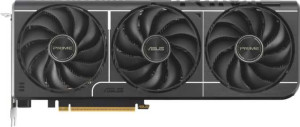
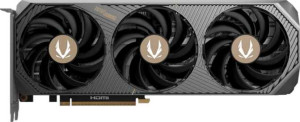
Sharing the same Blackwell architecture, 5 nm process node, and PCIe 5.0 interface, these two cards are built from the same generational foundation — but the silicon underneath differs substantially. The RTX 5070 Solid packs 31,100 million transistors against the 5060 Ti's 21,900 million, a roughly 42% larger die that directly explains the wider shader and raster resources seen in the Performance group. More transistors mean more functional units, and that gap is not trivial.
The power story is equally telling. The 5060 Ti OC Edition carries a 180W TDP, while the 5070 Solid demands 250W — a 70W difference that has real-world consequences. Users with tighter PSU headroom or smaller chassis with limited airflow will find the 5060 Ti considerably easier to accommodate, both in terms of power supply requirements and thermal management. The 5070's higher draw is the cost of its larger, more capable die. Physical dimensions are essentially a wash: both cards are nearly identical in width at just over 304 mm, with a negligible height difference of a few millimeters.
Neither card uses liquid cooling, so both rely on their air-cooling solutions to handle their respective thermal loads. On general characteristics, the 5060 Ti OC Edition earns a clear efficiency advantage — delivering its performance at a significantly lower power envelope, which matters for system builders working within wattage or thermal constraints. The 5070 Solid's larger transistor count justifies its higher draw, but it demands more from the rest of the system in return.