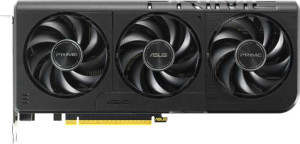
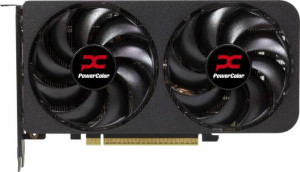
At first glance, the Asus Prime RTX 5060 appears to hold a shading-unit advantage with 3,840 shading units versus the PowerColor Reaper RX 9060 XT's 2,048 — nearly double the count. However, raw shader counts tell only part of the story. The RX 9060 XT compensates aggressively through clock speed: its base clock of 1700 MHz is lower, but its turbo climbs to a striking 3130 MHz, compared to the RTX 5060's more modest 2497 MHz turbo. This high-frequency operation allows the AMD card to close — and in several throughput metrics, surpass — the gap that the shader count alone would suggest.
The downstream effect of that clock advantage is visible across every throughput metric. The RX 9060 XT delivers 25.64 TFLOPS of floating-point performance versus 19.18 TFLOPS for the RTX 5060, a roughly 34% lead. Its pixel fill rate of 200.3 GPixel/s and texture rate of 400.6 GTexels/s likewise outpace the Asus card's 119.9 GPixel/s and 299.6 GTexels/s respectively. Higher fill rates translate directly to faster rendering of complex scenes and higher resolutions, while superior texture throughput benefits texture-heavy workloads and high-detail environments. The RX 9060 XT also holds an edge in render output units (64 ROPs vs 48), further reinforcing its pixel-pushing capability.
Both cards support Double Precision Floating Point, and their memory bus speeds are comparable (1750 MHz vs 1700 MHz). Overall, based strictly on the provided performance specs, the PowerColor Reaper RX 9060 XT holds a clear and consistent advantage in raw compute throughput, fill rate, and rasterization capacity — making it the stronger performer in this group despite operating with fewer shading units.