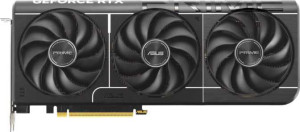
Asus Prime GeForce RTX 5070 OC Edition
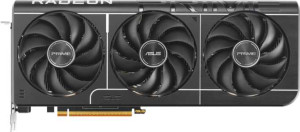
Asus Prime Radeon RX 9070 OC Edition

Asus Prime GeForce RTX 5070 OC Edition Asus Prime Radeon RX 9070 OC Edition

Overview

Welcome to our in-depth specification comparison between the Asus Prime GeForce RTX 5070 OC Edition and the Asus Prime Radeon RX 9070 OC Edition — two compelling mid-to-high-end graphics cards built on cutting-edge 5 nm architecture. In this head-to-head, we examine key battlegrounds including floating-point performance, memory configuration, feature support, and thermal efficiency to help you decide which GPU best suits your needs.

Common Features

  • Both products support Double Precision Floating Point (DPFP).
  • Both products support ECC memory.
  • Both products support DirectX 12 Ultimate.
  • Both products support OpenGL version 4.6.
  • Both products support multi-display technology.
  • Both products support ray tracing.
  • Both products support 3D rendering.
  • XeSS (XMX) support is not available on either product.
  • LHR is not present on either product.
  • RGB lighting is not available on either product.
  • Both products have an HDMI output with 1 HDMI port at version HDMI 2.1b.
  • Both products have 3 DisplayPort outputs.
  • Neither product has USB-C ports, DVI outputs, or mini DisplayPort outputs.
  • Both products use a PCIe version 5 interface.
  • Both products are manufactured on a 5 nm semiconductor process.
  • Neither product features air-water cooling.

Main Differences

  • GPU base clock speed is 2325 MHz on Asus Prime GeForce RTX 5070 OC Edition and 1330 MHz on Asus Prime Radeon RX 9070 OC Edition.
  • GPU turbo clock speed is 2557 MHz on Asus Prime GeForce RTX 5070 OC Edition and 2590 MHz on Asus Prime Radeon RX 9070 OC Edition.
  • Pixel rate is 204.6 GPixel/s on Asus Prime GeForce RTX 5070 OC Edition and 331.5 GPixel/s on Asus Prime Radeon RX 9070 OC Edition.
  • Floating-point performance is 31.42 TFLOPS on Asus Prime GeForce RTX 5070 OC Edition and 37.13 TFLOPS on Asus Prime Radeon RX 9070 OC Edition.
  • Texture rate is 490.9 GTexels/s on Asus Prime GeForce RTX 5070 OC Edition and 580.2 GTexels/s on Asus Prime Radeon RX 9070 OC Edition.
  • GPU memory speed is 1750 MHz on Asus Prime GeForce RTX 5070 OC Edition and 2518 MHz on Asus Prime Radeon RX 9070 OC Edition.
  • Shading units total 6144 on Asus Prime GeForce RTX 5070 OC Edition and 3584 on Asus Prime Radeon RX 9070 OC Edition.
  • Texture mapping units (TMUs) number 192 on Asus Prime GeForce RTX 5070 OC Edition and 224 on Asus Prime Radeon RX 9070 OC Edition.
  • Render output units (ROPs) number 80 on Asus Prime GeForce RTX 5070 OC Edition and 128 on Asus Prime Radeon RX 9070 OC Edition.
  • Effective memory speed is 28000 MHz on Asus Prime GeForce RTX 5070 OC Edition and 20000 MHz on Asus Prime Radeon RX 9070 OC Edition.
  • Maximum memory bandwidth is 672 GB/s on Asus Prime GeForce RTX 5070 OC Edition and 644.6 GB/s on Asus Prime Radeon RX 9070 OC Edition.
  • VRAM capacity is 12 GB on Asus Prime GeForce RTX 5070 OC Edition and 16 GB on Asus Prime Radeon RX 9070 OC Edition.
  • Memory type is GDDR7 on Asus Prime GeForce RTX 5070 OC Edition and GDDR6 on Asus Prime Radeon RX 9070 OC Edition.
  • Memory bus width is 192-bit on Asus Prime GeForce RTX 5070 OC Edition and 256-bit on Asus Prime Radeon RX 9070 OC Edition.
  • OpenCL version is 3 on Asus Prime GeForce RTX 5070 OC Edition and 2.2 on Asus Prime Radeon RX 9070 OC Edition.
  • DLSS support is present on Asus Prime GeForce RTX 5070 OC Edition but not available on Asus Prime Radeon RX 9070 OC Edition.
  • Resizable BAR technology is Intel Resizable BAR on Asus Prime GeForce RTX 5070 OC Edition and AMD SAM on Asus Prime Radeon RX 9070 OC Edition.
  • GPU architecture is Blackwell on Asus Prime GeForce RTX 5070 OC Edition and RDNA 4.0 on Asus Prime Radeon RX 9070 OC Edition.
  • Thermal Design Power (TDP) is 250W on Asus Prime GeForce RTX 5070 OC Edition and 220W on Asus Prime Radeon RX 9070 OC Edition.
  • Transistor count is 31100 million on Asus Prime GeForce RTX 5070 OC Edition and 53900 million on Asus Prime Radeon RX 9070 OC Edition.
  • Card width is 304 mm on Asus Prime GeForce RTX 5070 OC Edition and 312 mm on Asus Prime Radeon RX 9070 OC Edition.
  • Card height is 126 mm on Asus Prime GeForce RTX 5070 OC Edition and 130 mm on Asus Prime Radeon RX 9070 OC Edition.
Specs Comparison
Asus Prime GeForce RTX 5070 OC Edition

Asus Prime GeForce RTX 5070 OC Edition

Asus Prime Radeon RX 9070 OC Edition

Asus Prime Radeon RX 9070 OC Edition

Performance:
GPU clock speed 2325 MHz 1330 MHz
GPU turbo 2557 MHz 2590 MHz
pixel rate 204.6 GPixel/s 331.5 GPixel/s
floating-point performance 31.42 TFLOPS 37.13 TFLOPS
texture rate 490.9 GTexels/s 580.2 GTexels/s
GPU memory speed 1750 MHz 2518 MHz
shading units 6144 3584
texture mapping units (TMUs) 192 224
render output units (ROPs) 80 128
Has Double Precision Floating Point (DPFP)

At first glance, the Asus Prime RTX 5070 OC appears to have a clock speed advantage with a base of 2325 MHz versus the RX 9070 OC's 1330 MHz. However, this comparison is misleading — both GPUs boost to virtually the same peak turbo (2557 MHz vs 2590 MHz), meaning sustained real-world performance is dictated far more by architectural efficiency and hardware counts than by base clocks alone.

When examining the throughput metrics that actually drive gaming and compute workloads, the RX 9070 OC holds a consistent lead across the board. Its pixel rate of 331.5 GPixel/s dwarfs the RTX 5070's 204.6 GPixel/s — a gap that translates directly to higher fill rates and sharper rendering at high resolutions. Similarly, its 37.13 TFLOPS of floating-point performance outpaces the RTX 5070's 31.42 TFLOPS, and its texture rate of 580.2 GTexels/s versus 490.9 GTexels/s gives it a tangible edge in texture-heavy scenes. Driving these advantages are more render output units (128 vs 80 ROPs) and more texture mapping units (224 vs 192 TMUs), despite the RX 9070 having fewer raw shading units — a testament to AMD's architectural efficiency gains. The RX 9070 also features significantly faster memory at 2518 MHz vs 1750 MHz, reducing potential bandwidth bottlenecks under load.

On paper performance for this group clearly favors the Asus Prime RX 9070 OC Edition, which leads in nearly every throughput category that matters — pixel fill rate, shader compute, texturing, ROP count, and memory speed. Both cards support Double Precision Floating Point, making them viable for light compute tasks. Buyers prioritizing raw rasterization horsepower and memory responsiveness based on these specs alone should lean toward the RX 9070 OC.
Memory:
effective memory speed 28000 MHz 20000 MHz
maximum memory bandwidth 672 GB/s 644.6 GB/s
VRAM 12GB 16GB
GDDR version GDDR7 GDDR6
memory bus width 192-bit 256-bit
Supports ECC memory

The Asus Prime GeForce RTX 5070 OC Edition and Asus Prime Radeon RX 9070 OC Edition differ in several key memory specifications. The RTX 5070 features an effective memory speed of 28000 MHz, which is higher than the RX 9070’s effective memory speed of 20000 MHz. In terms of memory bandwidth, the RTX 5070 offers a maximum of 672 GB/s, surpassing the RX 9070’s 644.6 GB/s bandwidth.

When it comes to VRAM, the RX 9070 has a larger capacity with 16GB, compared to the 12GB VRAM in the RTX 5070. This could potentially provide more room for data processing in certain scenarios. The RTX 5070 uses GDDR7 memory, whereas the RX 9070 uses GDDR6 memory, with the newer GDDR7 likely providing faster data transfer rates.

Regarding the memory bus width, the RX 9070 has a wider 256-bit memory bus, while the RTX 5070 uses a 192-bit bus. This difference in width contributes to the RX 9070’s higher memory bandwidth. Both products support ECC memory, ensuring error correction capabilities for both models.

Features:
DirectX version DirectX 12 Ultimate DirectX 12 Ultimate
OpenGL version 4.6 4.6
OpenCL version 3 2.2
Supports multi-display technology
supports ray tracing
Supports 3D
supports DLSS
has XeSS (XMX)
AMD SAM / Intel Resizable BAR Intel Resizable BAR AMD SAM
has LHR
has RGB lighting
supported displays 4 4

The Asus Prime GeForce RTX 5070 OC Edition and Asus Prime Radeon RX 9070 OC Edition both support DirectX 12 Ultimate, ensuring compatibility with the latest graphics technologies. Both cards also support OpenGL version 4.6 and have a similar level of OpenCL support, with the RTX 5070 supporting version 3 and the RX 9070 supporting version 2.2, meaning the RTX 5070 has a more recent version of OpenCL support.

Both products support multi-display technology and ray tracing, along with 3D capabilities. The RTX 5070 supports DLSS, while the RX 9070 does not, which could offer the RTX 5070 an edge in terms of enhanced graphics performance through AI upscaling. Neither card supports XeSS (XMX), so there is no additional AI-based graphics enhancement from Intel’s technology.

When it comes to platform compatibility, the RTX 5070 uses Intel Resizable BAR technology, while the RX 9070 supports AMD SAM. Both cards lack LHR (Lite Hash Rate), which means they are not optimized for cryptocurrency mining limitations. Both cards also do not feature RGB lighting. Finally, both GPUs can support up to 4 displays, providing ample connectivity options for multi-monitor setups.

Ports:
has an HDMI output
HDMI ports 1 1
HDMI version HDMI 2.1b HDMI 2.1b
DisplayPort outputs 3 3
USB-C ports 0 0
DVI outputs 0 0
mini DisplayPort outputs 0 0

The Asus Prime GeForce RTX 5070 OC Edition and Asus Prime Radeon RX 9070 OC Edition have identical port configurations. Both cards feature an HDMI output with 1 HDMI port, supporting the HDMI 2.1b version. Additionally, both GPUs are equipped with 3 DisplayPort outputs. Neither product has USB-C, DVI, or mini DisplayPort outputs.

Overall, the port layouts of both cards are identical, offering the same number of HDMI and DisplayPort connections without additional features such as USB-C or mini DisplayPort.

General info:
GPU architecture Blackwell RDNA 4.0
release date January 2025 March 2025
Thermal Design Power (TDP) 250W 220W
PCI Express (PCIe) version 5 5
semiconductor size 5 nm 5 nm
number of transistors 31100 million 53900 million
Has air-water cooling
width 304 mm 312 mm
height 126 mm 130 mm

The Asus Prime GeForce RTX 5070 OC Edition and Asus Prime Radeon RX 9070 OC Edition differ in a few key general specifications. The RTX 5070 is based on the Blackwell GPU architecture, while the RX 9070 uses the RDNA 4.0 architecture. Both cards use a 5 nm semiconductor size, ensuring cutting-edge performance and efficiency.

When it comes to power consumption, the RTX 5070 has a higher Thermal Design Power (TDP) of 250W compared to the RX 9070’s 220W, indicating that the RTX 5070 may draw more power under load. Both cards support PCI Express 5.0, ensuring high-speed data transfer. The RTX 5070 has 31.1 billion transistors, while the RX 9070 features a higher transistor count of 53.9 billion, which may contribute to its performance in certain workloads.

In terms of physical size, the RTX 5070 measures 304 mm in width and 126 mm in height, while the RX 9070 is slightly larger at 312 mm in width and 130 mm in height. Neither card features air-water cooling, which may be a consideration for users looking for more advanced cooling solutions.

Comparison Summary & Verdict

After a thorough review of the specifications, both cards prove to be strong contenders with distinct strengths. The Asus Prime GeForce RTX 5070 OC Edition stands out with its DLSS support, higher effective memory speed of 28000 MHz, and a greater shading unit count of 6144 — advantages that benefit workloads relying on AI-accelerated rendering and raw shader throughput. Meanwhile, the Asus Prime Radeon RX 9070 OC Edition leads in floating-point performance at 37.13 TFLOPS, offers a larger 16 GB VRAM pool, a wider 256-bit memory bus, more ROPs (128 vs 80), and runs at a lower TDP of 220W — making it appealing for memory-intensive tasks and power-conscious builds. Gamers and creators who rely on Nvidia’s ecosystem and upscaling technology will gravitate toward the RTX 5070, while those prioritizing raw compute throughput and larger framebuffer capacity will find the RX 9070 a compelling choice.

Asus Prime GeForce RTX 5070 OC Edition
Buy Asus Prime GeForce RTX 5070 OC Edition if...

Buy the Asus Prime GeForce RTX 5070 OC Edition if you rely on DLSS support and want higher effective memory speed paired with a larger shading unit count for AI-accelerated and shader-heavy workloads.

Asus Prime Radeon RX 9070 OC Edition
Buy Asus Prime Radeon RX 9070 OC Edition if...

Buy the Asus Prime Radeon RX 9070 OC Edition if you prioritize higher floating-point performance, a larger 16 GB VRAM capacity, a wider 256-bit memory bus, and a lower 220W power draw.