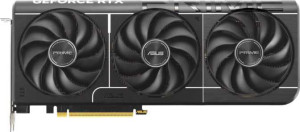
Asus Prime GeForce RTX 5070 OC Edition
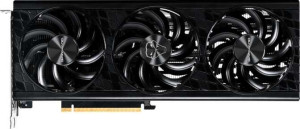
Gainward GeForce RTX 5060 Python III OC

Asus Prime GeForce RTX 5070 OC Edition Gainward GeForce RTX 5060 Python III OC

Overview

Welcome to our in-depth specification comparison between the Asus Prime GeForce RTX 5070 OC Edition and the Gainward GeForce RTX 5060 Python III OC. Both cards share the same Blackwell architecture and GDDR7 memory, yet they diverge sharply across raw compute performance, VRAM capacity, and power consumption. Read on to discover which card best suits your needs.

Common Features

  • Both cards share a GPU memory speed of 1750 MHz.
  • Double Precision Floating Point (DPFP) support is available on both products.
  • Both cards feature an effective memory speed of 28000 MHz.
  • Both cards use GDDR7 memory.
  • ECC memory support is available on both products.
  • Both cards support DirectX 12 Ultimate.
  • Both cards support OpenGL version 4.6.
  • Both cards support OpenCL version 3.
  • Multi-display technology support is available on both products.
  • Ray tracing support is available on both products.
  • 3D support is available on both products.
  • DLSS support is available on both products.
  • XeSS (XMX) support is not available on either product.
  • Both cards include one HDMI output port.
  • Both cards use HDMI version 2.1b.
  • Both cards feature three DisplayPort outputs.
  • Neither card includes USB-C, DVI, or mini DisplayPort outputs.
  • Both cards are built on the Blackwell GPU architecture.
  • Both cards use PCIe version 5.
  • Both cards are manufactured on a 5 nm semiconductor process.
  • Air-water cooling is not available on either product.

Main Differences

  • GPU base clock speed is 2325 MHz on Asus Prime GeForce RTX 5070 OC Edition and 2280 MHz on Gainward GeForce RTX 5060 Python III OC.
  • GPU turbo clock speed is 2557 MHz on Asus Prime GeForce RTX 5070 OC Edition and 2580 MHz on Gainward GeForce RTX 5060 Python III OC.
  • Pixel rate is 204.6 GPixel/s on Asus Prime GeForce RTX 5070 OC Edition and 123.8 GPixel/s on Gainward GeForce RTX 5060 Python III OC.
  • Floating-point performance is 31.42 TFLOPS on Asus Prime GeForce RTX 5070 OC Edition and 19.81 TFLOPS on Gainward GeForce RTX 5060 Python III OC.
  • Texture rate is 490.9 GTexels/s on Asus Prime GeForce RTX 5070 OC Edition and 309.6 GTexels/s on Gainward GeForce RTX 5060 Python III OC.
  • Shading units total 6144 on Asus Prime GeForce RTX 5070 OC Edition and 3840 on Gainward GeForce RTX 5060 Python III OC.
  • Texture mapping units (TMUs) number 192 on Asus Prime GeForce RTX 5070 OC Edition and 120 on Gainward GeForce RTX 5060 Python III OC.
  • Render output units (ROPs) number 80 on Asus Prime GeForce RTX 5070 OC Edition and 48 on Gainward GeForce RTX 5060 Python III OC.
  • Maximum memory bandwidth is 672 GB/s on Asus Prime GeForce RTX 5070 OC Edition and 448 GB/s on Gainward GeForce RTX 5060 Python III OC.
  • VRAM is 12 GB on Asus Prime GeForce RTX 5070 OC Edition and 8 GB on Gainward GeForce RTX 5060 Python III OC.
  • Memory bus width is 192-bit on Asus Prime GeForce RTX 5070 OC Edition and 128-bit on Gainward GeForce RTX 5060 Python III OC.
  • RGB lighting is present on Gainward GeForce RTX 5060 Python III OC but not available on Asus Prime GeForce RTX 5070 OC Edition.
  • Thermal Design Power (TDP) is 250W on Asus Prime GeForce RTX 5070 OC Edition and 145W on Gainward GeForce RTX 5060 Python III OC.
  • The number of transistors is 31100 million on Asus Prime GeForce RTX 5070 OC Edition and 21900 million on Gainward GeForce RTX 5060 Python III OC.
  • Card width is 304 mm on Asus Prime GeForce RTX 5070 OC Edition and 291.9 mm on Gainward GeForce RTX 5060 Python III OC.
  • Card height is 126 mm on Asus Prime GeForce RTX 5070 OC Edition and 116.5 mm on Gainward GeForce RTX 5060 Python III OC.
Specs Comparison
Asus Prime GeForce RTX 5070 OC Edition

Asus Prime GeForce RTX 5070 OC Edition

Gainward GeForce RTX 5060 Python III OC

Gainward GeForce RTX 5060 Python III OC

Performance:
GPU clock speed 2325 MHz 2280 MHz
GPU turbo 2557 MHz 2580 MHz
pixel rate 204.6 GPixel/s 123.8 GPixel/s
floating-point performance 31.42 TFLOPS 19.81 TFLOPS
texture rate 490.9 GTexels/s 309.6 GTexels/s
GPU memory speed 1750 MHz 1750 MHz
shading units 6144 3840
texture mapping units (TMUs) 192 120
render output units (ROPs) 80 48
Has Double Precision Floating Point (DPFP)

At the core of the performance gap between these two cards is raw compute hardware. The Asus RTX 5070 OC Edition ships with 6,144 shading units, 192 TMUs, and 80 ROPs, versus 3,840 shading units, 120 TMUs, and 48 ROPs on the Gainward RTX 5060 Python III OC — a roughly 60% advantage in every execution resource. This directly translates into the headline figures: the 5070 delivers 31.42 TFLOPS of floating-point throughput against the 5060's 19.81 TFLOPS, meaning the 5070 can process approximately 59% more shader work per second. In practice, that gap shows up in demanding rasterization workloads, ray tracing scenes, and AI-accelerated rendering tasks where raw parallelism is the bottleneck.

Clock speeds tell a more nuanced story. The 5070 has a slightly higher base clock (2325 MHz vs 2280 MHz), but interestingly the 5060 edges ahead at peak turbo (2580 MHz vs 2557 MHz). This marginal turbo advantage is essentially negligible in real-world use and does nothing to close the gap created by the 5060's substantially smaller shader array. The pixel rate (204.6 GPixel/s vs 123.8 GPixel/s) and texture rate (490.9 GTexels/s vs 309.6 GTexels/s) on the 5070 further confirm a significant lead in fill-rate-bound scenarios, such as high-resolution rendering with dense geometry and heavy texture sampling. Memory clock is identical at 1750 MHz on both cards, meaning memory bandwidth is not a differentiator at this level of comparison.

The Asus RTX 5070 OC Edition holds a clear and decisive performance advantage in this group across every meaningful compute metric. The Gainward RTX 5060 is not competitive in raw throughput — it is a different class of GPU. The 5060 Python III OC makes sense for users prioritizing efficiency or a lower price tier, but anyone seeking higher framerates or heavier workloads will find the 5070 substantially more capable based on these specs alone.

Memory:
effective memory speed 28000 MHz 28000 MHz
maximum memory bandwidth 672 GB/s 448 GB/s
VRAM 12GB 8GB
GDDR version GDDR7 GDDR7
memory bus width 192-bit 128-bit
Supports ECC memory

The memory specifications of the Asus Prime GeForce RTX 5070 OC Edition and Gainward GeForce RTX 5060 Python III OC show both similarities and differences. Both products feature an effective memory speed of 28000 MHz and use the same GDDR7 memory version, ensuring fast data transfer speeds in each card.

However, there are key differences in memory size and bandwidth. The Asus Prime RTX 5070 is equipped with 12GB of VRAM, while the Gainward RTX 5060 comes with 8GB of VRAM. This gives the Asus card a significant advantage in terms of memory capacity. Additionally, the Asus card offers a higher maximum memory bandwidth of 672 GB/s, compared to the Gainward's 448 GB/s, which means the Asus model can handle more data at once, improving performance in memory-intensive tasks.

Both products feature a memory bus width of 192-bit (Asus) and 128-bit (Gainward), further contributing to the memory performance difference. Finally, both cards support ECC memory, ensuring error-checking and correction for more reliable performance in critical workloads.

Features:
DirectX version DirectX 12 Ultimate DirectX 12 Ultimate
OpenGL version 4.6 4.6
OpenCL version 3 3
Supports multi-display technology
supports ray tracing
Supports 3D
supports DLSS
has XeSS (XMX)
AMD SAM / Intel Resizable BAR Intel Resizable BAR Intel Resizable BAR
has LHR
has RGB lighting
supported displays 4 4

The Asus Prime GeForce RTX 5070 OC Edition and Gainward GeForce RTX 5060 Python III OC share many of the same key features. Both support DirectX 12 Ultimate, OpenGL 4.6, and OpenCL 3, ensuring compatibility with modern graphics applications and games. Additionally, both cards support multi-display technology, ray tracing, 3D, and DLSS, providing enhanced visuals and performance in compatible software.

Both products also support Intel Resizable BAR (AMD SAM is not mentioned for either card), and neither has LHR (Lite Hash Rate), which is ideal for cryptocurrency mining. However, there is a difference in RGB lighting support. The Asus Prime RTX 5070 does not feature RGB lighting, while the Gainward RTX 5060 does. Both cards can drive up to four displays simultaneously, offering plenty of multi-monitor options.

Neither card supports XeSS (XMX), so users will not have access to Intel's AI-driven upscaling technology. Overall, the feature sets are quite similar, with the key differentiator being the presence of RGB lighting on the Gainward card.

Ports:
has an HDMI output
HDMI ports 1 1
HDMI version HDMI 2.1b HDMI 2.1b
DisplayPort outputs 3 3
USB-C ports 0 0
DVI outputs 0 0
mini DisplayPort outputs 0 0

Both the Asus Prime GeForce RTX 5070 OC Edition and Gainward GeForce RTX 5060 Python III OC feature similar port configurations. Both cards include 1 HDMI output, with HDMI version 2.1b, and 3 DisplayPort outputs. Neither card offers USB-C ports, DVI outputs, or mini DisplayPort outputs, ensuring that their connectivity options are identical in these areas.

In terms of HDMI ports, both products are equipped with a single HDMI port, providing support for high-definition displays and advanced features like variable refresh rates and higher resolutions at 120Hz or more, thanks to HDMI 2.1b. The DisplayPort outputs allow for flexible display setups, supporting multiple monitors for enhanced productivity or gaming.

Overall, the port specifications are identical between the two products, with no significant differences in connectivity options provided.

General info:
GPU architecture Blackwell Blackwell
release date January 2025 May 2025
Thermal Design Power (TDP) 250W 145W
PCI Express (PCIe) version 5 5
semiconductor size 5 nm 5 nm
number of transistors 31100 million 21900 million
Has air-water cooling
width 304 mm 291.9 mm
height 126 mm 116.5 mm

The Asus Prime GeForce RTX 5070 OC Edition and Gainward GeForce RTX 5060 Python III OC both feature the Blackwell GPU architecture, ensuring similar foundational performance characteristics. However, they differ in several key general specifications. The Asus card has a higher Thermal Design Power (TDP) of 250W, compared to the Gainward's 145W, indicating that the Asus model may require more power for peak performance.

Both cards use the same PCI Express (PCIe) version 5 and feature a 5 nm semiconductor size, ensuring high efficiency and data throughput. The Asus Prime RTX 5070 has a larger number of transistors, with 31,100 million compared to the Gainward's 21,900 million, suggesting a more complex and capable processing unit in the Asus card.

In terms of physical dimensions, the Asus card is larger, with a width of 304 mm and a height of 126 mm, while the Gainward card is slightly smaller at 291.9 mm in width and 116.5 mm in height. Neither product features air-water cooling, relying instead on standard cooling methods.

Comparison Summary & Verdict

After examining all the evidence, a clear picture emerges for each card. The Asus Prime GeForce RTX 5070 OC Edition holds a commanding lead in every performance metric, offering 6144 shading units, 12 GB of VRAM on a 192-bit bus, 672 GB/s of memory bandwidth, and 31.42 TFLOPS of floating-point performance — making it the obvious choice for demanding workloads and high-resolution gaming. The Gainward GeForce RTX 5060 Python III OC, by contrast, draws only 145W TDP, has a more compact footprint, and adds RGB lighting, positioning it as the more power-efficient and visually customizable option for budget-conscious or small-form-factor builds. Both cards support ray tracing, DLSS, DirectX 12 Ultimate, and identical port configurations, so neither sacrifices modern feature support.

Asus Prime GeForce RTX 5070 OC Edition
Buy Asus Prime GeForce RTX 5070 OC Edition if...

Buy the Asus Prime GeForce RTX 5070 OC Edition if you want maximum graphics performance, more VRAM, and higher memory bandwidth for demanding games or creative workloads.

Gainward GeForce RTX 5060 Python III OC
Buy Gainward GeForce RTX 5060 Python III OC if...

Buy the Gainward GeForce RTX 5060 Python III OC if you are building a compact, power-efficient system on a tighter budget and want RGB lighting included out of the box.