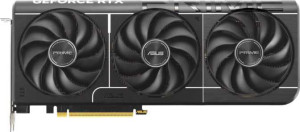
Both the Asus Prime RTX 5070 OC and the Zotac Gaming RTX 5070 Solid OC share an identical architectural foundation: the same 6144 shading units, 192 TMUs, 80 ROPs, and a base GPU clock of 2325 MHz. This means the two cards are drawing from exactly the same hardware pool, and any performance difference between them comes down entirely to how aggressively each manufacturer has tuned the boost clock.
That is where a small but measurable gap emerges. The Asus card boosts to 2557 MHz versus the Zotac's 2542 MHz — a 15 MHz advantage that cascades into marginally higher throughput across every derived metric: floating-point performance lands at 31.42 TFLOPS on the Asus versus 31.24 TFLOPS on the Zotac, and texture throughput follows the same pattern at 490.9 GTexels/s versus 488.1 GTexels/s. In practice, a difference of roughly 0.6% in compute throughput is far below the threshold of perceptible frame-rate variation in any real workload — no benchmark or game will expose it under normal conditions.
In terms of a performance edge, the Asus Prime RTX 5070 OC holds a technical lead thanks to its higher factory boost clock, but it is a paper advantage only. Both cards also support Double Precision Floating Point, which is relevant for GPU-accelerated compute tasks. For pure gaming or creative workloads, these two cards should be considered effectively tied on performance, meaning the purchase decision should hinge on cooling solution, acoustics, price, and warranty rather than raw clock figures.