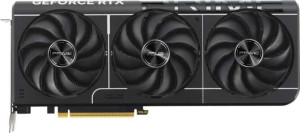
Asus Prime GeForce RTX 5070 Ti OC Edition
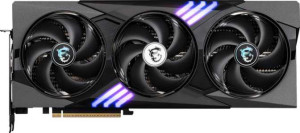
MSI GeForce RTX 5070 Ti Gaming Trio Plus

Asus Prime GeForce RTX 5070 Ti OC Edition MSI GeForce RTX 5070 Ti Gaming Trio Plus

Overview

Welcome to our in-depth specification comparison between the Asus Prime GeForce RTX 5070 Ti OC Edition and the MSI GeForce RTX 5070 Ti Gaming Trio Plus. Both cards are built on the same Blackwell architecture and share an identical memory configuration, yet they diverge in key areas such as boost clock performance and physical dimensions. Read on to see exactly how these two RTX 5070 Ti cards stack up across every major specification.

Common Features

  • Both cards share a base GPU clock speed of 2295 MHz.
  • Both cards have a GPU memory speed of 1750 MHz.
  • Both cards feature 8960 shading units.
  • Both cards include 280 texture mapping units (TMUs).
  • Both cards have 96 render output units (ROPs).
  • Double Precision Floating Point (DPFP) is supported on both cards.
  • Both cards have an effective memory speed of 28000 MHz.
  • Both cards offer a maximum memory bandwidth of 896 GB/s.
  • Both cards come with 16GB of VRAM.
  • Both cards use GDDR7 memory.
  • Both cards have a 256-bit memory bus width.
  • ECC memory is supported on both cards.
  • Both cards support DirectX 12 Ultimate.
  • Both cards support OpenGL version 4.6.
  • Both cards support OpenCL version 3.
  • Multi-display technology is supported on both cards.
  • Ray tracing is supported on both cards.
  • 3D support is available on both cards.
  • DLSS is supported on both cards.
  • XeSS (XMX) is not available on either card.
  • Both cards include 1 HDMI port with HDMI 2.1b.
  • Both cards offer 3 DisplayPort outputs.
  • Neither card includes USB-C ports, DVI outputs, or mini DisplayPort outputs.
  • Both cards are built on the Blackwell GPU architecture.
  • Both cards have a Thermal Design Power (TDP) of 300W.
  • Both cards use PCIe version 5.
  • Both cards are manufactured on a 5 nm semiconductor process.
  • Both cards contain 45600 million transistors.
  • Neither card features air-water cooling.

Main Differences

  • GPU turbo clock speed is 2497 MHz on Asus Prime GeForce RTX 5070 Ti OC Edition and 2452 MHz on MSI GeForce RTX 5070 Ti Gaming Trio Plus.
  • Pixel rate is 239.7 GPixel/s on Asus Prime GeForce RTX 5070 Ti OC Edition and 235.4 GPixel/s on MSI GeForce RTX 5070 Ti Gaming Trio Plus.
  • Floating-point performance is 44.75 TFLOPS on Asus Prime GeForce RTX 5070 Ti OC Edition and 43.94 TFLOPS on MSI GeForce RTX 5070 Ti Gaming Trio Plus.
  • Texture rate is 699.2 GTexels/s on Asus Prime GeForce RTX 5070 Ti OC Edition and 686.6 GTexels/s on MSI GeForce RTX 5070 Ti Gaming Trio Plus.
  • RGB lighting is present on MSI GeForce RTX 5070 Ti Gaming Trio Plus but not available on Asus Prime GeForce RTX 5070 Ti OC Edition.
  • Card width is 304 mm on Asus Prime GeForce RTX 5070 Ti OC Edition and 338 mm on MSI GeForce RTX 5070 Ti Gaming Trio Plus.
  • Card height is 126 mm on Asus Prime GeForce RTX 5070 Ti OC Edition and 140 mm on MSI GeForce RTX 5070 Ti Gaming Trio Plus.
Specs Comparison
Asus Prime GeForce RTX 5070 Ti OC Edition

Asus Prime GeForce RTX 5070 Ti OC Edition

MSI GeForce RTX 5070 Ti Gaming Trio Plus

MSI GeForce RTX 5070 Ti Gaming Trio Plus

Performance:
GPU clock speed 2295 MHz 2295 MHz
GPU turbo 2497 MHz 2452 MHz
pixel rate 239.7 GPixel/s 235.4 GPixel/s
floating-point performance 44.75 TFLOPS 43.94 TFLOPS
texture rate 699.2 GTexels/s 686.6 GTexels/s
GPU memory speed 1750 MHz 1750 MHz
shading units 8960 8960
texture mapping units (TMUs) 280 280
render output units (ROPs) 96 96
Has Double Precision Floating Point (DPFP)

At the foundation, both cards share an identical hardware configuration: 8960 shading units, 280 TMUs, 96 ROPs, and a base GPU clock of 2295 MHz, making them functionally equivalent in terms of raw silicon. The real divergence comes in the boost clock: the Asus Prime OC Edition reaches a GPU turbo of 2497 MHz, while the MSI Gaming Trio Plus tops out at 2452 MHz — a 45 MHz gap that directly cascades into every derived throughput metric.

That clock advantage translates into measurable, if modest, performance deltas across the board. The Asus delivers 44.75 TFLOPS of floating-point performance versus 43.94 TFLOPS on the MSI — roughly a 1.8% lead. Similarly, texture throughput stands at 699.2 GTexels/s vs 686.6 GTexels/s, and pixel fill rate at 239.7 GPixel/s vs 235.4 GPixel/s. In practice, these differences are unlikely to be perceptible in typical gaming workloads, but they could offer a marginal edge in heavily compute-bound scenarios or GPU-accelerated tasks where sustained throughput matters over many frames.

The Asus Prime OC Edition holds a clear but narrow performance edge in this group, driven entirely by its higher factory overclock. Both cards are otherwise identical in architecture and memory configuration, so the MSI Gaming Trio Plus is not disadvantaged by design — only by tuning. If raw peak performance is the priority and all else is equal, the Asus is the stronger choice here; the gap is real, even if it is slim.
Memory:
effective memory speed 28000 MHz 28000 MHz
maximum memory bandwidth 896 GB/s 896 GB/s
VRAM 16GB 16GB
GDDR version GDDR7 GDDR7
memory bus width 256-bit 256-bit
Supports ECC memory

The memory specifications for the Asus Prime GeForce RTX 5070 Ti OC Edition and the MSI GeForce RTX 5070 Ti Gaming Trio Plus are identical across the board. Both cards feature an effective memory speed of 28000 MHz, a maximum memory bandwidth of 896 GB/s, and 16GB of VRAM.

Additionally, both models are equipped with GDDR7 memory and have a 256-bit memory bus width. Both also support ECC memory.

Since all memory-related specs match between the two products, there are no differences in this category.

Features:
DirectX version DirectX 12 Ultimate DirectX 12 Ultimate
OpenGL version 4.6 4.6
OpenCL version 3 3
Supports multi-display technology
supports ray tracing
Supports 3D
supports DLSS
has XeSS (XMX)
AMD SAM / Intel Resizable BAR Intel Resizable BAR Intel Resizable BAR
has LHR
has RGB lighting
supported displays 4 4

Both the Asus Prime GeForce RTX 5070 Ti OC Edition and the MSI GeForce RTX 5070 Ti Gaming Trio Plus support DirectX 12 Ultimate, OpenGL version 4.6, and OpenCL version 3. Additionally, both cards support multi-display technology, ray tracing, and 3D, and feature DLSS support.

When it comes to specific features, the Asus card does not have XeSS (XMX) support, while the MSI card is also without this feature. Both products support Intel Resizable BAR, but the Asus model does not have RGB lighting, whereas the MSI version does.

Lastly, both cards support up to 4 displays, and neither has LHR (Lite Hash Rate) support.

Ports:
has an HDMI output
HDMI ports 1 1
HDMI version HDMI 2.1b HDMI 2.1b
DisplayPort outputs 3 3
USB-C ports 0 0
DVI outputs 0 0
mini DisplayPort outputs 0 0

Both the Asus Prime GeForce RTX 5070 Ti OC Edition and the MSI GeForce RTX 5070 Ti Gaming Trio Plus feature one HDMI output, with both supporting HDMI version 2.1b. They also each have three DisplayPort outputs, while neither card includes USB-C, DVI, or mini DisplayPort outputs.

In summary, the port configurations for both cards are identical across all categories.

General info:
GPU architecture Blackwell Blackwell
release date January 2025 February 2025
Thermal Design Power (TDP) 300W 300W
PCI Express (PCIe) version 5 5
semiconductor size 5 nm 5 nm
number of transistors 45600 million 45600 million
Has air-water cooling
width 304 mm 338 mm
height 126 mm 140 mm

Both the Asus Prime GeForce RTX 5070 Ti OC Edition and the MSI GeForce RTX 5070 Ti Gaming Trio Plus are built on the same Blackwell GPU architecture and feature the same 300W Thermal Design Power (TDP), PCI Express 5.0 version, 5 nm semiconductor size, and 45.6 billion transistors. Neither card includes air-water cooling.

The key difference lies in their physical dimensions. The Asus model has a width of 304 mm and a height of 126 mm, while the MSI card is larger, measuring 338 mm in width and 140 mm in height.

Aside from the size, all other general specifications are identical between the two products.

Comparison Summary & Verdict

After examining every specification, both cards share a strong common foundation: identical 16GB GDDR7 memory, a 300W TDP, and the same port layout. The Asus Prime GeForce RTX 5070 Ti OC Edition edges ahead in raw compute metrics, delivering a higher GPU turbo clock of 2497 MHz, 44.75 TFLOPS of floating-point performance, and a superior pixel and texture rate — making it the better pick for users who want every last frame. The MSI GeForce RTX 5070 Ti Gaming Trio Plus, while slightly behind on peak clocks, brings RGB lighting to the table and occupies a larger physical footprint, appealing to enthusiasts who value aesthetics in a windowed build. In short, choose the Asus for pure performance efficiency, and the MSI if visual flair matters alongside strong gaming capability.

Asus Prime GeForce RTX 5070 Ti OC Edition
Buy Asus Prime GeForce RTX 5070 Ti OC Edition if...

Buy the Asus Prime GeForce RTX 5070 Ti OC Edition if you prioritize maximum boost clock speed and higher floating-point performance in a more compact card size.

MSI GeForce RTX 5070 Ti Gaming Trio Plus
Buy MSI GeForce RTX 5070 Ti Gaming Trio Plus if...

Buy the MSI GeForce RTX 5070 Ti Gaming Trio Plus if RGB lighting is important to you and you are happy to accommodate its larger physical dimensions in your build.