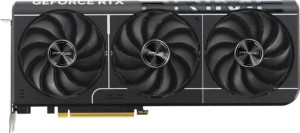
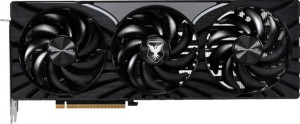
At the core, the Asus Prime RTX 5070 Ti and the Gainward Phoenix-S RTX 5070 Ti are built on an essentially identical computational foundation: both run at 2295 MHz base / 2452 MHz boost, share the same 8960 shading units, 280 TMUs, and deliver exactly 43.94 TFLOPS of floating-point throughput alongside a matching 686.6 GTexels/s texture fill rate. For the vast majority of GPU-intensive workloads — shader computation, AI inference, geometry processing — these two cards are effectively indistinguishable on paper.
The one meaningful divergence in this group is the pixel fill rate: the Asus Prime registers 313.9 GPixel/s versus the Gainward Phoenix-S's 235.4 GPixel/s. Pixel fill rate governs how quickly a GPU can write final rendered pixels to the framebuffer, which becomes a bottleneck in scenarios involving high resolutions, heavy multi-sample anti-aliasing (MSAA), or rendering pipelines that rely on many render passes. A higher pixel rate translates to smoother frame delivery and less saturation of output bandwidth in those specific workloads.
On balance, the Asus Prime holds a clear edge in this performance group purely due to its substantially higher pixel rate — roughly 33% more pixel throughput. All other metrics being equal, this advantage is most relevant to users targeting 4K with MSAA enabled or other pixel-bound scenarios. For workloads dominated by shader or texture operations, the two cards remain on equal footing.