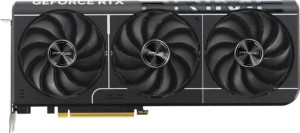
Asus Prime GeForce RTX 5070 Ti
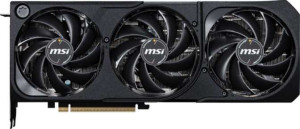
MSI GeForce RTX 5070 Ti Shadow 3X OC

Asus Prime GeForce RTX 5070 Ti MSI GeForce RTX 5070 Ti Shadow 3X OC

Overview

Welcome to our in-depth specification comparison between the Asus Prime GeForce RTX 5070 Ti and the MSI GeForce RTX 5070 Ti Shadow 3X OC. Both cards are built on the same Blackwell architecture and share a remarkably similar foundation, yet key battlegrounds emerge around pixel rate, boost clock speeds, texture throughput, and physical dimensions. Read on to discover which card edges ahead where it matters most for your build.

Common Features

  • Both GPUs share a base clock speed of 2295 MHz.
  • Both cards have a GPU memory speed of 1750 MHz.
  • Both GPUs feature 8960 shading units.
  • Both cards include 280 texture mapping units (TMUs).
  • Both GPUs have 96 render output units (ROPs).
  • Double Precision Floating Point (DPFP) is supported on both cards.
  • Both cards have an effective memory speed of 28000 MHz.
  • Both GPUs offer a maximum memory bandwidth of 896 GB/s.
  • Both cards come with 16GB of VRAM.
  • Both GPUs use GDDR7 memory.
  • Both cards have a 256-bit memory bus width.
  • ECC memory is supported on both cards.
  • Both GPUs support DirectX 12 Ultimate.
  • Both cards support OpenGL version 4.6.
  • Both GPUs support OpenCL version 3.
  • Multi-display technology is supported on both cards.
  • Ray tracing is supported on both GPUs.
  • 3D support is available on both cards.
  • DLSS is supported on both GPUs.
  • XeSS (XMX) is not available on either card.
  • Both GPUs have one HDMI 2.1b output.
  • Both cards feature three DisplayPort outputs.
  • Neither card has USB-C, DVI, or mini DisplayPort outputs.
  • Both GPUs are built on the Blackwell architecture.
  • Both cards have a Thermal Design Power (TDP) of 300W.
  • Both GPUs use PCIe version 5.
  • Both cards are manufactured on a 5 nm process.
  • Both GPUs contain 45600 million transistors.
  • Air-water cooling is not available on either card.

Main Differences

  • GPU turbo clock is 2452 MHz on Asus Prime GeForce RTX 5070 Ti and 2482 MHz on MSI GeForce RTX 5070 Ti Shadow 3X OC.
  • Pixel rate is 313.9 GPixel/s on Asus Prime GeForce RTX 5070 Ti and 238.3 GPixel/s on MSI GeForce RTX 5070 Ti Shadow 3X OC.
  • Floating-point performance is 43.94 TFLOPS on Asus Prime GeForce RTX 5070 Ti and 44.48 TFLOPS on MSI GeForce RTX 5070 Ti Shadow 3X OC.
  • Texture rate is 686.6 GTexels/s on Asus Prime GeForce RTX 5070 Ti and 695 GTexels/s on MSI GeForce RTX 5070 Ti Shadow 3X OC.
  • Card width is 304 mm on Asus Prime GeForce RTX 5070 Ti and 303 mm on MSI GeForce RTX 5070 Ti Shadow 3X OC.
  • Card height is 126 mm on Asus Prime GeForce RTX 5070 Ti and 121 mm on MSI GeForce RTX 5070 Ti Shadow 3X OC.
Specs Comparison
Asus Prime GeForce RTX 5070 Ti

Asus Prime GeForce RTX 5070 Ti

MSI GeForce RTX 5070 Ti Shadow 3X OC

MSI GeForce RTX 5070 Ti Shadow 3X OC

Performance:
GPU clock speed 2295 MHz 2295 MHz
GPU turbo 2452 MHz 2482 MHz
pixel rate 313.9 GPixel/s 238.3 GPixel/s
floating-point performance 43.94 TFLOPS 44.48 TFLOPS
texture rate 686.6 GTexels/s 695 GTexels/s
GPU memory speed 1750 MHz 1750 MHz
shading units 8960 8960
texture mapping units (TMUs) 280 280
render output units (ROPs) 96 96
Has Double Precision Floating Point (DPFP)

At their core, the Asus Prime RTX 5070 Ti and MSI Shadow 3X OC share the same foundational hardware configuration: identical base clocks of 2295 MHz, matching shader counts of 8960 units, and equivalent memory speeds, TMU, and ROP counts. This means both cards draw from the same raw architectural well, and most of their performance story is told in the finer details.

The most striking divergence is in pixel fill rate: the Asus Prime posts 313.9 GPixel/s versus the MSI's 238.3 GPixel/s — a gap of over 30%. Pixel fill rate directly governs how quickly a GPU can push rendered pixels to the framebuffer, making it especially relevant at high resolutions and in rasterization-heavy workloads. On the compute side, the MSI marginally leads with 44.48 TFLOPS of floating-point performance and a slightly higher boost clock of 2482 MHz versus the Asus's 2452 MHz and 43.94 TFLOPS — differences that are largely negligible in practice and unlikely to be perceptible in gaming scenarios.

Overall, the Asus Prime RTX 5070 Ti holds a meaningful edge in this group, driven almost entirely by its substantially higher pixel rate. For users prioritizing high-resolution gaming where fill rate is a bottleneck, this is a tangible real-world advantage. The MSI's fractionally higher boost clock and TFLOPS figure are too slim to offset that lead. Asus takes the performance edge here.

Memory:
effective memory speed 28000 MHz 28000 MHz
maximum memory bandwidth 896 GB/s 896 GB/s
VRAM 16GB 16GB
GDDR version GDDR7 GDDR7
memory bus width 256-bit 256-bit
Supports ECC memory

The memory specifications for the Asus Prime GeForce RTX 5070 Ti and MSI GeForce RTX 5070 Ti Shadow 3X OC are identical. Both products feature an effective memory speed of 28000 MHz, with a maximum memory bandwidth of 896 GB/s. They are equipped with 16GB of VRAM, utilize GDDR7 memory, and have a memory bus width of 256-bit. Additionally, both cards support ECC memory (Error Correcting Code), ensuring better data integrity.

Since all the memory-related specifications are the same between these two cards, there is no difference in memory performance or features to consider.

Features:
DirectX version DirectX 12 Ultimate DirectX 12 Ultimate
OpenGL version 4.6 4.6
OpenCL version 3 3
Supports multi-display technology
supports ray tracing
Supports 3D
supports DLSS
has XeSS (XMX)
AMD SAM / Intel Resizable BAR Intel Resizable BAR Intel Resizable BAR
has LHR
has RGB lighting
supported displays 4 4

The Asus Prime GeForce RTX 5070 Ti and MSI GeForce RTX 5070 Ti Shadow 3X OC are almost identical in terms of features. Both cards support DirectX 12 Ultimate, OpenGL 4.6, and OpenCL 3, offering compatibility with modern graphics and compute APIs. Additionally, they both support multi-display technology, ray tracing, 3D, and DLSS, providing a robust set of capabilities for high-quality gaming and content creation.

Both cards also lack support for XeSS (XMX), and neither model has LHR (Lite Hash Rate), meaning they are not specifically optimized for cryptocurrency mining. Both cards also include Intel Resizable BAR support, which enhances performance by allowing the CPU to access the full GPU memory buffer.

The only difference in features between the two is the RGB lighting. The Asus card does not feature RGB lighting, and the MSI card has the same specification, also stating that it lacks RGB lighting. Finally, both cards support up to 4 displays, making them equally capable for multi-monitor setups.

Ports:
has an HDMI output
HDMI ports 1 1
HDMI version HDMI 2.1b HDMI 2.1b
DisplayPort outputs 3 3
USB-C ports 0 0
DVI outputs 0 0
mini DisplayPort outputs 0 0

The Asus Prime GeForce RTX 5070 Ti and MSI GeForce RTX 5070 Ti Shadow 3X OC share identical port configurations. Both cards have one HDMI output with HDMI 2.1b support, as well as three DisplayPort outputs. Neither card includes USB-C ports, DVI outputs, or mini DisplayPort outputs.

As the specifications are exactly the same for both cards, users can expect the same connectivity options regardless of which model they choose.

General info:
GPU architecture Blackwell Blackwell
release date January 2025 February 2025
Thermal Design Power (TDP) 300W 300W
PCI Express (PCIe) version 5 5
semiconductor size 5 nm 5 nm
number of transistors 45600 million 45600 million
Has air-water cooling
width 304 mm 303 mm
height 126 mm 121 mm

The Asus Prime GeForce RTX 5070 Ti and MSI GeForce RTX 5070 Ti Shadow 3X OC are nearly identical in terms of general specifications. Both cards feature the same Blackwell GPU architecture, 300W thermal design power (TDP), PCI Express 5.0 support, and 5 nm semiconductor size. They also share an identical number of transistors, with 45,600 million transistors each.

Neither card includes air-water cooling, and both have nearly identical dimensions. The Asus card measures 304 mm in width and 126 mm in height, while the MSI card is slightly smaller, at 303 mm in width and 121 mm in height. These differences in size are minor and unlikely to affect performance or installation in most systems.

Comparison Summary & Verdict

After a thorough look at the specs, both the Asus Prime GeForce RTX 5070 Ti and the MSI GeForce RTX 5070 Ti Shadow 3X OC deliver an almost identical experience at their core, sharing the same 16GB GDDR7 memory, 300W TDP, and full feature set including ray tracing and DLSS. Where they diverge is telling: the Asus card posts a significantly higher pixel rate of 313.9 GPixel/s, which can benefit rasterization-heavy workloads, while the MSI card holds a slight edge in boost clock (2482 MHz), floating-point performance, and texture rate. The MSI is also 5mm shorter in height, making it the marginally better fit for tighter cases. Choose the Asus Prime if raw pixel throughput is your priority; opt for the MSI Shadow 3X OC if you prefer a fractionally higher boost clock and a more compact cooler profile.

Asus Prime GeForce RTX 5070 Ti
Buy Asus Prime GeForce RTX 5070 Ti if...

Buy the Asus Prime GeForce RTX 5070 Ti if you prioritize a higher pixel rate of 313.9 GPixel/s, which gives it an edge in rasterization-heavy gaming workloads.

MSI GeForce RTX 5070 Ti Shadow 3X OC
Buy MSI GeForce RTX 5070 Ti Shadow 3X OC if...

Buy the MSI GeForce RTX 5070 Ti Shadow 3X OC if you want a slightly higher boost clock of 2482 MHz and a more compact form factor that fits better in space-constrained cases.