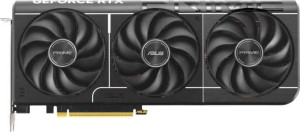
Asus Prime GeForce RTX 5070
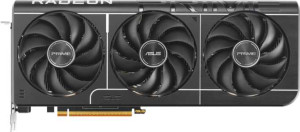
Asus Prime Radeon RX 9070 OC Edition

Asus Prime GeForce RTX 5070 Asus Prime Radeon RX 9070 OC Edition

Overview

Welcome to our in-depth spec comparison between the Asus Prime GeForce RTX 5070 and the Asus Prime Radeon RX 9070 OC Edition. These two mid-to-high-end graphics cards represent the latest GPU architectures from Nvidia and AMD, and they take surprisingly different approaches to memory configuration, raw throughput, and feature sets. Read on as we break down every key specification to help you decide which card best fits your needs.

Common Features

  • Both cards support Double Precision Floating Point (DPFP).
  • Both cards support ECC memory.
  • Both cards are compatible with DirectX 12 Ultimate.
  • Both cards support OpenGL version 4.6.
  • Both cards support multi-display technology.
  • Both cards support ray tracing.
  • Both cards support 3D rendering.
  • Neither card features XeSS (XMX) support.
  • Neither card has LHR (Lite Hash Rate) limitation.
  • Neither card includes RGB lighting.
  • Both cards have one HDMI output running HDMI version 2.1b.
  • Both cards include three DisplayPort outputs.
  • Neither card has USB-C ports.
  • Neither card has DVI outputs.
  • Neither card has mini DisplayPort outputs.
  • Both cards use PCIe version 5.
  • Both cards are manufactured on a 5 nm semiconductor process.
  • Neither card features air-water cooling.

Main Differences

  • Base GPU clock speed is 2325 MHz on Asus Prime GeForce RTX 5070 and 1330 MHz on Asus Prime Radeon RX 9070 OC Edition.
  • GPU turbo clock speed is 2512 MHz on Asus Prime GeForce RTX 5070 and 2590 MHz on Asus Prime Radeon RX 9070 OC Edition.
  • Pixel rate is 201 GPixel/s on Asus Prime GeForce RTX 5070 and 331.5 GPixel/s on Asus Prime Radeon RX 9070 OC Edition.
  • Floating-point performance is 30.87 TFLOPS on Asus Prime GeForce RTX 5070 and 37.13 TFLOPS on Asus Prime Radeon RX 9070 OC Edition.
  • Texture rate is 482.3 GTexels/s on Asus Prime GeForce RTX 5070 and 580.2 GTexels/s on Asus Prime Radeon RX 9070 OC Edition.
  • GPU memory speed is 1750 MHz on Asus Prime GeForce RTX 5070 and 2518 MHz on Asus Prime Radeon RX 9070 OC Edition.
  • Shading units number 6144 on Asus Prime GeForce RTX 5070 and 3584 on Asus Prime Radeon RX 9070 OC Edition.
  • Texture mapping units (TMUs) total 192 on Asus Prime GeForce RTX 5070 and 224 on Asus Prime Radeon RX 9070 OC Edition.
  • Render output units (ROPs) total 80 on Asus Prime GeForce RTX 5070 and 128 on Asus Prime Radeon RX 9070 OC Edition.
  • Effective memory speed is 28000 MHz on Asus Prime GeForce RTX 5070 and 20000 MHz on Asus Prime Radeon RX 9070 OC Edition.
  • Maximum memory bandwidth is 672 GB/s on Asus Prime GeForce RTX 5070 and 644.6 GB/s on Asus Prime Radeon RX 9070 OC Edition.
  • VRAM is 12 GB on Asus Prime GeForce RTX 5070 and 16 GB on Asus Prime Radeon RX 9070 OC Edition.
  • Memory type is GDDR7 on Asus Prime GeForce RTX 5070 and GDDR6 on Asus Prime Radeon RX 9070 OC Edition.
  • Memory bus width is 192-bit on Asus Prime GeForce RTX 5070 and 256-bit on Asus Prime Radeon RX 9070 OC Edition.
  • OpenCL version is 3 on Asus Prime GeForce RTX 5070 and 2.2 on Asus Prime Radeon RX 9070 OC Edition.
  • DLSS support is present on Asus Prime GeForce RTX 5070 but not available on Asus Prime Radeon RX 9070 OC Edition.
  • Resizable BAR technology is Intel Resizable BAR on Asus Prime GeForce RTX 5070 and AMD SAM on Asus Prime Radeon RX 9070 OC Edition.
  • GPU architecture is Blackwell on Asus Prime GeForce RTX 5070 and RDNA 4.0 on Asus Prime Radeon RX 9070 OC Edition.
  • Thermal Design Power (TDP) is 250W on Asus Prime GeForce RTX 5070 and 220W on Asus Prime Radeon RX 9070 OC Edition.
  • Transistor count is 31100 million on Asus Prime GeForce RTX 5070 and 53900 million on Asus Prime Radeon RX 9070 OC Edition.
  • Card width is 306 mm on Asus Prime GeForce RTX 5070 and 312 mm on Asus Prime Radeon RX 9070 OC Edition.
  • Card height is 126 mm on Asus Prime GeForce RTX 5070 and 130 mm on Asus Prime Radeon RX 9070 OC Edition.
Specs Comparison
Asus Prime GeForce RTX 5070

Asus Prime GeForce RTX 5070

Asus Prime Radeon RX 9070 OC Edition

Asus Prime Radeon RX 9070 OC Edition

Performance:
GPU clock speed 2325 MHz 1330 MHz
GPU turbo 2512 MHz 2590 MHz
pixel rate 201 GPixel/s 331.5 GPixel/s
floating-point performance 30.87 TFLOPS 37.13 TFLOPS
texture rate 482.3 GTexels/s 580.2 GTexels/s
GPU memory speed 1750 MHz 2518 MHz
shading units 6144 3584
texture mapping units (TMUs) 192 224
render output units (ROPs) 80 128
Has Double Precision Floating Point (DPFP)

At first glance, the Asus Prime GeForce RTX 5070 appears clock-speed competitive, posting a higher base clock of 2325 MHz versus the 1330 MHz base of the Asus Prime Radeon RX 9070 OC. However, base clocks are rarely the sustained operating point under load — and once both cards hit their boost targets, the RX 9070 OC pulls ahead with a turbo of 2590 MHz against the RTX 5070's 2512 MHz. More importantly, raw clock speed alone does not determine throughput; architecture width does.

This is where the RX 9070 OC establishes a decisive lead across every throughput metric. Despite having significantly fewer shading units (3584 vs. 6144), the RX 9070 OC outpaces the RTX 5070 in floating-point performance (37.13 TFLOPS vs. 30.87 TFLOPS), texture rate (580.2 GTexels/s vs. 482.3 GTexels/s), and — most strikingly — pixel rate (331.5 GPixel/s vs. 201 GPixel/s). That pixel rate gap is driven by the RX 9070 OC's 128 ROPs versus only 80 ROPs on the RTX 5070, which directly translates to higher fill-rate and better performance at high resolutions. Memory speed also favors the RX 9070 OC substantially (2518 MHz vs. 1750 MHz), meaning its memory subsystem feeds the GPU more aggressively.

In summary, the RX 9070 OC holds a clear performance edge within this spec group. The RTX 5070's higher shading unit count does not compensate for its lower throughput across compute, texturing, and rasterization — all metrics that directly map to real-world rendering workloads. Both cards support Double Precision Floating Point, so that is a non-differentiator. For users prioritizing raw GPU throughput as defined by these specs, the Radeon RX 9070 OC Edition is the stronger performer.
Memory:
effective memory speed 28000 MHz 20000 MHz
maximum memory bandwidth 672 GB/s 644.6 GB/s
VRAM 12GB 16GB
GDDR version GDDR7 GDDR6
memory bus width 192-bit 256-bit
Supports ECC memory

The Asus Prime GeForce RTX 5070 comes with an effective memory speed of 28000 MHz, while the Asus Prime Radeon RX 9070 OC Edition operates at a lower effective memory speed of 20000 MHz. When it comes to maximum memory bandwidth, the RTX 5070 leads with 672 GB/s, surpassing the RX 9070 OC Edition's 644.6 GB/s. However, the RX 9070 OC Edition offers a larger VRAM capacity of 16GB, compared to the 12GB of VRAM found in the RTX 5070. The RX 9070 OC Edition also has a wider memory bus width of 256-bit, while the RTX 5070 features a narrower 192-bit memory bus.

Both products use different GDDR memory versions: the RTX 5070 uses GDDR7, while the RX 9070 OC Edition uses GDDR6. Despite these differences, both graphics cards support ECC memory, ensuring reliable error-correction for stability in demanding tasks.

In summary, the two cards differ mainly in memory-related specs, with the RTX 5070 offering faster memory speed and greater bandwidth, while the RX 9070 OC Edition compensates with more VRAM, a wider memory bus, and a slightly older GDDR version.

Features:
DirectX version DirectX 12 Ultimate DirectX 12 Ultimate
OpenGL version 4.6 4.6
OpenCL version 3 2.2
Supports multi-display technology
supports ray tracing
Supports 3D
supports DLSS
has XeSS (XMX)
AMD SAM / Intel Resizable BAR Intel Resizable BAR AMD SAM
has LHR
has RGB lighting
supported displays 4 4

Both the Asus Prime GeForce RTX 5070 and the Asus Prime Radeon RX 9070 OC Edition support DirectX 12 Ultimate, OpenGL 4.6, and multi-display technology. However, the RTX 5070 supports OpenCL 3, while the RX 9070 OC Edition supports the older OpenCL 2.2. In terms of ray tracing and 3D support, both cards are capable, making them well-suited for advanced visual effects and immersive gaming experiences.

The RTX 5070 supports DLSS (Deep Learning Super Sampling), which enhances performance and image quality, while the RX 9070 OC Edition does not support DLSS. Neither card supports XeSS (XMX), a feature exclusive to Intel's Arc GPUs. For the AMD SAM / Intel Resizable BAR feature, the RTX 5070 is compatible with Intel Resizable BAR, whereas the RX 9070 OC Edition supports AMD SAM.

Neither card has LHR (Lite Hash Rate), ensuring they are fully functional for mining purposes. Both products also lack RGB lighting. When it comes to display support, both the RTX 5070 and RX 9070 OC Edition support up to four displays, providing flexibility for multi-monitor setups.

Ports:
has an HDMI output
HDMI ports 1 1
HDMI version HDMI 2.1b HDMI 2.1b
DisplayPort outputs 3 3
USB-C ports 0 0
DVI outputs 0 0
mini DisplayPort outputs 0 0

Both the Asus Prime GeForce RTX 5070 and the Asus Prime Radeon RX 9070 OC Edition offer similar port configurations. Each card features one HDMI output with HDMI 2.1b support, and three DisplayPort outputs. Neither card includes USB-C ports, DVI outputs, or mini DisplayPort outputs. This means that, in terms of display connectivity, the two products are identical in their available ports and features.

Overall, both cards provide the same set of display outputs, supporting HDMI and DisplayPort, with no additional ports like USB-C or mini DisplayPort available on either model.

General info:
GPU architecture Blackwell RDNA 4.0
release date January 2025 March 2025
Thermal Design Power (TDP) 250W 220W
PCI Express (PCIe) version 5 5
semiconductor size 5 nm 5 nm
number of transistors 31100 million 53900 million
Has air-water cooling
width 306 mm 312 mm
height 126 mm 130 mm

The Asus Prime GeForce RTX 5070 is built on the Blackwell GPU architecture, while the Asus Prime Radeon RX 9070 OC Edition utilizes the RDNA 4.0 architecture. Both cards use the same 5 nm semiconductor size. The RTX 5070 has a Thermal Design Power (TDP) of 250W, while the RX 9070 OC Edition has a slightly lower TDP of 220W. In terms of transistors, the RTX 5070 has 31,100 million, while the RX 9070 OC Edition features more, with 53,900 million transistors.

Both cards support PCI Express (PCIe) version 5 and lack air-water cooling solutions. The dimensions also differ slightly: the RTX 5070 has a width of 306 mm and a height of 126 mm, while the RX 9070 OC Edition is a bit larger, with a width of 312 mm and a height of 130 mm.

In summary, the two cards feature different GPU architectures and transistor counts, but share some common features, such as the same semiconductor size, PCIe version, and cooling setup. The RX 9070 OC Edition is slightly more compact but has a lower TDP and more transistors than the RTX 5070.

Comparison Summary & Verdict

After examining the full specification sheet, both cards prove competitive but cater to different priorities. The Asus Prime GeForce RTX 5070 stands out with its higher effective memory speed of 28000 MHz, GDDR7 memory, and exclusive DLSS support, making it a strong choice for users who rely on Nvidia-specific technologies and AI-driven upscaling in their workflows or games. On the other hand, the Asus Prime Radeon RX 9070 OC Edition counters with superior floating-point performance at 37.13 TFLOPS, a larger 16 GB VRAM pool, a wider 256-bit memory bus, and better pixel and texture throughput, all while drawing less power at 220W TDP. Gamers and creators who demand more raw rasterization muscle and extra VRAM headroom will find the RX 9070 OC Edition compelling, whereas those deeply invested in the Nvidia ecosystem and DLSS pipelines will prefer the RTX 5070.

Asus Prime GeForce RTX 5070
Buy Asus Prime GeForce RTX 5070 if...

Buy the Asus Prime GeForce RTX 5070 if you rely on DLSS support, prefer GDDR7 memory with a higher effective memory speed of 28000 MHz, or are already invested in the Nvidia ecosystem.

Asus Prime Radeon RX 9070 OC Edition
Buy Asus Prime Radeon RX 9070 OC Edition if...

Buy the Asus Prime Radeon RX 9070 OC Edition if you want more raw floating-point performance, a larger 16 GB VRAM buffer, a wider 256-bit memory bus, and a lower 220W power draw.