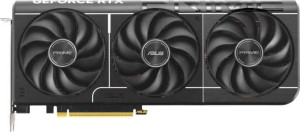
Asus Prime GeForce RTX 5070
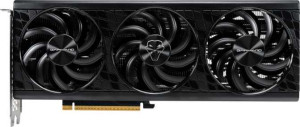
Gainward GeForce RTX 5070 Python III

Asus Prime GeForce RTX 5070 Gainward GeForce RTX 5070 Python III

Overview

Welcome to our detailed spec comparison of the Asus Prime GeForce RTX 5070 and the Gainward GeForce RTX 5070 Python III. Both cards are built on the same Blackwell architecture and share an identical feature set, making this a fascinating head-to-head. The real question comes down to physical dimensions and aesthetic preferences — two factors that can genuinely matter depending on your build. Read on to see exactly how these two RTX 5070 variants stack up.

Common Features

  • Both products have a GPU clock speed of 2325 MHz.
  • Both products have a GPU turbo speed of 2512 MHz.
  • Both products deliver a pixel rate of 201 GPixel/s.
  • Both products offer 30.87 TFLOPS of floating-point performance.
  • Both products have a texture rate of 482.3 GTexels/s.
  • Both products have a GPU memory speed of 1750 MHz.
  • Both products include 6144 shading units.
  • Both products have 192 texture mapping units (TMUs).
  • Both products have an effective memory speed of 28000 MHz.
  • Both products have a maximum memory bandwidth of 672 GB/s.
  • Both products come with 12GB of VRAM.
  • Both products use GDDR7 memory.
  • Both products feature a 192-bit memory bus width.
  • ECC memory support is available on both products.
  • Both products support DirectX 12 Ultimate.
  • Both products support OpenGL version 4.6.
  • Both products support OpenCL version 3.
  • Multi-display technology support is available on both products.
  • Ray tracing support is available on both products.
  • 3D support is available on both products.
  • DLSS support is available on both products.
  • XeSS (XMX) support is not available on either product.
  • Both products include one HDMI 2.1b output.
  • Both products feature three DisplayPort outputs.
  • Neither product includes USB-C ports, DVI outputs, or mini DisplayPort outputs.
  • Both products are based on the Blackwell GPU architecture.
  • Both products have a Thermal Design Power (TDP) of 250W.
  • Both products use PCIe version 5.
  • Both products are manufactured on a 5 nm semiconductor process.
  • Both products contain 31100 million transistors.
  • Neither product features air-water cooling.

Main Differences

  • RGB lighting is present on the Gainward GeForce RTX 5070 Python III but not available on the Asus Prime GeForce RTX 5070.
  • Width is 306 mm on the Asus Prime GeForce RTX 5070 and 291.9 mm on the Gainward GeForce RTX 5070 Python III.
  • Height is 126 mm on the Asus Prime GeForce RTX 5070 and 116.5 mm on the Gainward GeForce RTX 5070 Python III.
Specs Comparison
Asus Prime GeForce RTX 5070

Asus Prime GeForce RTX 5070

Gainward GeForce RTX 5070 Python III

Gainward GeForce RTX 5070 Python III

Performance:
GPU clock speed 2325 MHz 2325 MHz
GPU turbo 2512 MHz 2512 MHz
pixel rate 201 GPixel/s 201 GPixel/s
floating-point performance 30.87 TFLOPS 30.87 TFLOPS
texture rate 482.3 GTexels/s 482.3 GTexels/s
GPU memory speed 1750 MHz 1750 MHz
shading units 6144 6144
texture mapping units (TMUs) 192 192
render output units (ROPs) 80 80
Has Double Precision Floating Point (DPFP)

In terms of raw performance, the Asus Prime RTX 5070 and the Gainward RTX 5070 Python III are built on identical silicon configurations. Both cards share the same base and boost clocks of 2325 MHz and 2512 MHz respectively, and both deliver 30.87 TFLOPS of floating-point performance — a figure that places them firmly in the high-end tier for modern rasterization and AI-accelerated workloads.

Digging deeper into the GPU architecture, both cards are equally equipped: 6144 shading units, 192 TMUs, and 80 ROPs — with the ROPs directly governing pixel throughput, confirmed by the matching 201 GPixel/s pixel rate. The shared memory speed of 1750 MHz and texture rate of 482.3 GTexels/s further reinforce that neither card holds any compute or throughput advantage over the other. Both also support Double Precision Floating Point, which is relevant for users running scientific, simulation, or professional compute workloads alongside gaming.

The performance group is a complete tie. Every measurable metric — clocks, throughput, shader counts, and memory speed — is identical. This is expected given that both products use the same RTX 5070 GPU with no factory overclock differentiation between them. Any purchasing decision should therefore be driven by factors outside of raw performance, such as cooling solution, noise levels, build quality, or price.

Memory:
effective memory speed 28000 MHz 28000 MHz
maximum memory bandwidth 672 GB/s 672 GB/s
VRAM 12GB 12GB
GDDR version GDDR7 GDDR7
memory bus width 192-bit 192-bit
Supports ECC memory

The Asus Prime GeForce RTX 5070 and Gainward GeForce RTX 5070 Python III are identical when it comes to memory specifications. Both products feature an effective memory speed of 28000 MHz, ensuring high-speed data access. They also offer the same maximum memory bandwidth of 672 GB/s, providing ample throughput for demanding applications.

In terms of memory capacity, both GPUs are equipped with 12GB of VRAM, allowing them to handle large datasets and high-resolution textures effectively. They both use GDDR7 memory, which is the latest standard, enhancing overall performance.

Additionally, both models have a memory bus width of 192-bit and support ECC memory (Error Correction Code), ensuring data integrity and stability during operation.

Features:
DirectX version DirectX 12 Ultimate DirectX 12 Ultimate
OpenGL version 4.6 4.6
OpenCL version 3 3
Supports multi-display technology
supports ray tracing
Supports 3D
supports DLSS
has XeSS (XMX)
AMD SAM / Intel Resizable BAR Intel Resizable BAR Intel Resizable BAR
has LHR
has RGB lighting
supported displays 4 4

The Asus Prime GeForce RTX 5070 and Gainward GeForce RTX 5070 Python III have identical feature sets in most areas. Both GPUs support DirectX 12 Ultimate, OpenGL 4.6, and OpenCL 3, ensuring compatibility with the latest software and applications. They also both support multi-display technology, ray tracing, 3D, and DLSS, allowing for an enhanced visual experience across multiple monitors with advanced rendering features.

One difference between the two models is the inclusion of RGB lighting. The Gainward GeForce RTX 5070 Python III supports RGB lighting, while the Asus Prime GeForce RTX 5070 does not. However, both products lack XeSS (XMX) support and feature Intel Resizable BAR for improved memory access.

In terms of display support, both products are capable of handling up to four displays, and neither has LHR (Lite Hash Rate) restrictions, making them equally suitable for gaming and other high-demand applications.

Ports:
has an HDMI output
HDMI ports 1 1
HDMI version HDMI 2.1b HDMI 2.1b
DisplayPort outputs 3 3
USB-C ports 0 0
DVI outputs 0 0
mini DisplayPort outputs 0 0

The Asus Prime GeForce RTX 5070 and Gainward GeForce RTX 5070 Python III offer identical port configurations. Both GPUs have one HDMI output with HDMI 2.1b support, ensuring compatibility with the latest display technologies. Each model also features three DisplayPort outputs, providing ample options for multi-monitor setups.

Neither GPU includes USB-C ports, DVI outputs, nor mini DisplayPort outputs, which means both have similar port offerings and will support modern display standards without additional legacy connections.

In summary, the port setups on both products are identical, making them equally suitable for connecting to high-resolution displays and supporting a multi-display environment.

General info:
GPU architecture Blackwell Blackwell
release date January 2025 March 2025
Thermal Design Power (TDP) 250W 250W
PCI Express (PCIe) version 5 5
semiconductor size 5 nm 5 nm
number of transistors 31100 million 31100 million
Has air-water cooling
width 306 mm 291.9 mm
height 126 mm 116.5 mm

The Asus Prime GeForce RTX 5070 and Gainward GeForce RTX 5070 Python III share identical specifications in terms of core GPU architecture, thermal design power (TDP), PCI Express version, semiconductor size, and number of transistors. Both are based on the Blackwell architecture, have a TDP of 250W, and feature the latest PCIe 5.0 interface. Additionally, they both use a 5 nm semiconductor process and contain 31,100 million transistors, ensuring high performance and efficiency.

Both products also lack air-water cooling systems, so they will rely on traditional air cooling methods. The main difference between the two models is in their physical dimensions: the Asus Prime GeForce RTX 5070 has a width of 306 mm and a height of 126 mm, while the Gainward GeForce RTX 5070 Python III is slightly smaller with a width of 291.9 mm and a height of 116.5 mm.

Despite the slight difference in size, the overall internal specifications and features are identical, meaning the primary distinction between the two models lies in their form factor.

Comparison Summary & Verdict

After examining every specification, it is clear that the Asus Prime GeForce RTX 5070 and the Gainward GeForce RTX 5070 Python III are virtually identical in terms of raw performance, memory configuration, ports, and feature support. Both deliver the same 30.87 TFLOPS of floating-point performance, 12GB of GDDR7 VRAM, and full support for ray tracing and DLSS. The differences are purely physical and cosmetic: the Gainward is the more compact option at 291.9 mm wide and 116.5 mm tall, while the Asus is slightly larger at 306 mm by 126 mm. Additionally, the Gainward adds RGB lighting, which the Asus Prime omits entirely. Choose the Gainward Python III if you have a tight case or want visual flair; choose the Asus Prime if a cleaner, no-frills aesthetic suits your build better.

Asus Prime GeForce RTX 5070
Buy Asus Prime GeForce RTX 5070 if...

Buy the Asus Prime GeForce RTX 5070 if you prefer a clean, no-RGB aesthetic and do not mind a slightly larger card in your build.

Gainward GeForce RTX 5070 Python III
Buy Gainward GeForce RTX 5070 Python III if...

Buy the Gainward GeForce RTX 5070 Python III if you want a more compact card with RGB lighting to complement a visually styled system.