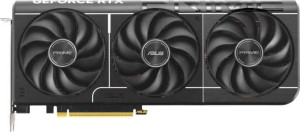
Asus Prime GeForce RTX 5070
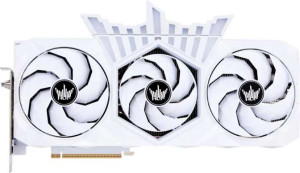
Galax GeForce RTX 5070 Ti HOF OC Lab Deluxe

Asus Prime GeForce RTX 5070 Galax GeForce RTX 5070 Ti HOF OC Lab Deluxe

Overview

Welcome to our in-depth specification comparison between the Asus Prime GeForce RTX 5070 and the Galax GeForce RTX 5070 Ti HOF OC Lab Deluxe. Both cards share the same Blackwell architecture and GDDR7 memory standard, yet they diverge significantly across raw compute performance, VRAM capacity, and physical footprint. Read on to see how these two Nvidia-based GPUs stack up across every key metric.

Common Features

  • GPU memory speed is 1750 MHz on both products.
  • Both products support Double Precision Floating Point (DPFP).
  • Effective memory speed is 28000 MHz on both products.
  • Both products use GDDR7 memory.
  • Both products support ECC memory.
  • Both products support DirectX 12 Ultimate.
  • OpenGL version is 4.6 on both products.
  • OpenCL version is 3 on both products.
  • Both products support multi-display technology.
  • Ray tracing is supported on both products.
  • 3D support is available on both products.
  • DLSS is supported on both products.
  • XeSS (XMX) support is not available on either product.
  • Both products have one HDMI output running HDMI version 2.1b.
  • Both products have 3 DisplayPort outputs.
  • Neither product has USB-C ports, DVI outputs, or mini DisplayPort outputs.
  • Both products are based on the Blackwell GPU architecture.
  • Both products use PCIe version 5.
  • Both products are manufactured on a 5 nm semiconductor process.
  • Neither product features air-water cooling.

Main Differences

  • GPU clock speed is 2325 MHz on the Asus Prime GeForce RTX 5070 and 2295 MHz on the Galax GeForce RTX 5070 Ti HOF OC Lab Deluxe.
  • GPU turbo clock is 2512 MHz on the Asus Prime GeForce RTX 5070 and 2580 MHz on the Galax GeForce RTX 5070 Ti HOF OC Lab Deluxe.
  • Pixel rate is 201 GPixel/s on the Asus Prime GeForce RTX 5070 and 247.7 GPixel/s on the Galax GeForce RTX 5070 Ti HOF OC Lab Deluxe.
  • Floating-point performance is 30.87 TFLOPS on the Asus Prime GeForce RTX 5070 and 46.23 TFLOPS on the Galax GeForce RTX 5070 Ti HOF OC Lab Deluxe.
  • Texture rate is 482.3 GTexels/s on the Asus Prime GeForce RTX 5070 and 722.4 GTexels/s on the Galax GeForce RTX 5070 Ti HOF OC Lab Deluxe.
  • Shading units number 6144 on the Asus Prime GeForce RTX 5070 and 8960 on the Galax GeForce RTX 5070 Ti HOF OC Lab Deluxe.
  • Texture mapping units (TMUs) total 192 on the Asus Prime GeForce RTX 5070 and 280 on the Galax GeForce RTX 5070 Ti HOF OC Lab Deluxe.
  • Render output units (ROPs) total 80 on the Asus Prime GeForce RTX 5070 and 96 on the Galax GeForce RTX 5070 Ti HOF OC Lab Deluxe.
  • Maximum memory bandwidth is 672 GB/s on the Asus Prime GeForce RTX 5070 and 896 GB/s on the Galax GeForce RTX 5070 Ti HOF OC Lab Deluxe.
  • VRAM is 12GB on the Asus Prime GeForce RTX 5070 and 16GB on the Galax GeForce RTX 5070 Ti HOF OC Lab Deluxe.
  • Memory bus width is 192-bit on the Asus Prime GeForce RTX 5070 and 256-bit on the Galax GeForce RTX 5070 Ti HOF OC Lab Deluxe.
  • RGB lighting is present on the Galax GeForce RTX 5070 Ti HOF OC Lab Deluxe but not available on the Asus Prime GeForce RTX 5070.
  • Thermal Design Power (TDP) is 250W on the Asus Prime GeForce RTX 5070 and 300W on the Galax GeForce RTX 5070 Ti HOF OC Lab Deluxe.
  • The number of transistors is 31100 million on the Asus Prime GeForce RTX 5070 and 45600 million on the Galax GeForce RTX 5070 Ti HOF OC Lab Deluxe.
  • Width is 306 mm on the Asus Prime GeForce RTX 5070 and 349.4 mm on the Galax GeForce RTX 5070 Ti HOF OC Lab Deluxe.
  • Height is 126 mm on the Asus Prime GeForce RTX 5070 and 160 mm on the Galax GeForce RTX 5070 Ti HOF OC Lab Deluxe.
Specs Comparison
Asus Prime GeForce RTX 5070

Asus Prime GeForce RTX 5070

Galax GeForce RTX 5070 Ti HOF OC Lab Deluxe

Galax GeForce RTX 5070 Ti HOF OC Lab Deluxe

Performance:
GPU clock speed 2325 MHz 2295 MHz
GPU turbo 2512 MHz 2580 MHz
pixel rate 201 GPixel/s 247.7 GPixel/s
floating-point performance 30.87 TFLOPS 46.23 TFLOPS
texture rate 482.3 GTexels/s 722.4 GTexels/s
GPU memory speed 1750 MHz 1750 MHz
shading units 6144 8960
texture mapping units (TMUs) 192 280
render output units (ROPs) 80 96
Has Double Precision Floating Point (DPFP)

The most telling performance gap between these two cards lies not in clock speeds, but in raw silicon: the Galax RTX 5070 Ti HOF OC Lab Deluxe is built on a significantly larger GPU die, packing 8,960 shading units and 280 TMUs versus the Asus Prime RTX 5070's 6,144 shaders and 192 TMUs. This ~46% advantage in compute resources directly explains why the Galax delivers 46.23 TFLOPS of floating-point performance against the Asus's 30.87 TFLOPS — a roughly 50% lead that translates to meaningfully higher frame rates and headroom for demanding workloads like ray tracing or AI-accelerated rendering.

Clock speeds tell a more nuanced story. The Asus Prime actually holds a slightly higher base clock (2325 MHz vs 2295 MHz), but the Galax reclaims the lead at boost, reaching 2580 MHz turbo versus 2512 MHz — a modest but real edge under sustained load. Memory speeds are identical at 1750 MHz for both. The Galax also leads on pixel fill rate (247.7 GPixel/s vs 201 GPixel/s) and texture throughput (722.4 GTexels/s vs 482.3 GTexels/s), advantages that matter directly in high-resolution rendering and texture-heavy scenes. Both cards support Double Precision Floating Point, making neither uniquely advantaged for DPFP compute tasks.

The verdict here is unambiguous: the Galax RTX 5070 Ti HOF OC Lab Deluxe holds a commanding performance advantage across every meaningful metric in this group. Its edge is not marginal — the ~50% lead in shader count and compute throughput reflects a fundamentally more powerful GPU tier, not just a factory overclock. The Asus Prime RTX 5070 is the more modest option by design, and users prioritizing peak performance should look to the Galax without hesitation.

Memory:
effective memory speed 28000 MHz 28000 MHz
maximum memory bandwidth 672 GB/s 896 GB/s
VRAM 12GB 16GB
GDDR version GDDR7 GDDR7
memory bus width 192-bit 256-bit
Supports ECC memory

The Asus Prime GeForce RTX 5070 and the Galax GeForce RTX 5070 Ti HOF OC Lab Deluxe both feature impressive memory specifications, with some key differences. Both products utilize GDDR7 memory, but the Asus Prime has a VRAM of 12GB, while the Galax card comes with a larger 16GB of VRAM.

When it comes to memory bandwidth, the Galax card again leads with a maximum bandwidth of 896 GB/s, compared to the Asus Prime's 672 GB/s. Both products share the same effective memory speed of 28000 MHz. Additionally, both cards feature a 256-bit memory bus width, but the Asus Prime has a narrower 192-bit memory bus width.

Both products support ECC memory, ensuring error-correcting capabilities for more stable performance. Despite sharing some similarities, the Galax card offers higher VRAM, wider memory bus, and greater bandwidth, making it the more powerful option in terms of memory performance.

Features:
DirectX version DirectX 12 Ultimate DirectX 12 Ultimate
OpenGL version 4.6 4.6
OpenCL version 3 3
Supports multi-display technology
supports ray tracing
Supports 3D
supports DLSS
has XeSS (XMX)
AMD SAM / Intel Resizable BAR Intel Resizable BAR Intel Resizable BAR
has LHR
has RGB lighting
supported displays 4 4

The Asus Prime GeForce RTX 5070 and the Galax GeForce RTX 5070 Ti HOF OC Lab Deluxe share many similar features, with both supporting DirectX 12 Ultimate, OpenGL 4.6, and OpenCL 3. Both cards also support multi-display technology, ray tracing, 3D, and DLSS, making them suitable for a variety of advanced gaming and rendering tasks. Additionally, both cards support Intel's Resizable BAR technology, but neither supports AMD's SAM technology.

In terms of design and extra features, there are a few key differences. The Galax card includes RGB lighting, whereas the Asus Prime does not. Both cards do not have LHR (Lite Hash Rate) and lack support for XeSS (XMX), which is not available in either model. Lastly, both products can support up to four displays, so there's no difference in display capabilities.

Overall, while the core features are largely identical, the addition of RGB lighting on the Galax card stands out as the main distinction between the two models.

Ports:
has an HDMI output
HDMI ports 1 1
HDMI version HDMI 2.1b HDMI 2.1b
DisplayPort outputs 3 3
USB-C ports 0 0
DVI outputs 0 0
mini DisplayPort outputs 0 0

Both the Asus Prime GeForce RTX 5070 and the Galax GeForce RTX 5070 Ti HOF OC Lab Deluxe offer similar port configurations. Both cards feature one HDMI 2.1b output, and each supports three DisplayPort outputs. Neither card includes USB-C ports, DVI outputs, or mini DisplayPort outputs, making their port offerings nearly identical.

Since both cards have the same HDMI version, number of HDMI ports, and DisplayPort outputs, there is no significant difference in their connectivity options.

Overall, the port specifications for these two products are identical, providing the same display options for users.

General info:
GPU architecture Blackwell Blackwell
release date January 2025 February 2025
Thermal Design Power (TDP) 250W 300W
PCI Express (PCIe) version 5 5
semiconductor size 5 nm 5 nm
number of transistors 31100 million 45600 million
Has air-water cooling
width 306 mm 349.4 mm
height 126 mm 160 mm

The Asus Prime GeForce RTX 5070 and the Galax GeForce RTX 5070 Ti HOF OC Lab Deluxe both utilize the Blackwell GPU architecture and share the same semiconductor size of 5 nm. However, they differ in several key general specifications. The TDP of the Asus Prime is 250W, while the Galax card has a higher TDP of 300W, indicating that the Galax card may require more power for operation.

In terms of transistor count, the Asus Prime has 31,100 million transistors, while the Galax card features a significantly higher 45,600 million transistors, which could translate to more processing power and capabilities. The dimensions of the two cards also vary, with the Asus Prime measuring 306 mm in width and 126 mm in height, whereas the Galax card is larger at 349.4 mm in width and 160 mm in height.

Both products support PCIe version 5, and neither card includes air-water cooling. Despite similar architectures and semiconductor sizes, the Galax card stands out with its higher TDP, larger transistor count, and increased size.

Comparison Summary & Verdict

After examining every specification, a clear picture emerges for each card. The Asus Prime GeForce RTX 5070 stands out as the more compact and power-efficient option, drawing just 250W while still delivering capable rasterization performance with its 2512 MHz turbo clock. It is best suited for users who need a smaller form factor and lower power consumption without sacrificing modern feature support. The Galax GeForce RTX 5070 Ti HOF OC Lab Deluxe, by contrast, is a powerhouse aimed at enthusiasts, offering 46.23 TFLOPS of floating-point performance, a wider 256-bit memory bus, 16GB of VRAM, and 896 GB/s of bandwidth — making it the clear choice for demanding workloads, high-resolution gaming, and content creation where memory capacity and throughput are critical.

Asus Prime GeForce RTX 5070
Buy Asus Prime GeForce RTX 5070 if...

Buy the Asus Prime GeForce RTX 5070 if you want a more compact, lower-power GPU with a 250W TDP and smaller dimensions that still delivers solid modern gaming performance.

Galax GeForce RTX 5070 Ti HOF OC Lab Deluxe
Buy Galax GeForce RTX 5070 Ti HOF OC Lab Deluxe if...

Buy the Galax GeForce RTX 5070 Ti HOF OC Lab Deluxe if you need maximum compute performance, with 16GB of VRAM, a 256-bit memory bus, and 46.23 TFLOPS of floating-point throughput for demanding games and creative workloads.