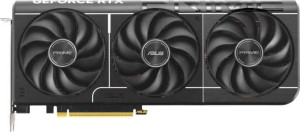
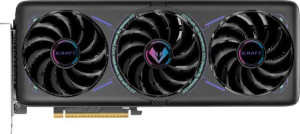
At first glance, the Maxsun RTX 5060 Ti appears to have a clock speed advantage, running a base of 2407 MHz and a boost of 2662 MHz versus the Asus RTX 5070's 2325 MHz base and 2512 MHz turbo. However, raw clock speed is only one dimension of GPU performance — what truly determines throughput is how many execution units are clocked at that speed. The RTX 5070 fields 6144 shading units, 192 TMUs, and 80 ROPs, compared to the 5060 Ti's 4608 shaders, 144 TMUs, and 48 ROPs. That wider silicon more than compensates for the clock deficit.
The practical consequence shows clearly in the aggregate throughput figures. The RTX 5070 delivers 30.87 TFLOPS of floating-point performance versus 24.53 TFLOPS on the 5060 Ti — a roughly 26% lead — meaning it can complete significantly more shader work per second. Similarly, its texture rate of 482.3 GTexels/s versus 383.3 GTexels/s translates to faster texture filtering in complex scenes, and its pixel fill rate of 201 GPixel/s versus 127.8 GPixel/s — a gap of over 57% — means it can push far more pixels to the framebuffer per second, which directly benefits high-resolution and high-refresh-rate gaming. Memory speed is identical at 1750 MHz on both cards, so neither holds a bandwidth edge from that angle.
The Asus RTX 5070 holds a clear and decisive performance advantage in this group. The 5060 Ti's higher clock speeds are real but insufficient to overcome the 5070's substantially larger shader array, and the downstream metrics — TFLOPS, texture throughput, and especially pixel rate — all confirm this gap. Both cards support double precision floating point, so that is a tie. For users prioritizing raw computational and rendering performance, the RTX 5070 is the stronger choice by a meaningful margin.